





















-
 +12 +2
Depression and anxiety might affect susceptibility to certain allergies, according to new study
Learn more about Depression and anxiety might affect susceptibility to certain allergies, according to new study
-
 +14 +1
Do Fatty Foods Deplete Serotonin Levels?
A new study examines the molecular connection between diet and depression.
-
 +26 +5
How Girls and Boys Differ in the Development of Depression
A recent study examines critical points of depressive symptom trajectories.
-
 +15 +3
She was the “queen of the mommy bloggers.” Then her life fell apart.
It wasn’t long ago that millions of people knew every detail of Heather Armstrong’s life. Armstrong rose to fame after she started the blog Dooce.com in 2001. It amassed a cult following for its sharp, witty, and unapologetic look at motherhood’s tribulations, from breastfeeding and diaper changing to the mountains of homework and carpool runs. She opened up about the unspeakable, like which parts of parenthood she despised and why she had left the Church of Jesus Christ of Latter-Day Saints (commonly known as the Mormon Church). Dooce also extensively covered mental health, with Armstrong chronicling her ongoing struggle with depression.
-
 +25 +6
People with depression feel better after listening to sad music, research suggests
People with depression listen to sad music because it makes them feel better, according to a small study that is one of the first to investigate why people turn to tearjerkers when they’re already down. The first part of the study, published recently in the journal Emotion, tried to repeat the findings of a 2015 study that showed that depressed people preferred listening to sad music.
-
 +13 +2
New research uncovers the psychological burden of being unemployed
New psychology research highlights how unemployment can place a psychological burden on people by frustrating access to several psychological needs, such as a sense of purpose. Past research has established that unemployment can undermine mental health. The new findings, which appear in the Journal of Occupational Health Psychology, help explain why that is.
-
 +14 +5
The best $16 I ever spent: Old Navy pajamas after my husband left
Even on my worst days, putting on clean, cozy clothes always made me feel a little bit less bad, a little bit more human. By Rachel Miller.
-
 +37 +6
Why Do People With Depression Like Listening To Sad Music?
By Christian Jarrett. The findings challenge the idea that depressed people are seeking to perpetuate their low mood.
-
 +26 +5
Everybody Here Hates You
Courtney Barnett
-
 +29 +8
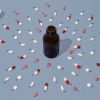
How Biases About Mental Illness Keep People From Seeking Help
We’ve all seen the memes and social media posts. While variations exist, they’re basically the same idea: First, a picture of a forest, a field, or a garden with text that reads, “This is an antidepressant.” Below will be a photo of some pile of anonymous, colorful pills, with text saying, “This is shit.” The point these memes are trying to make, of course, is that going outdoors and enjoying fresh air is a “natural” antidepressant, whereas taking a pill—a chemical, a drug—pollutes your brain and body. It’s shit.
-
 +20 +3
Sad music and depression: does it help?
Depression and suicide are major concerns in the 21st century. The World Health Organisation estimates that over 800,000 people die by suicide each year, with the 15-29 age group particularly affected. Interestingly, it is also when we are in our teens and twenties that music seems to play its most important role in our lives. Studies show that adolescents listen to music for approximately two to three hours per day, especially when feeling distressed.
-
 +2 +1
+2 +1From Popular Anesthetic to Antidepressant, Ketamine Isn't the Drug You Think It Is - The Crux
Known to most as a party drug, ketamine has actually been used clinically for years — and may have a future as a depression treatment.
-
 +15 +2
Depressed and Anxious? These Video Games Want to Help
In the coming adventure video game Sea of Solitude, the main character — a young woman named Kay — navigates a partly submerged city as she faces a multitude of red-eyed scaly creatures. None are as terrifying as her own personal demons. As the game progresses, Kay realizes the creatures she is encountering are humans who turned into monsters when they became too lonely. To save herself, she fights to overcome her own loneliness.
-
 +12 +3
Fast-Acting Psychedelic Associated With Improvements In Depression/Anxiety
Johns Hopkins researchers have discovered that use of the synthetic psychedelic 5-methocy-N,-N-dimethyltryptamine (5-MeO-DMT) appears to be associated with unintended improvements in self-reported depression and anxiety when given in a ceremonial group setting. 5-MeO-DMT is a psychedelic that is found in the venom of Bufo Alvarius toads, in a variety of plants species, and can be produced synthetically.
-
 +17 +3
FDA approves nasal spray for depression
The US Food and Drug Administration approved Janssen Pharmaceuticals Inc.'s esketamine on Tuesday for treatment-resistant depression; the drug is the chemical cousin of ketamine, the powerful anesthetic that has been used illegally as the club drug Special K. It will be sold as Spravato. More specifically, it's for patients who have tried at least two other medications without success, and it should be taken with an oral antidepressant.
-
 +8 +1
+8 +1Can You Cure Depression With Ketamine Nose Spray?
According to the FDA, you may be able to.
-
 +18 +4
Study suggests humor could be an emotion regulation strategy for depression
Humor can help decrease negative emotional reactions in people vulnerable to depression, according to new research published in the journal Brain and Behavior. The findings offer preliminary evidence that humor could be an effective emotion regulation strategy.
-
 +15 +2
FDA approves esketamine, first major depression drug in decades
The Food and Drug Administration on Tuesday approved esketamine, the first major depression treatment to hit the U.S. market in decades and a new option for patients who haven’t responded to existing therapies.
-
 +2 +1
+2 +1Anesthetic drug propofol shows promise in the treatment of medication-resistant depression
A commonly used anesthetic drug could help people with severe depression. Preliminary research published in the International Journal of Neuropsychopharmacology suggests that propofol may trigger rapid, durable antidepressant effects. “Severe depression strikes millions of people each year, and up to one-third of these individuals do not respond to currently available treatments (medications, psychotherapy, brain stimulation),” said Brian James Mickey of the University of Utah, the corresponding author of the study.
-
 +16 +5
Millennial depression on the rise, study says
Today, young people are more likely to suffer from depression and self-harm than they were 10 years ago, even as substance abuse and anti-social behavior continue to fall, a new study says. Depression levels rose to nearly 15 percent among people born between the early 1990s to 2000, while self-harm rates increased to 14 percent, research published Thursday in the International Journal of Epidemiology shows.
Submit a link
Start a discussion