





















-
 +28 +1
Do Bees Know Nothing?
Researchers say bees understand the concept of nothing, or zero. But do we understand what that means?
-
 +14 +1
Two million bees stolen from Swedish farmers
Thieves have made away with an estimated 2.1 million bees from bee harvesters in southern Sweden. Two farms near Eslöv, southern Sweden, were hit this week in what appears to be a bee heist. The robbers got away with around 50 beehives, as well as bee wax and over 1,000 litres of honey.
-
 +19 +1
Bumblebees confused by iridescent colors
Iridescence is a form of structural colour which uses regular repeating nanostructures to reflect light at slightly different angles, causing a colour-change effect.
-
 +24 +1
Bees are being 'driven to the edge' as humans and climate change destroy their havens
A third of Irish bee species are threatened with extinction with bumblebee populations falling year-on-year due to removal of hedgerows and ditches, use of pesticides and insecticides and climate change. Tomorrow is the first ever global World Bee Day and experts hope an EU ban on insecticides linked to declining bee populations will help prevent further deterioration of the vital pollinators here. Local authorities and homeowners could also help by planting bee-friendly flowers including snowdrops...
-
 +6 +1
+6 +1Robotic spies among bees
Researchers are developing little robots able to interact within animal societies such as honeybees. They believe that creating mixed societies of animal and robots can be a new way to protect many endangered species and the environment. The 20th of May has been declared World Bee Day by the United Nations. Bees and wild pollinators are crucial to ecosystem biodiversity and food security, and they have been used as bioindicators of environmental pollution for decades.
-
 +35 +1
EU agrees total ban on bee-harming pesticides
The world’s most widely used insecticides will be banned from all fields within six months, to protect both wild and honeybees that are vital to crop pollination
-
 +24 +1
Are Lithuanians obsessed with bees?
Lithuanian, the most conservative of all Indo-European languages, is riddled with references to bees.
-
 +20 +1
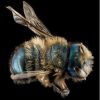
A Promising Backup to the Honeybee Is Shut Down
The world’s largest almond grower has suddenly closed an eight-year research project to develop a new commercial pollinator. By Paige Embry.
-
 +4 +1
+4 +1Nobody Knows Why These Bees Built a Spiral Nest
This Australian stingless bee builds spiral towers of its unborn young. That may be the least weird thing about it.
-
 +25 +1
Nobody Knows Why These Bees Built a Spiral Nest
This Australian stingless bee builds spiral towers of its unborn young. That may be the least weird thing about it.
-
 +18 +1
With a beehive fence, Kerala’s farmers tell marauding elephants to buzz off
A year ago, no one in Mayilattumpara could sleep soundly at night. Residents of the village in the foothills of Thrissur district, in southwest India's Kerala state, feared invasions by wild elephants. The animals, reacting to the loss of their forest habitat and a scarcity of food, frequently invaded the farmland around the village, trampling on plants and crops and destroying incomes.
-
 +22 +1
Two kids kill half-a-million bees and wipe out a honey business, police say
Two juveniles have been charged with killing more than a half million bees at a honey business last month in Iowa. The juveniles allegedly destroyed 50 hives at the Wild Hill Honey business in Sioux City.
-
 +17 +1
Quarter of British honey contaminated with bee-harming pesticides, research reveals
Almost a quarter of British honey samples remain contaminated after a partial ban on neonicotinoid pesticides, new research has revealed. The contamination rate has fallen – it was more than half before the ban – but the study shows that the potent insecticides remain prevalent in the farmed environment and still pose a serious risk to bees and other vital pollinators.
-
 +53 +1
Vandals smash beehives, killing 500,000 bees
Bees are rapidly disappearing around the U.S., and that could be potentially devastating, because bees are essential to the production of many major food.
-
 +31 +1
What Is It Like to Be a Bee?
A philosophical and neurobiological look into the apian mind.
-
 +20 +1
Puerto Rico's hurricane destruction may have doomed the world's honeybees
It’s a killer mystery without a killer. The astonishing die-off of honeybees over the past decade is a problem no one knows how to solve, but the key might rest in Puerto Rico, where the so-called “killer bee” spontaneously became gentle. This remarkable evolutionary leap could hold the secret to restoring the global bee population—unless Hurricane Maria kills off these benign “killers.”
-
 +22 +1
Bee research may redefine understanding of intelligence
The brain of a honeybee is tiny — the size of a pin head — and contains less than a million neurons, compared to the 85 billion in our own brains. Yet... By Rowan Hooper.
-
 +12 +1
Much of the world’s honey now contains bee-harming pesticides
Neonicotinoid pesticides are turning up in honey on every continent with honeybees. The first global honey survey testing for these controversial nicotine-derived pesticides shows just how widely honeybees are exposed to the chemicals, which have been shown to affect the health of bees and other insects. Three out of four honey samples tested contained measurable levels of at least one of five common neonicotinoids, researchers report in the Oct. 6 Science.
-
 +12 +1
The UK just banned pesticides harmful to bees
A total ban on bee-harming pesticides being used across Europe will be supported by the UK, the Environment Secretary has said. In a reversal of the Government's previous position on neonicotinoid pesticides, Michael Gove said new evidence indicated the risk to bees and other insects was “greater than previously understood”.
-
 +27 +1
Bee-harming pesticides in 75 percent of honey worldwide: study
Traces of pesticides that act as nerve agents on bees have been found in 75 percent of honey worldwide, raising concern about the survival of these crucial crop pollinators, researchers said Thursday. Human health is not likely at risk from the concentrations detected in a global sampling of 198 types of honey, which were below what the European Union authorizes for human consumption, said the report in the journal Science.
Submit a link
Start a discussion