





















-
 +20 +1
Bees stopped buzzing during, the great American eclipse
On August 21, 2017, hordes of individuals over the United States assembled to watch the moon go before the sun. As the moon’s shadow passed specifically overhead totality the sky went dull. What’s more, honey bees took note. Individuals had set out receivers in bloom patches at 11 locales in the way of the overshadowing. The amplifiers grabbed the humming hints of honey bees flying among blossoms. However, those sounds were observably missing amid the brief time of the full sun powered power outage, another examination finds.
-
 +19 +1
Royal jelly research could propel cure for Alzheimer’s, claim scientists
It is the mysterious substance that turns worker honeybees into queens and fills the shelves of health food shops which tout its unverified powers to fend off ageing, improve fertility and reinvigorate the immune system. Whether royal jelly has genuine health benefits for humans is a matter for more research, but in a study scientists have cracked one of the most enduring puzzles surrounding the milky gloop: the secret behind its queen-maker magic.
-
 +13 +1
Inside the mind of a bee is a hive of sensory activity
Are insects ‘philosophical zombies’ with no inner life? Close attention to their behaviours and moods suggests otherwise. By Lars Chittka, Catherine Wilson.
-
 +18 +1
One Million South African Bees 'Poisoned'
An ant-controlling insecticide used by wine farmers is suspected to have caused the deaths.
-
 +26 +1
France Is The First Country To Ban All Five Bee-Killing Pesticides
With bees on the endangered list and the terrible consequences that will come to pass if they become extinct, France has taken a drastic step in an attempt to save the population of pollinating insects. As reported by Organic Consumers, the European nation has decided to ban all five pesticides that scientists believe are responsible for killing bees.
-
 +30 +1
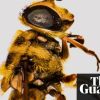
Invasion of the ‘frankenbees’: the danger of building a better bee
The long read: Beekeepers are sounding the alarm about the latest developments in genetically modified pollinators
-
 +25 +1
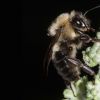
Busy Bees Take a Break During Total Solar Eclipses
The 2017 North American eclipse gave researchers an inside look at how bees respond to light—with the help of a few hundred elementary-schoolers
-
 +4 +1
+4 +1Robotic bees could pollinate plants in case of insect apocalypse
Intensive modern farming methods and the unravelling consequences of global climate change are said to have put the future of the common bee under threat like never before. But in Delft University of Technology in the Netherlands a group of scientists working on long-term solutions to some of the world’s thorniest problems have developed a solution that could have come straight from a sci-fi novel: robotic bees.
-
 +20 +1
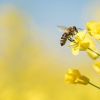
Don't kill wasps they're just as important as bees
Wasps are being wiped out as quickly as bees - and their disappearance will be just as disastrous, according to new research. But the plight of wasps is going under the radar compared to that of their close cousins - because of their unpopularity. Nature's unloved insects are best known for ruining picnics - and leaving a painful sting when we try to swat them away.
-
 +28 +1
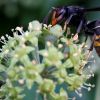
Native bee species could be 'wiped out' as Asian hornets spread across UK, conservationists warn
Britain's native bee species face being “wiped out” by a "highly aggressive" Asian hornet, conservationists have warned after the invasive insect was spotted in two locations at opposite ends of the country. The honey bee-killing Asian hornet, which is believed to have first arrived in Europe on crates imported from China to France in 2004, has been confirmed at locations in Liskeard, Cornwall and Hull. The creature, which is smaller than the UK's native hornet, poses no greater risk to humans than the humble wasp, but feasts on honey bees and is capable of killing around 50 a day.
-
 +12 +1
Bees are dying at an alarming rate. Amsterdam may have the answer.
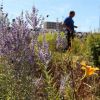
An unkempt stretch of tall grass, wildflowers and weeds in front of a train station doesn't look like much — but it may be crucial to solving one of the world's biggest environmental puzzles. While scientists around the globe have been sounding alarm bells over the decline of bees and pollinators crucial to the growth of crops, the diversity of wild bee and honeybee species in the Dutch capital has increased by 45 percent since 2000.
-
 +28 +1
France's ban on bee-killing pesticides begins Saturday
A ban on five neonicotinoid pesticides enters into force in France on Saturday, placing the country at the forefront of a campaign against chemicals blamed for decimating critical populations of crop-pollinating bees. The move has been hailed by beekeepers and environmental activists, but lamented by cereal and sugar beet farmers who claim there are no effective alternatives for protecting their valuable crops against insects.
-
 +15 +1
Microrobots: Bigger than they seem
Using insects as templates, researchers are buildings robots that are very small, very mobile—and very useful.
-
 +12 +1
Swarm of 20,000 bees attack New York City hotdog stand
Productivity came to a halt across New York City offices on Tuesday afternoon, as hordes of people eagerly followed the removal of 20,000 bees from a hotdog stand. The bees had swarmed the hotdog stand, a block south of Times Square, around 1pm. Thousands watched a Reuters livestream – the stand is located outside the news agency’s New York headquarters – and followed on Twitter as a police officer was called in to remove the bees. With a vacuum cleaner.
-
 +6 +1
+6 +1Rising CO2 levels reduce protein in crucial pollen source for bees
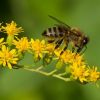
Rising levels of atmospheric carbon dioxide have reduced protein in goldenrod pollen, a key late-season food source for North American bees, a Purdue University study shows. Researchers found that the overall protein concentration of goldenrod pollen fell about one-third from the onset of the Industrial Revolution to the beginning of the 21st century.
-
 +10 +1
Plan Bee: The Rise of Alternative Pollinators
Jim Freese grows apples, pears and cherries on 45 acres in the north-central part of this state, on sagebrush-studded land his grandfather bought in 1910. Walking among trees laden with shiny red cherries, Mr. Freese recalled that four years ago his trees were not producing well and his farm was financially struggling. Like many growers, he had been relying on rented honeybees to pollinate his cherry trees every spring, along with wild bees and other insects.
-
 +17 +1
The Super Bowl of Beekeeping
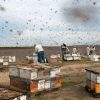
Every February, white petals blanket first the almond trees, then the floor of the central valley, an 18,000-square-mile expanse of California that begins at the stretch of highway known as the Grapevine just south of Bakersfield and reaches north to the foothills of the Cascades. The blooms represent the beginning of the valley’s growing season each year: Almond trees are first to bud, flower and fruit. At the base of the trunks sit splintered boxes — some marked with numbers, some with names, some with insignias — stacked two boxes high on a wooden pallet that fits four stacks.
-
 +11 +1
Could an Australian bee solve the world's plastic crisis?
Researchers believe an Australian bee which produces a “cellophane-like” material for its nests could help to end the world’s reliance on disposable plastics. The native Hylaeus nubilosus masked bee, known for the distinctive yellow badge on its back, does not sting or live in hives but it has generated interest because of the nesting material it produces, which is non-toxic, waterproof, flame-resistant and able to withstand heat.
-
 +15 +1
Canada to phase out pesticides linked to bee deaths, sources say
The federal government will begin phasing out the outdoor use of nicotine-based pesticides beginning in 2021, part of an effort to stem the mysterious decline of honey bee colonies around the world. The Pest Management Regulatory Agency of Canada will announce Wednesday a three-year phaseout of two of the three main neonicotinoid pesticides currently approved for use in the country, sources close to the decision tell The Canadian Press.
-
 +13 +1
Ottawa to phase out pesticides linked to bee deaths
In what is being hailed as a victory for troubled bee populations, the federal government is moving to ban the outdoor use of pesticides that are widely applied to canola, corn and soybean crops in Canada, the Star has learned. Beekeepers and environmentalists have blamed the pesticides — called neonicotinoids — for contributing to honeybee die-offs in recent years.
Submit a link
Start a discussion