





















-
 +38 +2
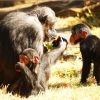
Chimpanzees recognize each other’s butts the way we recognize faces
For chimpanzees, it’s all about the butt. You won’t find a female chimp going “My eyes are up here,” as it turns out that chimps often tell each other apart based on their behinds. Their brains even process butts in the same way that we process faces.
-
 +7 +1
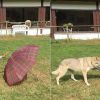
+7 +1Dogs form memories of experiences
New experiments suggest that dogs have some version of episodic memory, allowing them to recall specific experiences.
-
 +5 +1
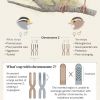
+5 +1The sparrow with four sexes
Elaina Tuttle spent her life trying to understand the bizarre chromosome evolution of a common bird — until tragedy struck.
-
 +27 +1
Bird poop might help keep the Arctic cool
Important poop news, friends: According to a new study, Arctic bird droppings may help keep temperatures cool. The research, published Tuesday in Nature Communications, is the result of an investigation into a spike in ammonia levels seen each summer in the atmosphere around the Canadian Arctic. "Since it's so remote, there are only so many potential sources," says Greg Wentworth of the University of Toronto, one of the study's corresponding authors. "And we ruled out the ocean."
-
 +7 +1
+7 +1How dogs understand the meaning of some words and their intonation -
Neuroscientists have discovered that the dogs are well aware of the meaning of some words
-
 +36 +1
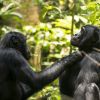
Old bonobos need reading glasses too
Bonobos observed in the wild exhibit signs of long-sightedness similar to humans. A study released today in Current Biology has found that bonobos’ eyesight becomes significantly reduced when they reach around 40 years of age. We talk to the study’s lead author, Heungjin Ryu, to find out why his discovery is a sign that we have even more in common with our primate relatives than we previously thought.
-
 +22 +1
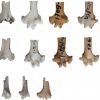
Parrot Fossil Unearthed in Siberia
A parrot fossil has been discovered in Siberia - the furthest north these birds have ever been found.
-
 +6 +1
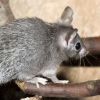
+6 +1Mice Squeak By Expelling Air At Supersonic Speed
The animal kingdom's mating rituals are almost as weird as humanity's: Frogs are out there inventing new sex positions, ocean crabs are embracing polygamy, and female bonobos are faking it to play the field. The modest mouse, however, might be the most metal of them all. They're singing to soulmates using a mechanism similar to a supersonic jet engine, according to new research published in Current Biology.
-
 +23 +1
How Baby Turtles Find Their Way Home
-
 +14 +1
New Research Debunks The Dinosaur's Roar
New studies prove that dinosaurs may not have roared in their days on the earth. NPR's Linda Wertheimer talks to paleontologist Julia Clarke about her new discovery — the cooing sounds of dinosaurs.
-
 +19 +1
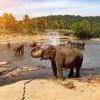
Study: Asian elephant society is egalitarian
New research reveals Asian elephant societies to be less hierarchical than their African relatives. In Africa, elephant societies are characterized by matriarchal leadership and a clear pecking order. Many scientists believed Asian elephants organized and interacted in similar ways. But when a team scientists lead by biologists from Colorado State University surveyed Asian elephant societies, they observed less than a third as many instances of dominance and deferment behavior -- not enough to establish any clear hierarchical patterns among individuals.
-
 +12 +1
Fossil Sheds Light on Evolution of Birdsong
Scientists have reconstructed the "voicebox" of an extinct bird that lived at the time of the dinosaurs - and they say it honked or quacked like a duck.
-
 +26 +1
Paleontologists Link Dinosaur, Bird Reproduction
A recent theory by paleontologists at Montana State University suggests that the nesting habits of some Mesozoic-era dinosaurs further bolsters the theory that all birds, from the majestic bald eagles of Yellowstone National Park to robins nesting in backyards across Montana, evolved from dinosaurs that lived millions of years ago.
-
 +24 +1
Man v rat: could the long war soon be over? | Jordan Kisner
The Long Read: Rats spread disease, decimate crops and very occasionally eat people alive. For centuries, we have struggled to find an effective way of controlling their numbers. Until now …
-
 +28 +1
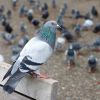
Today in Terrifying Bird News, Pigeons Know How to Read,Well Sort of
Well, sort of. In a study published last week in the Proceedings of the National Academy of Sciences, scientists taught pigeons to memorize certain words.
-
 +11 +1
This Endangered Hawaiian Crow is a Master Tool-User
The Hawaiian crow, also known as ‘Alalā, wields sticks to help it forage.
-
 +22 +1
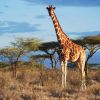
DNA analysis reveals there are four distinct giraffe species, not one as previously thought
Researchers have long recognized only a single species of giraffe, thought to be made up of several subspecies. However, a research collaboration has now identified four distinct species. Conservation biologist Julian Fennessy of the Giraffe Conservation Foundation, geneticist Axel Janke of the Senkenberg Research Institute, and their colleagues collected and analyzed samples from giraffes across the African continent. Their results appear in the journal Current Biology.
-
 +31 +1
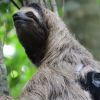
Pioneering 'Diaries' Reveal the Secret Lives of Animals
Specially designed tags that act as 'daily diaries' are revealing previously unknown animal behaviours.
-
 +18 +1
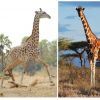
A Quadruple Take on the Giraffe: There are Four Species, Not One - The New York Times Science
Genetic testing found four distinct species of giraffe.
-
 +26 +1
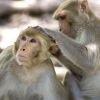
David Attenborough calls for end to ‘cruel’ brain tests on primates
Sir David Attenborough has joined forces with leading scientists and animal welfare experts to call for an end to the use primates in certain types of “cruel” testing by neuroscientists. The leading naturalist and broadcaster said recent breakthroughs in understanding primates’ capacity to feel suffering and pain meant it was time to stop funding some potentially painful or cruel types of experiments.
Submit a link
Start a discussion