





















-
 +19 +1
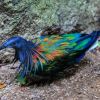
The Closest Living Relative to the Dodo is a Rainbow-Hued Knockout
The world is brimming with 'fancy' pigeons, but perhaps the most show-stopping of them all is the Nicobar pigeon.
-
 +14 +1
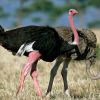
World’s Biggest Birds Are Stellar Dads and Unusual Lovers
When it comes to childcare and mating, ostriches, emus, and the like are, well, odd ducks.
-
 +22 +1
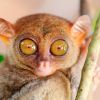
This Animal's Eye Makes Up Almost Half of Its Body
When it comes to giant peepers, little marine animals called hyperiid amphipods are heads above the rest. When Dwayne LaGrou asked Weird Animal Question of the Week what animals have the largest eyes for their body size, we were sure the answer would be guilty-looking dogs. The actual candidates proved to be some real eye-openers. Because animals are built so differently, figuring out which has the biggest eyes can be tricky, Sönke Johnsen, a biologist at Duke University, says via email. (Read more about eyes, nature's most exquisite creation, in National Geographic magazine.)
-
 +36 +1
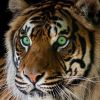
We have made it harder for big-brained animals to survive
Our big brains have long been hailed as our greatest asset. We are smart, have conquered almost every corner on Earth, manipulated our habitat to suit us, and are developing increasingly-innovative technology to make our lives easier. Without our brains, none of these things would have been possible. Though they are costly organs – they require a great deal of energy to power – humans are living proof that the cost can pay off, biologically speaking. We have managed to find ways to overcome the added burden it has taken to evolve ever-bigger brains.
-
 +8 +1
+8 +1Mission Kākāpō Copulation
Still,these birds will be so inbred,it will be pathetic.
-
 +31 +1
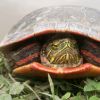
‘Red gene’ in birds and turtles suggests dinosaurs had bird-like colour vision
A gene for red colour vision that originated in the reptile lineage around 250m years ago has resulted in the bright red bird feathers and ‘painted’ turtles we see today, and may be evidence that dinosaurs could see as many shades of red as birds - and perhaps even displayed more red than we might think.
-
 +32 +1
Why did a humpback whale just save this seal's life?
First study finds multiple cases of humpback whales going on the offensive
-
 +25 +1
Dinosaurs Literally Reshaped The Planet
Dinos didn't just leave behind footprints and fossil bones—they also changed the landscapes in which they lived
-
 +22 +1
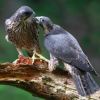
Peregrines remain faithful falcons, even in the city
"Whenever you have animals living in habitats that have been influenced by human development, you have to wonder how the animals' life histories will be altered," said researcher John Bates. Even for birds, the city life comes with extra temptations -- chiefly, a plethora of potential mates. But new research shows, even in the city, Peregrine falcons remain committed to their partners.
-
 +1 +1
+1 +1Millions Of Tons Of Garbage Are Swirling In The Pacific Ocean "Trash Vortex"
Every year, over 10 million tons of plastic garbage ends up in the world's oceans that get caught up in a trash vortex, killing off fish and wildlife.
-
 +26 +1
Monkeys In Brazil Entered The Stone Age 700 Years Ago
Humanity is no longer the only species on Earth that has entered the Stone Age. It’s been known for some time now that various other primates use stone too
-
 +26 +1
Belgian Neanderthals 'were eating each other 40,000 years ago'
Belgian Neanderthals were eating each other 40,000 years ago, new research has shown. The grisly discovery was made in a cave where scientists found bones bearing marks left by intentional butchering. Not only were they cannibals, but the Neanderthals appear to have fashioned tools out of the bones of their own kind. Neanderthals were a human subspecies that lived in Europe and western Asia for hundreds of thousands of years before becoming extinct between 30,000 and 40,000 years ago.
-
 +6 +1
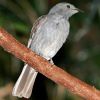
+6 +1Cotingas,Quintessential Tropical Birds
Cotingidae all live in humid rain forests throughout Central and South America. Among the 70-odd contingid species are some of the most colorful, vocal and bizarrely ornamented birds in the world.
-
 +39 +1
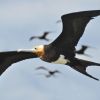
These Remarkable Frigate Birds can Fly without Landing for Months at a Time
On a tiny island off the coast of Mozambique, a young frigate bird emerges from his nesting place, looks north and flies off. And for 185 days, he keeps going ... for 34,000 miles.
-
 +29 +1
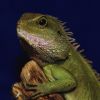
Feathers, hair, and scales have a common ancestor, study finds
Scientists have long pondered whether or not the hair of mammals, the feathers of birds, and the scales of reptiles had a common evolutionary link, and now, after decades of debate, they finally have an answer, thanks to new research published today in the journal Science Advances.
-
 +27 +1
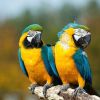
Birds found to have more brain cells despite organ being much smaller
Scientists have found that birds are not only as clever as apes, but have more brain cells despite much tinier brains. Crows and parrots have shown remarkable skills such as being able to use tools.
-
 +6 +1
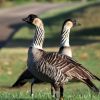
+6 +1Why cat poop is a threat to Hawaiian geese
The nene Hawaiian goose is at risk from Toxoplasma gondii, a parasite spread by cat poop.
-
 +36 +1
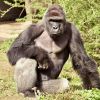
Harambe was protecting boy from screaming crowd: expert
Screaming adults above the enclosure, rather than the little boy who fell in, the real 'threat' perceived by gorilla shot at a zoo on the weekend, expert says.
-
 +23 +1
How Do Animals Keep from Getting Lost?
Every three years, the Royal Institute of Navigation organizes a conference focussed solely on animals. This April, the event was held southwest of London, at Royal Holloway College, whose ornate Victorian-era campus has appeared in “Downton Abbey.” For several days, the world’s foremost animal-navigation researchers presented their data and findings in a small amphitheatre. Most of the talks dealt with magnetoreception—the ability to sense Earth’s weak but ever-present magnetic field—in organisms as varied as mice, salmon, pigeons, frogs, and cockroaches.
-
 +6 +1
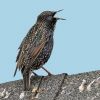
+6 +1A Plague of Starlings
The pretty plan was to bring the Bard's birds to America. It brought troubles by the flock. Think of the starling as a cane toad with feathers.
Submit a link
Start a discussion