






















10 years ago
5
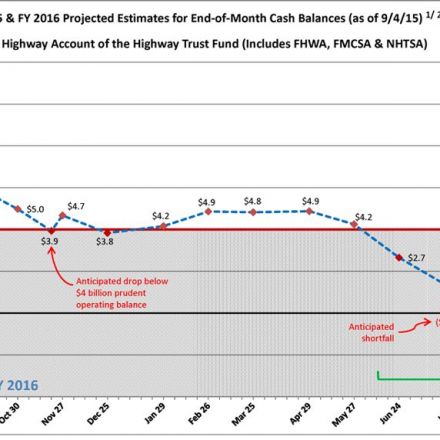
Fixing America’s roads would essentially pay for itself
If we were able to raise the gas tax by 40 cents and repair our highways and roads, we would create no new net burden on consumers. And as is fair, those who drive the most would both pay the most and benefit the most from reduced repair costs.
Continue Reading https://www.washingtonpost.com



Join the Discussion
I'd pay another 40-50 cents a gallon. especially if it was temporary.
The thing is, infrastructure maintenance isn't something you can do once and forget. That kind of attitude is why our roads are in such poor shape: because we accepted short term gains in the form of lower gas taxes at the cost of long term funding for our infrastructure. If we raise taxes only temporarily to fix the current problem and then drop it back again, all we'll accomplish is to kick the can down the road a little farther.
well to elaborate, I'll put out my 2 point plan to fix the economy specifically regarding infrastructure.
1. Impose an immediate 50 cent per gallon tax on gas/diesel. This will provide the initial boost necessary to jump start our infrastructure repair. This money goes directly to an infrastructure fund to be distributed to the states on a state-by-state lane-mile basis. This tax will decrease over time. From 2016-2020, it will be 50 cents per gallon. From 2021-2025, it will be 40 cents per gallon. From 2026-2030, it will be 30 cents per gallon. From 2031-until we are done using gas/diesel, it will remain at 20 cents per gallon.
2. Between 2016 and 2030, the military budget (pentagon, DOD, overseas, everything except R&D) will be reduced by 50% mostly by pulling troops back to our own borders, no longer waging war all over the planet, etc. The 50% reduction in military spending will be distributed as follows. 20% - education + science funding. 5% directly to NASA specifically for colonial efforts. 15% to infrastructure improvement/upgrades. 5% for developing single payer healthcare infrastructure. The final 5% will not be distributed. It should be applied to our debt.
Mainly what I'm saying is that we need a shot in the arm to fix our infrastructure. Once we get the initial shot in the arm, we just need to spend more than we are spending now. We don't need to continuously aggressively attack the infrastructure. We just need to do a better job spending a little money now on maintenance instead of spending a lot of money on deferred maintenance.
I can also tell you that as an engineer for AKDOT, I would love for more money to be thrown at infrastructure for an indefinite amount of time. However, it isn't necessary to keep the tax at 50 cents per gallon.
I think I'm starting to ramble, but I think I got my point across.
I'm happier with your second point than your first. In particular, there are two things that I see as problematic in your approach:
If only the world were this straightforward, but I can see this negatively impacting colder states in colder/rougher climes. It's a lot more expensive to fix and maintain roads in areas where the window of opportunity for construction is limited such as Alaska than in places like New Mexico where the temperature remains fairly stable. Roads that require regular plowing take a lot more damage than roads that don't.
Again, this makes some assumptions that I don't think are justified. How do we know that these levels will successfully cover costs? Shouldn't such reductions be implemented after review rather than set by a hard date regardless of conditions at the time?
Obviously, I don't have a crystal ball. I don't know what inflation will do. I don't know what oil prices will do. Paving prices are highly dependent on oil prices. I used 10 cent increments and 5 year increments because multiples of 5 and 10 are nice round easy numbers to look at. Were I to expend the effort to actually come up with a plan, I would do research and math to develop actual numbers. Maybe the initial years need to be a 73 cent per gallon tax that can be decreased by 10% to 66 cents per gallon in 2021, then decreased by 12% to 54 cents per gallon in 2024, then reduced by 13% to 47 cents per gallon in 2028, and so on. I just put down some nice round numbers that took me 30 seconds to come up with.