





















-
 +13 +3
One-third of the food we eat is at risk because the climate crisis is endangering butterflies and bees | CNN
Bee populations are declining. More than half of the bat species in the United States are in severe decline or listed as endangered. And international scientists recently announced the monarch butterfly is perilously close to extinction.
-
 +4 +1
+4 +1More species are at risk than ever in Canada. Who will save them?
The recent addition of the monarch butterfly to the International Union for Conservation of Nature’s Red List of Threatened Species captured the attention of the media and public across North America. Rightly so. This brightly coloured butterfly is easy to recognize and one of the few endangered species you might find right in your backyard. But the monarch is just the latest to be added to a growing group of wild species found in Canada that are at risk of disappearing forever.
-
 +3 +1
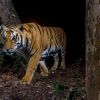
+3 +1Nepal has nearly tripled its wild tiger population since 2009
Wild tigers in Nepal have clawed their way back from the brink of extinction. There are now almost three times as many wild tigers in the country as there were in 2009, according to the Nepalese government.
-
 +15 +4
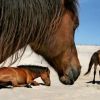
A centuries-old horse tooth helps prove the Spanish origin of these feral horses
The unexpected discovery of a 16th-century horse tooth in modern-day Haiti has provided credence for an age-old folk story about the origin of feral horses on an island off Maryland and Virginia.
-
 +18 +5
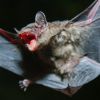
Man wakes up with bat on his neck, later dies after refusing rabies vaccine
A colony of bats was later discovered in the man's Illinois home, and he refused treatment despite the warnings.
-
 +15 +3
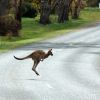
Good news: highway underpasses for wildlife actually work
Australia’s wildlife is increasingly threatened with extinction. One key driver of this is habitat clearing and fragmentation. An associated factor is the expansion of our road network, particularly the upgrade and duplication of our highways.
-
 +17 +3
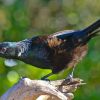
Native birds increase by 51% on Miramar Peninsula
Latest figures show native birds have increased by 51 percent on Wellington's Miramar Peninsula. This includes a whopping 550 percent rise in the pīwakawaka / fantail population of, a 275 percent increase in riroriro / grey warblers, and a 49 percent increase in tūī.
-
 +4 +1
+4 +1Bison back in the UK: the inside story
They’ve been absent in the UK wild for thousands of years, but now a special project has welcomed these “woolly bulldozers” home.
-
 +3 +1
+3 +1There are 40% more tigers in the world than previously estimated
The number of tigers in the wild has gone up dramatically since 2015 — largely because of improvements in monitoring them, but the species remains endangered.
-
 +14 +2
Past the Salt
In San Francisco’s salty South Bay, an ambitious wetlands restoration project is seeking to balance a return to the ecological past with the realities of a changing future.
-
 +3 +1
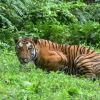
+3 +1Wild tiger numbers 40% higher than thought, says conservation group
There are 40% more tigers in the wild than previously thought, with as many as 5,578 around, though they remain an endangered species, according to a leading conservationist group. The jump in numbers was due to improved monitoring, with the population thought to be stable or increasing, said the International Union for Conservation of Nature (IUCN). Habitat protection projects showed that “recovery is possible”.
-
 +14 +3
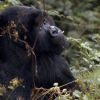
Mountain gorillas of Rwanda making a comeback
With close to a million species now threatened with extinction, it's not often you hear about a conservation success story. But as we first reported in November, the mountain gorillas of the East African nation of Rwanda are just that.
-
 +14 +2
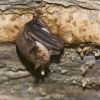
These bats buzz like wasps and bees. The sound may deter hungry owls
Some bats buzz like wasps and bees when grasped, and the sound seems to deter predatory owls. The findings reveal what may be the first known case of a mammal mimicking an insect, researchers report May 9 in Current Biology.
-
 +16 +3
Wildlife traffickers in Oregon sentenced to help researchers study wildlife crime
It was exactly 16 minutes into the Zoom meeting before the topic of Yuan Xie’s parole officer came up. Xie, a convicted turtle trafficker, shifted in his seat. “I don’t know how often we’re supposed to check in with your parole officer, but I think we should be able to show we’re making good progress,” wildlife crime expert Meredith Gore told Xie, who’s collaborating with her on a research project studying the illegal wildlife trade online.
-
 +4 +1
+4 +1The billionaire blocking off Montana’s wildlife: ‘Like fencing people out of Walmart’
Almost immediately after their new billionaire neighbor put up miles of 5ft fences around his Montana ranch, complaints started coming in to the Blackfeet tribe. In photos and videos captured by Blackfeet tribal members and reviewed by the Guardian, animals such as elk, deer, moose and grizzly bears can be seen struggling to navigate around or over the fences as they follow a historical migration path.
-
 +16 +1
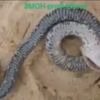
I AM DEAD SNAKE (Hilarious Voiceover!)
A harmless hog nose snake takes playing dead to dramatic heights!
2 comments by Gozzin -
 +2 +1
+2 +1An eagle snatched a baby hawk for dinner, then ended up adopting it
A pair of bald eagles near Nanaimo, B.C., have adopted a baby red-tailed hawk and are raising it alongside their own eaglet. But while the hawk is now part of the eagles’ family, it could have just as easily been their dinner.
-
 +16 +4
An eagle snatched a baby hawk for dinner, then ended up adopting it | CBC Radio
A pair of bald eagles near Nanaimo, B.C., have adopted a baby red-tailed hawk and are raising it alongside their own eaglet. But while the hawk is now part of the eagles’ family, it could have just as easily been their dinner.
-
 +22 +4
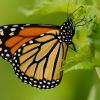
U.S. House passes a major wildlife conservation spending bill
The Recovering America's Wildlife Act would create a permanent fund of more than $1.3 billion, given to states, territories, and tribal nations for wildlife conservation on the ground.
-
 +3 +1
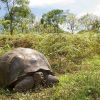
+3 +1Scientists find ‘long-extinct’ giant tortoise alive in the Galápagos
Believed to be extinct for more than a century, a rare species of giant tortoise is in fact still alive. Scientists assumed that the chelonoidis phantasticus had died out more than a century ago. The species is better known as the ‘fantastic giant tortoise’ and is native to the Galápagos Fernandina island.
Submit a link
Start a discussion