





















-
 +12 +1
Tokyo’s Voluntary Standstill May Have Stopped COVID-19 in its Tracks
Why did Japan largely contain COVID-19 despite famously jam-packed Tokyo and despite the country's proximity to China? With no penalties and only requests for cooperation, Japan's state of emergency somehow averted the large-scale outbreaks seen elsewhere. At least one viable answer has now emerged.
-
 +18 +1
'The worst case scenario is a new pandemic': Denmark to cull 17 million mink over COVID-19 mutation fears
Denmark will get rid of its entire mink population over reports the animal had infected humans with a mutated strain of COVID-19.
-
 +18 +1
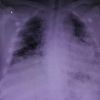
Lung damage found in COVID dead may shed light on 'long COVID' - study
A study of the lungs of people who have died from COVID-19 has found persistent and extensive lung damage in most cases and may help doctors understand what is behind a syndrome known as 'long COVID', in which patients suffer ongoing symptoms for months.
-
 +28 +1
It’s Evolving: Coronavirus Genetic Mutation May Have Made COVID-19 More Contagious
A study involving more than 5,000 COVID-19 patients in Houston finds that the virus that causes the disease is accumulating genetic mutations, one of which may have made it more contagious. According to the paper published in the peer-reviewed journal mBIO, that mutation, called D614G, is located in the spike protein that pries open our cells for viral entry. It’s the largest peer-reviewed study of SARS-CoV-2 genome sequences in one metropolitan region of the U.S. to date.
-
 +17 +1
Over 27 Million people have recovered from COVID-19 globally
It has been almost 10 months since the first case of COVID-19 was reported in Wuhan, China. Since then, countries around the world have been working tirelessly to try and contain the virus that has killed over one million people and infected over 40 million worldwide to date, according the Johns Hopkins University.
-
 +18 +1
Chinese Covid-19 vaccine candidate 'triggers antibody response'
A Covid-19 vaccine candidate being developed in China has been found to be safe and to trigger an antibody response, early results have shown. Researchers said those aged 60 and over were slower to respond to the BBIBP-CorV vaccine, but they said it was "encouraging" that the vaccine did trigger such a response. They also found antibody levels to be lower in those aged 60 to 80 years, compared with those aged 18 to 59.
-
 +10 +1
Covid may cause sudden, permanent hearing loss – UK study
Study team says Covid-19 patients in intensive care should be asked about hearing loss
-
 +12 +1
Australian scientists reveal new insights into how long coronavirus survives on surfaces
New Australian research finds the coronavirus that causes COVID-19 can live for up to 28 days on surfaces such as mobile phone screens and ATMs — much longer than previously thought.
-
 +28 +1
Excel: Why using Microsoft's tool caused Covid-19 results to be lost
The decision to use a database format that dates back to the 1980s has proved to be unwise.
-
 +13 +1
Rapid COVID-19 tests to be rolled out in poorer countries
The World Health Organization (WHO) said Monday that it has agreed to a plan to roll out 120 million rapid-diagnostic tests for the coronavirus. Along with its leading partners, WHO aims to help lower- and middle-income countries make up ground in a testing gap with richer countries.
-
 +4 +1
+4 +1SARS-CoV-2 Seems to Block Some Pain Signals. Here's Why This Is Important
Imagine being infected with a deadly virus that makes you impervious to pain. By the time you realize you are infected, it's already too late. You have spread it far and wide.
-
 +20 +1
We May Finally Know a Molecular Reason Why COVID-19 Is So Deadly, But Only For Some
Among the million or so lives lost to COVID-19 there are stories that defy understanding. Healthy bodies, young and in their prime, succumb to the virus as easily as if they were among the most vulnerable. While for others in their age group, the vir
-
 +15 +1
Silk Offers Homemade Solution for COVID-19 Prevention – More Protection Than Cotton Face Masks
With personal protective equipment still in short supply, researchers at the University of Cincinnati examined what common household fabrics might work best as a face covering. Next to a single-use N95 respirator or surgical mask, UC found the best alternative could be made by a hungry little caterpillar. Silk face masks are comfortable, breathable, and repel moisture, which is a desirable trait in fighting an airborne virus.
-
 +9 +1
+9 +1As Pandemic Progressed, People's Perceived Risks Went Up
In the first week of the coronavirus pandemic, people living in the United States underestimated their chances of catching the virus, or of getting seriously ill from the virus, according to a recently published Caltech-led study. But as the days progressed, those same people became more worried about their personal risk, and, as a result, began to increase protective behaviors such as washing hands and social distancing.
-
 +10 +1
Chinese virologist posts report claiming COVID-19 was made in Wuhan lab
A Chinese virologist who has alleged that COVID-19 was human-made in a lab in China released a report on Monday that she says backs up her explosive claim. Dr. Li-Meng Yan, a former researcher at t…
-
 +19 +1
Ab8 COVID-19 Drug Breakthrough: Tiny Antibody Component Completely Neutralizes the SARS-CoV-2 Virus
University of Pittsburgh School of Medicine scientists have isolated the smallest biological molecule to date that completely and specifically neutralizes the SARS-CoV-2 virus, which is the cause of COVID-19. This antibody component, which is 10 times smaller than a full-sized antibody, has been use
-
 +16 +1
America Is Trapped in a Pandemic Spiral
As the U.S. heads toward the winter, the country is going round in circles, making the same conceptual errors that have plagued it since spring.
-
 +13 +1
Mask wearers are “dramatically less likely” to get a severe case of Covid-19
When people wear masks, they can still get infected, but they’re more likely to have milder symptoms.
-
 +16 +1
Coronavirus pandemic could be over within two years - WHO head
WHO chief Dr Tedros Adhanom Ghebreyesus says "we have the technology to stop it".
-
 +18 +1
Germany puts on crowded concerts to study Covid
Scientists are using Saturday's three concerts to explore ways of holding mass indoor events safely.
Submit a link
Start a discussion