




















-
 +12 +1
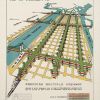
The Weird and Wonderful World of Renzo Picasso
A little-known Italian architect wanted to build seven-layer "superstreets" through American cities.
-
 +29 +1
The struggle in Iqaluit: north and south collide in Canada's Arctic capital
Iqaluit shot to prominence in 1995 as the capital for a bold endeavour in Inuit self-government. But their fight to carve out a modern city that still pays tribute to ancient traditions had just begun.
-
 +16 +1
Where ‘Not in My Backyard’ Prevails, Equality Does Not
A growing body of economic literature suggests that efforts in America aimed at things like “maintaining neighborhood character” contribute to segregation and lead to stagnation.
-
 +5 +1
+5 +1The sky's no limit: unusual uses for urban roof space – in pictures
From detached houses to running tracks to bee keeping, the scarcity of space in world cities means innovative uses are found for otherwise wasted rooftops. (Gallery)
-
 +30 +1
Ghost Boxes: Reusing Abandoned Big-Box Superstores Across America
Big-box stores promise convenience and jobs for suburbs and small towns, but have a mixed reputation with designers and citizens. Many see big boxes as icons of unsustainable sprawl, reinforcing car culture with highway-oriented access and expansive parking lots. These boxy buildings not only take up vast amounts of land but often also require infrastructure around them to be overhauled. Later, when their super-sized occupants leave: a giant empty structure is left in their wake, which can be difficult to reuse unless a similar retailer takes its place.
-
 +30 +1
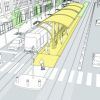
A One-Stop Guide to Designing the Streets of the Future
A recently published report by the National Association of City Transportation Officials includes insights from dozens of officials and practitioners across North America.
-
 +27 +1
When New York City tried to ban cars – the extraordinary story of 'Gridlock Sam'
Decades before New York installed bike lanes and pedestrian streets, Sam Schwartz – the man who coined the term ‘gridlock’ – was at the centre of a bitter fight to create a car-free Red Zone in downtown Manhattan
-
 +17 +2
Least Resistance: How Desire Paths Can Lead to Better Design
Informal ‘desire paths‘ can form with as few as fifteen traversals of an unpaved route, creating spontaneous new trails shaped by pedestrians effectively voting with their feet. These paths frequently become self-reinforcing... By Kurt Kohlstedt.
-
 +51 +1
The Subtle Design Features That Make Cities Feel More Hostile
Think your city doesn’t like you? You’re right.
-
 +3 +1
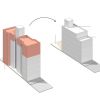
+3 +140 Percent of the Buildings in Manhattan Could Not Be Built Today
New York City’s zoning code turns 100 this year. That may not sound like cause for celebration — except maybe for land-use lawyers and Robert Moses aficionados. Yet for almost every New Yorker, the zoning code plays an outsize role in daily life, shaping virtually every inch of the city. The bays and cliffs of the Empire State Building come from zoning, as do the arcades and plazas of Park Avenue.
-
 +13 +1
40 Percent of the Buildings in Manhattan Could Not Be Built Today
In Manhattan alone, roughly two out of every five buildings are taller, bulkier, bigger or more crowded than current zoning allows. And often that can actually be a good thing.
-
 +6 +1
+6 +1How Jane Jacobs changed the way we look at cities
When I first encountered this doyenne of urban activism, she offered one of the sharpest critiques I’d ever heard. Jane Jacobs was relentless, and stood up to anyone in her quest to understand what really makes a city.
-
 +20 +1
The Value of a City's 'StreetScore'
An ongoing project from MIT uses an algorithm to predict the safety of streets, helping researchers and urban planners better understand cities.
-
 +41 +1
Futuristic 'vertical village'
The organic, curvilinear designs of an Avatar universe may be closer than we think. Indian agroecologist Amlankusum and Paris-based Vincent Callebaut Architectures have released plans for a vertical 'eco-neighborhood' called the Jaypee Green Sports City. The compound, which would theoretically be built outside of New Delhi, is named Hyperions and consists of a set of six 36-storey towers connected by common green spaces, walkways, and shared eco-conscious utilities.
-
 +26 +1
How the slum women of Ahmedabad led a housing revolution
The Indian city where Gandhi established his first ashram can be gruelling if you live in a slum: 50C temperatures, poor ventilation, no running water. A group of women had had enough and agreed to work with developers.
-
 +13 +1
The Psychological Cost of Boring Buildings
Scientists are investigating the emotional toll of ugly architecture.
-
 +22 +1
Germany's bicycle autobahn: pedaling nowhere?
Construction on a bike highway - hoped to connect communities to make high-speed, emissions-free commuting possible - is underway in Germany. But with funding in question, will this bikers' dream still come true? German autobahns are famous for lacking speed limits - now, bike autobahns may continue the trend. Following in the footsteps of other northern European countries, Germany is building a traffic-free bicycle highway: the Radschnellweg Ruhr, also known as RS1.
-
 +6 +1
+6 +1The Quest for Inclusive Economic Development
How can cities grow their economies without alienating poorer residents?
-
 +4 +1
+4 +1Dubai to build $1bn Babylon-inspired tower taller than the Burj Khalifa
Dubai is planning to build one of its most elaborate structures yet with developers promising that it will dwarf the current world's tallest building – the Burj Khalifa. The new tower, based at the centre of a new development called Dubai Creek Harbour, is set to boast rotating balconies and landscaping inspired by the mythical hanging gardens of Babylon. Chairman of Dubai-based Emaar Properties Mohamed Alabbar, said the huge viewing tower would cost about $1bn (£700m) to build in the Arab...
-
 +18 +1
Fascinating maps reveal what our cities sound like
How researchers mapped the spectrum of urban sound.
Submit a link
Start a discussion