





















-
 +21 +1
You’re not crazy: your appliances were built to fail you
Why appliances aren’t built to last, and how the E.U. is changing that.
-
 +1 +1
+1 +1How to design a home that stays cool without AC | Popular Science
Houses can be designed to stay cool without air conditioning—we just don't do it. Here's how you can build a home that won't require AC.
-
 +25 +1
FTC finds 'scant' reason for repair limits in right-to-repair report
The Federal Trade Commission told Congress "there is scant evidence to support manufacturers' justifications for repair restrictions" in a Thursday report that promised to consider new rules or enforcement around consumers' right to repair their goods.
-
 +20 +1
Bioplastic made from wood powder entirely degrades in three months
Motivated by our growing problem with plastics, which are environmentally damaging both to produce and after they're disposed of, scientists are tinkering away with more eco-friendly forms of the material. Researchers at Yale University have put forward a candidate that ticks a number of important boxes, developing a new bioplastic with high strength but an ability to degrade entirely in the space of three months.
-
 +33 +1
Big tech and independent shops clash over 'right to repair'
Trade groups representing big tech companies clashed with independent repair shop owners in Monday committee hearing in the Nevada Legislature over a proposal to require hardware manufacturers give repair shops the means to fix devices like computers, phones, tablets and printers.
-
 +3 +1
+3 +1Average westerner's eating habits lead to loss of four trees every year
The average western consumer of coffee, chocolate, beef, palm oil and other commodities is responsible for the felling of four trees every year, many in wildlife-rich tropical forests, research has calculated.
-
 +26 +1
World's First Plant to Recycle All Forms of Plastic Begins Construction
There is no doubt about it. We have a plastic problem. According to Plastics Europe, 350m tonnes of plastic is produced annually, and only 9% of that plastic is ever recycled. This plastic pollutes our oceans and shows up everywhere as microplastics. More alarmingly, according to the World Economic Forum, this problem is predicted to increase tenfold by 2025 if solutions aren’t found.
-
 +20 +1
Your right to repair: COVID-19 is sending businesses, hospitals, and consumers to the breaking point
Right now, when the speaker in your iPhone stops working or a memory stick in your laptop malfunctions, you're often left with one option: Take it to an authorized service center and pay for someone else to repair it for you. It's costly, expensive, and something that needs to change. But as right to repair legislation is gaining popularity across the country, that change may happen sooner than later.
-
 +3 +1
+3 +1Farmers ask for 'right to repair'
Legislation backed by the U.S. Public Interest Research Group would require farming equipment manufacturers to make software required for repairs available to consumers for purchase. House Bill 3061, introduced as the "Digital Right to Repair Act" in February by Democratic Rep. Michelle Mussman of Schaumburg, would mandate that manufacturers, by 2022, provide farmers with the same diagnostic materials available to official repair providers.
-
 +14 +1
Coca-Cola launches paper bottle trial in Hungary
Coca-Cola plant-based drink, AdeZ, will roll out 2,000 bottles of its paper prototype: marking the first market test for the innovation.
-
 +10 +1
Does Vertical Farming Actually Work?
In the outskirts of Newark, New Jersey, tucked between a packaging manufacturer and an aquatics center lies a farm. Except, if you're driving down the nearby highway you probably wouldn't be able to tell that this particular farm is churning out thousands of pounds of greens each year. In fact, all you'll see is a bunch of buildings, because this is a vertical farming operation called AeroFarms, which grows all their food in a warehouse.
-
 +3 +1
+3 +1EU bans plastic waste from being shipped to developing countries
The European Union has banned all non-recyclable plastic waste being shipped to developing nations from 1 January. The large quantity of plastic sent to the Global South is often not being properly treated. A lot of this waste ends up either in landfill, the ocean, or being incinerated because these countries often don’t have the capacity to sustainably treat the waste.
-
 +4 +1
+4 +1Salt-tolerant bacteria with an appetite for sludge make biodegradable plastics
Using a bacterial strain found in mangroves, researchers at Texas A&M University have uncovered a low-cost, sustainable method for producing bioplastics from sewage sludge and wastewater.
-
 +20 +1
Coca-Cola branded world’s worst plastic polluter for third straight year
Coca-Cola has been branded the world’s worst plastic polluter for the third year in a row, in a damning report that further reveals the scale of the global plastic crisis. In its annual audit of plastic waste found on beaches, rivers, parks and communities across the globe, Break Free From Plastic found Coca-Cola bottles were by far the worst offender.
-
 +21 +1
Right-To-Repair Gains Steam, Promises Lower Costs For Device Owners
Ever since the beginnings of the smartphone revolution, consumers have seen flagship phone prices steadily increase year after year. Today, it's no longer all that shocking to see price tags that start well north of $1,000 for each new top-of-the-line device that comes to market. And while some people chalk that up to the price of staying on the cutting edge – a great many more people now view their smartphones as significant investments.
-
 +14 +1
Plastic Eating Bacteria - Reengineering for Efficiency
Scientists show how re-engineering enzymes from a plastic eating bacteria, can provide us new avenues in plastic degradation.
-
 +12 +1
Let’s end disposable plastic containers in Canada
Plastic can be useful. Disposable plastic is almost always wasteful. Canadians, it’s your turn to make a difference and put an end to disposable, single-use plastics in Canada.The government of
-
 +19 +1
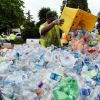
California passes first-in-nation plastics recycling law
In a move aimed at reducing huge amounts of plastic litter in the ocean and on land, California Gov. Gavin Newsom has signed a first-in-the-nation law requiring plastic beverage containers to contain an increasing amount of recycled material.
-
 +13 +1
How did wind power just become America's biggest renewable energy?
In 2019, the United States generated about 4.1 trillion kilowatt hours of electricity. According to new figures from the U.S. Energy Information Administration, here’s a rough breakdown as to where all that power came from: Sixty-three percent is still generated by fossil fuels, such as coal, natural gas and petroleum, while 20 percent is generated by nuclear power plants. Eighteen percent is now generated by renewable resources such as wind, solar and hydroelectric power from dams and other water-generated power plants.
-
 +2 +1
+2 +1Fall in plastic demand could be disastrous for oil companies
The global efforts to tackle plastic waste a leading environmental problem could result in up to $400 billion of stranded petrochemical assets for the oil industry, as the companies are betting on sustained demand for plastics to compensate for declining oil and gas demand.
Submit a link
Start a discussion