




















-
 +22 +3
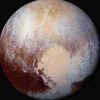
Far beyond Pluto: What's next for NASA's New Horizons probe?
New Horizons is still on duty in extended mission mode, diving ever deeper into the Kuiper Belt to examine ancient, icy mini-worlds in that vast region beyond the orbit of Neptune.
-
 +13 +5
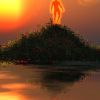
Scientists think they know when a rogue star will ruin the Solar System
IN 1687, Sir Isaac Newton published his magnum opus, Philosophiæ Naturalis Principia Mathematica, which effectively synthesized his theories on motion, velocity, and universal gravitation.
-
 +9 +2
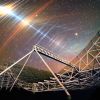
+9 +2Astronomers detect a radio “heartbeat” billions of light-years from Earth
Astronomers detected a persistent radio signal from a far-off galaxy that appears to flash with surprising regularity. Named FRB 20191221A, this fast radio burst, or FRB, is currently the longest-lasting FRB, with the clearest periodic pattern, detected to date.
-
 +25 +3
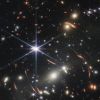
The Webb telescope's first full-color photo is here — and it's stunning
Dubbed “Webb’s First Deep Field,” it is the first full-color image from the $10 billion observatory that launched into space last year.
-
 +19 +1
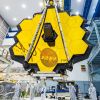
Biden to unveil first photo from James Webb Space Telescope
The image, known as “Webb’s First Deep Field,” will be the deepest and highest-resolution view of the universe ever captured. Biden is scheduled to release it on Monday.
-
 +14 +3
Faster-Than-Light Travel Could Work Within Einstein's Physics, Astrophysicist Shows
For decades, we've dreamed of visiting other star systems. There's just one problem – they're so far away, with conventional spaceflight it would take tens of thousands of years to reach even the closest one.
-
 +7 +2
+7 +2It Would Take About 100 Billion Years for Another Star to Pass Close Enough to Make the Solar System Unstable
A new study by a team of Canadian researchers shows that our Solar System will not experience a close and disruptive stellar flyby for a very long time!
-
 +25 +4
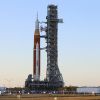
NASA targets late August to early September launch for Artemis 1 Moon mission
NASA has set an aggressive launch for its Artemis 1 Moon mission following the successful June 20th “wet dress rehearsal” fueling test of the SLS rocket that will carry the flight to space
-
 +12 +2
Slow spin of early galaxy observed for the first time
One of the most distant known galaxies, observed in the very earliest years of the Universe, appears to be rotating
-
 +4 +1
+4 +1Billions Behind a Lunar Dream: Why NASA's Mega Moon Rocket May Prove 'Unsustainable'
Commentary: Let's talk about the fiscal footprint of NASA's latest lunar endeavor, Artemis.
-
 +26 +1
New Study Reveals Devastating Effect on Astronaut Bones From Living in Space
Astronauts lose decades' worth of bone mass in space that many do not recover even after a year back on Earth, researchers said Thursday, warning that it could be a "big concern" for future missions to Mars.
-
 +25 +4
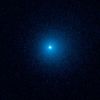
A Comet Nearing Earth Could Be One of the Largest We’ve Ever Seen
Comet C/2017 K2 is expected to be nearest to us on July 14.
-
 +18 +4
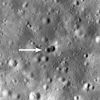
'Mystery rocket' that crashed into the Moon baffles NASA scientists
So far, no space exploring nations have claimed responsibility for the rocket.
-
 +19 +2
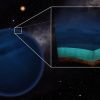
Alien super-Earths may get a habitability boost from hydrogen-rich atmospheres
Alien rocky worlds cocooned in hydrogen and helium could prove habitable to life as we know it for billions of years, with key features such as temperate conditions and liquid water, a new study finds.
-
 +15 +4
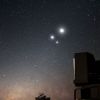
See a rare alignment of all the planets in the night sky
The celestial show, best viewed between June 17 and June 27, will be the last time the five brightest planets cluster in the sky until 2040.
-
 +14 +5
'No need to panic' as sunspot with potential for solar flares doubles in size overnight, scientists say
A sunspot pointing toward Earth has the potential to cause solar flares, but experts told USA TODAY it's far from unusual and eased concerns over how flares would affect the Blue Planet.
-
 +3 +1
+3 +1Why getting hit by space dust is an unavoidable aspect of space travel
NASA’s James Webb Space Telescope got thwacked, and it’ll probably get thwacked again.
-
 +18 +2
Scientists find remains of cannibalized baby planets in Jupiter's cloud-covered belly
The finding settles a long-standing debate about the gas giant's formation.
-
 +3 +1
+3 +1Human trash discovered on Mars — but NASA’s explanation leaves unanswered questions
“NASA’s Perseverance Mars Rover — please tidy up after yourself.”
-
 +18 +1
Astronomers discover a multiplanet system nearby
MIT astronomers discovered a multiplanet system just 33 light-years from Earth, making it one of the closest known multiplanet systems. The system likely hosts at least two terrestrial, Earth-sized planets.
Submit a link
Start a discussion