

















-
 +14 +1
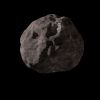
Brand-new mini 'moon' found lurking in the outer solar system
The tiny natural satellite was found orbiting an asteroid.
-
 +6 +2
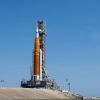
+6 +2NASA's Artemis 1 moon mission is 'go' for Aug. 29 launch
The Artemis 1 mission will use a Space Launch System megarocket to launch an Orion spacecraft to the moon.
-
 +17 +3
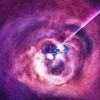
NASA Has Captured ‘Actual Sound’ in Space and It’s Honestly Terrifying
In space, no one can hear you scream—until now.
-
 +11 +1
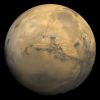
Astronauts could use plasma to make oxygen and fertiliser on Mars
A form of matter called plasma, which contains charged particles, could help break up the Martian atmosphere into more useful components
-
 +28 +3
After 45 years, the 5-billion-year legacy of the Voyager 2 interstellar probe is just beginning
In the void of interstellar space, the most distant emissary of humankind carries a message that will last for billions of years.
-
 +19 +3
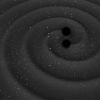
Colliding black holes could clock universe's expansion rate
'Spectral siren' method suggests mergers between massive and compact cosmic objects could help understand how the universe has evolved.
-
 +15 +3
New Evidence Points to the Moon Once Being Part of Earth
Gases trapped in lunar meteorites hint that the moon was formed out of material displaced from Earth after a planetary collision.
-
 +13 +3
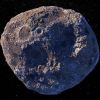
This Metal-Rich, Potato-Shaped Asteroid Could Be Worth $10 Quintillion
In August, NASA is sending an orbiter to the space object, which may be the partial remains of planet-forming material made of nickel and iron
-
 +14 +3
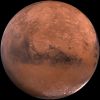
Researchers aim to turn Martian air, dirt and sunlight into iron
A team of researchers, led by Swinburne's Professor Akbar Rhamdhani, has published the first detailed study of its kind on metal production on another planet.
-
 +17 +5
Meet the 9 astronauts on NASA's Artemis team who have a chance to be the first woman to walk on the moon
NASA is aiming for a 2024 moon landing — and this time, it won't just be men making the trip.
-
 +15 +2
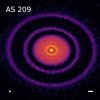
Discovery of new exoplanet raises questions about planet formation
Astronomers have identified one of the youngest exoplanets ever discovered, hidden in the swirl of gas around a newly born star 390 light-years from Earth.
-
 +16 +3
4 hostile alien civilizations may lurk in the Milky Way, a new study suggests
But Earth is 100 times more likely to be destroyed by an asteroid than invaded by aliens.
-
 +14 +4
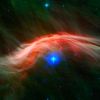
A Fast-Moving Star is Colliding With Interstellar gas, Creating a Spectacular bow Shock
Zeta Ophiuchi has had an interesting life. It began as a typical large star about twenty times more massive than the Sun. It spent its days happily orbiting a large companion star until its companion exploded as a supernova about a million years ago. The explosion ejected Zeta Ophiuchi, so now it is speeding away through interstellar space. Of course, the supernova also expelled the outer layers of the companion star, so rather than empty space...
-
 +13 +2
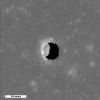
Deep pits on the moon may lead to caves, NASA says. Study uncovers startling detail
H.G. Wells’ book “The First Men in the Moon” depicts alien life in lunar caves.
-
 +14 +1
The James Webb Space Telescope is on the hunt for the universe's 1st-ever supermassive black holes
Even NASA's next-generation space observatory can't manage to see supermassive black holes directly, but that doesn't mean astronomers can't use its data to better understand the mysterious behemoths.
-
 +15 +3
One week later, astronomers find a galaxy even deeper back in time
How many galaxies should we see shortly after the Big Bang?
-
 +23 +2
James Webb Space Telescope discovers candidates for most distant galaxies yet
The two galaxies, if confirmed, existed 300 to 400 million years after the Big Bang.
-
 +15 +2
NASA sets tentative launch dates for debut of its massive new rocket
The timeline could still certainly shift in the coming weeks.
-
 +16 +3
Inside the Universe Machine: The Webb Space Telescope’s Ultra-Reliable Radio
When the James Webb Space Telescope (JWST) reveals its first images on 12 July, they will be the by-product of carefully crafted mirrors and scientific instruments. But all of its data-collecting prowess would be moot without the spacecraft’s communications subsystem. The Webb’s comms aren’t flashy. Rather, the data and communication systems are designed to be incredibly, unquestionably dependable and reliable.
-
 +27 +2
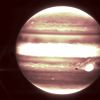
James Webb telescope can take detailed photos of our own solar system's planets and moons | Engadget
NASA has released images of Jupiter taken during James Webb's commissioning period..
Submit a link
Start a discussion