



















-
 +24 +1
Otherworldly 'time crystal' made inside Google quantum computer could change physics forever
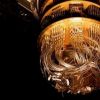
Researchers working in partnership with Google may have just used the tech giant's quantum computer to create a completely new phase of matter — a time crystal. With the ability to forever cycle between two states without ever losing energy, time crystals dodge one of the most important laws of physics — the second law of thermodynamics, which states that the disorder, or entropy, of an isolated system must always increase.
-
 +22 +1
An Ultra-Precise Clock Shows How to Link the Quantum World With Gravity
The infamous twin paradox sends the astronaut Alice on a blazing-fast space voyage. When she returns to reunite with her twin, Bob, she finds that he has aged much faster than she has. It’s a well-known but perplexing result: Time slows if you’re moving fast.
-
 +23 +1
Two Chinese teams claim to have reached primacy with quantum computers
Two teams in China are claiming that they have reached primacy with their individual quantum computers. Both have published the details of their work in the journal Physical Review Letters. In the computer world, quantum primacy is the performance of calculations that are not feasible on conventional computers—others use the term "quantum advantage."
-
 +31 +1
China's New Quantum Computer Has 1 Million Times the Power of Google's
It appears a quantum computer rivalry is growing between the U.S. and China. Physicists in China claim they've constructed two quantum computers with performance speeds that outrival competitors in the U.S., debuting a superconducting machine, in addition to an even speedier one that uses light photons to obtain unprecedented results, according to a recent study published in the peer-reviewed journals Physical Review Letters and Science Bulletin.
-
 +25 +1
IBM Reveals Quantum Computing Leap With 127-Qubit Processor
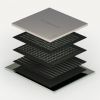
IBM has revealed its latest and most powerful quantum processor, and it represents a key breakthrough in the quantum computing industry. Dubbed Eagle, the 127-qubit processor becomes the first of its kind to deliver more than 100 qubits. To illustrate just how powerful quantum computing systems are, it’s been a requirement until recently that their qubits have to be cooled at temperatures as cold as outer space.
-
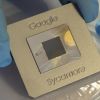 +16 +1
How Much Has Quantum Computing Actually Advanced?
Lately, it seems as though the path to quantum computing has more milestones than there are miles. Judging by headlines, each week holds another big announcement—an advance in qubit size, or another record-breaking investment.
-
 +28 +1
Quantum processor swapped in for a neural network
It's become increasingly clear that quantum computers won't have a single moment when they become clearly superior to classical hardware. Instead, we're likely to see them becoming useful for a narrow set of problems and then gradually expand out from there to an increasing range of computations. The question obviously becomes one of where the utility will be seen first.
-
 +17 +1
Quantum computers near a quantum leap
A new class of powerful computers is on the brink of doing something important: actual useful work.
-
 +14 +1
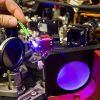
Physicists have coaxed ultracold atoms into an elusive form of quantum matter
An elusive form of matter called a quantum spin liquid isn’t a liquid, and it doesn’t spin — but it sure is quantum. Predicted nearly 50 years ago, quantum spin liquids have long evaded definitive detection in the laboratory. But now, a lattice of ultracold atoms held in place with lasers has shown hallmarks of the long-sought form of matter, researchers report in the Dec. 3 Science.
-
 +32 +1
The US government needs a commercialization strategy for quantum
Quantum computers, sensors and communications networks have the potential to bring about enormous societal and market opportunities — along with an equal amount of disruption. Unfortunately for most of us it takes a Ph.D. in physics to truly understand how quantum technologies work, and luminaries in the field of physics will be the first to admit that even their understanding of quantum mechanics remains incomplete.
-
 +15 +1
Isro conducts breakthrough demonstration of hack-proof quantum communication
In a major step forward towards satellite-based quantum communication, scientists from Ahmedabad-based Space Applications Centre and Physical Research Laboratory successfully demonstrated quantum entanglement. Using real-time Quantum Key Distribution (QKD), they conducted hack-proof communication between two places separated by 300 meters.
-
 +24 +1
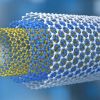
Quantum friction explains strange way water flows through nanotubes
Water flows more easily through narrower carbon nanotubes than larger ones and we have struggled to explain why. Now, one team has an answer: it may all be due to quantum friction.
-
 +20 +1
A New Method for Quantum Computing in Trapped Ions
The researchers work at QuSoft and the Institute of Physics in the groups of Rene Gerritsma and Arghavan Safavi-Naini. The effort, which was led by the PhD candidate Matteo Mazzanti, combines two important ingredients. One is a so-called trapped-ion platform, one of the most promising candidates for quantum computing that makes use of ions – atoms that have either a surplus or a shortage of electrons and as a result are electrically charged. The other is the use of a clever method to control the ions supplied by optical tweezers and oscillating electric fields.
-
 +23 +1
Quantum internet: the second quantum revolution
Quantum teleportation allows information to be transmitted between two linked quantum particles regardless of the distance that separates them. Unlike science fiction teleportation, which sends matter from one point in space to another, quantum teleportation sends information.
-
 +16 +1
Mapping the quantum future with smart TV technology
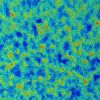
Scientists have created the first ever 2D map of the Overhauser field in organic LEDs, shedding light on the challenges we face in designing accurate quantum-based technologies. Television used to be known as ‘the idiot box’. But the organic LEDs found in modern flat screens are far from stupid. In fact, they’re helping us to draw a map that could unlock the quantum future. No wonder they’re now called smart TVs.
-
 +12 +1
Scientists think quantum tunneling in space led to life on Earth
A team of scientists recently published a paper indicating that life on Earth is the result of what can only accurately be described as cosmic teleportation. Humankind has long sought to penetrate the mystery of how life came to exist on our planet. But what if the only reason we’re here right now is because the universe cheats?
-
 +22 +1
New quantum gravity sensor could someday peel away the surfaces of other worlds
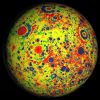
A new quantum gravity sensor may help scientists find features like groundwater under the surface of a planet or moon thanks to subtle marks those features leave in the planet's gravitational field.
-
 +22 +1
Physicists Think They've Finally Cracked Stephen Hawking's Famous Black Hole Paradox
At the heart of every black hole sits a problem. As they sizzle away into nothingness over the eons, they take with them a small piece of the Universe. Which, quite frankly, just isn't in the rule book.
-
 +13 +1
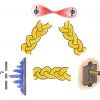
A ‘beyond-quantum’ equivalence principle for superposition and entanglement
The physics of the microrealm involves two famous and bizarre concepts: superposition and entanglement. Both are described mathematically by quantum theory, but many physicists believe that one day quantum theory will need to be replaced by an ultimate theory of reality that lies beyond quantum theory. Now, a team of physicists and mathematicians has discovered a new connection between these two weird properties that does not assume that quantum theory is correct. Their work, partially funded by the Foundational Questions Institute, FQXi, confirms that current quantum cryptographic protocols, which promise ultra-secure un-hackable...
-
 +17 +1
A New Quantum Technique Could Change How We Study The Universe
Astronomy is undergoing a revolution. In fact, you might argue there are a number of them. Exoplanet research has progressed significantly in the last ten years, gravitational wave astronomy has developed as a new area, and the first photographs of supermassive black holes (SMBHs) have been taken.
Submit a link
Start a discussion