



















-
 +13 +1
The universe might have a fundamental clock that ticks very, very fast
A theoretical study could help physicists searching for a theory of quantum gravity.
-
 +2 +1
+2 +1Casimir force used to control and manipulate objects
A collaboration between researchers from the University of Western Australia and the University of California Merced has provided a new way to measure tiny forces and use them to control objects.
-
 +19 +1
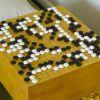
‘Quantum go machine’ plays ancient board game using entangled photons
A quantum-mechanical version of the ancient board game go has been demonstrated experimentally by physicists in China. Using entangled photons, the researchers placed go pieces (called stones) in quantum superpositions to vastly increase the complexity of the game. They foresee the technology serving as the ultimate test for machine players that use ever more sophisticated artificial intelligence (AI).
-
 +4 +1
+4 +1Physicists have ‘braided’ strange quasiparticles called anyons
Physicists have captured their first clear glimpse of the tangled web woven by particles called anyons. The observed effect, known as braiding, is the most striking evidence yet for the existence of anyons — a class of particle that can occur only in two dimensions. When anyons are braided, one anyon is looped around another, altering the anyons’ quantum states. That braiding effect was spotted within a complex layer cake of materials, researchers report in a paper posted June 25 at arXiv.org.
-
 +13 +1
Theorists calculate upper limit for possible quantization of time
A trio of theoretical physicists at the Pennsylvania State University has calculated the upper limit for the possible quantization of time—they suggest 10−33 seconds as the upper limit for the period of a universal oscillator. In their paper published in the journal Physical Review Letters, Garrett Wendel, Luis Martínez and Martin Bojowald outline their theory and suggest a possible way to prove it.
-
 +4 +1
+4 +1This weird quantum state of matter was made in orbit for the first time
On the International Space Station, astronauts are weightless. Atoms are, too. That weightlessness makes it easier to study a weird quantum state of matter known as a Bose-Einstein condensate. Now, the first Bose-Einstein condensates made on the space station are reported in the June 11 Nature.
-
 +18 +1
Physicists exploit a quantum rule to create a new kind of crystal
Cold atoms can form crystals as a result of the Pauli exclusion principle.
-
 +10 +1
The Breakthrough of Quantum Computing with Artificial Intelligence
Major milestones will be achieved through quantum computing that a normal classical computer cannot, claims Sundar Pichai, Alphabet CEO. Speaking at the World Economic Forum (WEF) 2020, Sundar said the world needs to assemble and work under a common regulatory framework for artificial intelligence (AI). As such, to extol the benefits of new technologies.
-
 +7 +1
+7 +1Why we need quantum-resistant cryptography now.
Quantum-resistant or post-quantum cryptography is our best bet against attacks from upcoming quantum computers.
-
 +16 +1
Electrons May Very Well Be Conscious
This month, the cover of New Scientist ran the headline, “Is the Universe Conscious?” Mathematician and physicist Johannes Kleiner, at the Munich Center for Mathematical Philosophy in Germany, told author Michael Brooks that a mathematically precise definition of consciousness could mean that the cosmos is suffused with subjective experience. “This could be the beginning of a scientific revolution,” Kleiner said, referring to research he and others have been conducting.
-
 +4 +1
+4 +1Physicists Just Built The First Working Prototype Of A 'Quantum Radar'
Quantum entanglement – that strange but potentially hugely useful quantum phenomenon where two particles are inextricably linked across space and time – could play a major role in future radar technology.
-
 +15 +1
The quantum computer is about to change the world. Three Israelis are leading the revolution
The Israeli startup QM is the first company in the world to be building both the hardware and the software that will make it possible to use quantum computers – once they actually are a practical reality
-
 +3 +1
+3 +1Gravitational wave echoes may confirm Stephen Hawking's hypothesis of quantum black holes
Echoes in gravitational wave signals suggest that the event horizon of a black hole may be more complicated than scientists currently think. Research from the University of Waterloo reports the first tentative detection of these echoes, caused by a microscopic quantum "fuzz" that surrounds newly formed black holes.
-
 +16 +1
Researchers find a platform for stable quantum computing
Harvard researchers have demonstrated the first material that can have both strongly correlated electron interactions and topological properties. The discovery both paves the way for more stable quantum computing and creates an entirely new platform to explore exotic physics.
-
 +13 +1
Is This What Quantum Mechanics Looks Like?
-
 +22 +1
Researchers reach milestone in quantum standardization
Researchers at the University of Waterloo have developed a method that could pave the way to establishing universal standards for measuring the performance of quantum computers. The new method, called cycle benchmarking, allows researchers to assess the potential of scalability and to compare one quantum platform against another.
-
 +22 +1
A.I.'s are helping design new molecules using quantum chemistry
In the fast-paced, complicated world of quantum chemistry, A.I.’s are used to help chemists calculate important chemical properties and make predictions about experimental outcomes. But, in order to do this accurately, these A.I. need to have a pretty strong understanding of the fundamental rules of quantum mechanics, and researchers of a new interdisciplinary study on the topic say these quantum predictions have been lacking for some time. A new machine learning framework could be the answer.
-
 +13 +1
Physicists Detect Strange Electron Pairs Acting as a Brand New State of Matter
Under the right circumstances, individual electrons can form partnerships that allow them to zip effortlessly through special materials called superconductors - letting them conduct electrical current without resistance.
-
 +4 +1
+4 +1New Quantum Physics Experiment Suggests Objective Reality Doesn't Exist
Alternative facts are spreading like a virus across society. Now it seems they have even infected science – at least the quantum realm.
-
 +23 +1
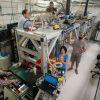
Quantum computing’s ‘Hello World’ moment
Does quantum computing really exist? It’s fitting that for decades this field has been haunted by the fundamental uncertainty of whether it would, eventually, prove to be a wild goose chase. But Google has collapsed this nagging superposition with research not just demonstrating what’s called “quantum supremacy,” but more importantly showing that this also is only the very beginning of what quantum computers will eventually be capable of.
Submit a link
Start a discussion