


















-
 +27 +4
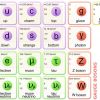
An upset to the standard model
Over the past 60 years, the standard model (SM) has established itself as the most successful theory of matter and fundamental interactions—to date.
-
 +22 +5
Physicists Think They've Finally Cracked Stephen Hawking's Famous Black Hole Paradox
At the heart of every black hole sits a problem. As they sizzle away into nothingness over the eons, they take with them a small piece of the Universe. Which, quite frankly, just isn't in the rule book.
-
 +17 +1
Scientists believe there could be an ‘anti-universe’ next to ours
A wild theory suggests there may be an "anti-universe" that runs backwards in time before the Big Bang. The concept, explained in a paper accepted for publication in the journal Annals of Physics, suggests that the reason for this universe is because there are fundamental symmetries in nature – such as charge, parity, and time. This fundamental symmetry is known as CPT symmetry.
-
 +26 +4
Sensor breakthrough paves way for groundbreaking map of world under Earth surface
An object hidden below ground has been located using quantum technology—a long-awaited milestone with profound implications for industry, human knowledge and national security.
-
 +13 +3
What happened before the Big Bang?
In the beginning, there was an infinitely dense, tiny ball of matter. Then, it all went bang, giving rise to the atoms, molecules, stars and galaxies we see today. Or at least, that's what we've been told by physicists for the past several decades.
-
 +17 +3
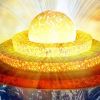
Earth's core is neither solid iron, nor liquid. It's a whole lot weirder
We've known for a while that Earth's deepest depths, its "solid iron" inner core, isn't made of pure iron — and now scientists say it might not be solid either.
-
 +24 +2
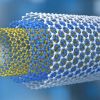
Quantum friction explains strange way water flows through nanotubes
Water flows more easily through narrower carbon nanotubes than larger ones and we have struggled to explain why. Now, one team has an answer: it may all be due to quantum friction.
-
 +4 +1
+4 +1Scientists Say the Universe Itself May Be "Pixelated"
Here’s a brain teaser for you: scientists are suggesting spacetime may be made out of individual “spacetime pixels,” instead of being smooth and continuous like it seems. Rana Adhikari, a professor of physics at Caltech, suggested in a new press blurb that these pixels would be “so small that if you were to enlarge things so that it becomes the size of a grain of sand, then atoms would be as large as galaxies.”
-
 +17 +3
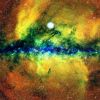
The Year in Physics
Puzzling particles, quirky (and controversial) quantum computers, and one of the most ambitious science experiments in history marked the year’s milestones.
-
 +14 +2
In the quantum realm, not even time flows as you might expect
A team of physicists at the Universities of Bristol, Vienna, the Balearic Islands and the Institute for Quantum Optics and Quantum Information (IQOQI-Vienna) has shown how quantum systems can simultaneously evolve along two opposite time arrows—both forward and backward in time.
-
 +18 +3
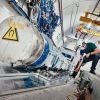
Physicists detect signs of neutrinos at Large Hadron Collider
The international Forward Search Experiment team, led by physicists at the University of California, Irvine, has achieved the first-ever detection of neutrino candidates produced by the Large Hadron Collider at the CERN facility near Geneva, Switzerland.
-
 +18 +2
Physicist who found a way to trap light wins $1M science prize
Sajeev John, a scientist who developed a way to confine and control light, similar to the way electrons are confined and controlled in electronics, has been awarded Canada's top science prize, the $1-million Herzberg Gold Medal.
-
 +2 +1
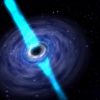
+2 +1Where does gold come from?—New insights into element synthesis in the universe
How are chemical elements produced in our Universe? Where do heavy elements like gold and uranium come from? Using computer simulations, a research team from the GSI Helmholtzzentrum für Schwerionenforschung in Darmstadt, together with colleagues from Belgium and Japan, shows that the synthesis of heavy elements is typical for certain black holes with orbiting matter accumulations, so-called accretion disks.
-
 +22 +3
An Ultra-Precise Clock Shows How to Link the Quantum World With Gravity
The infamous twin paradox sends the astronaut Alice on a blazing-fast space voyage. When she returns to reunite with her twin, Bob, she finds that he has aged much faster than she has. It’s a well-known but perplexing result: Time slows if you’re moving fast.
-
 +18 +3
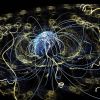
Unifying models of chorus wave frequency chirping
Whistler mode chorus waves are electromagnetic emissions common in planetary magnetospheres. Among other impacts, their scattering of magnetospheric electrons is one driver for the formation of auroras. An important attribute of these waves is frequency chirping, in which the frequency of the emission rises or falls nearly monotonically with time.
-
 +4 +1
+4 +1Nobel physics prize goes to 3 for climate discoveries
STOCKHOLM — The Nobel Prize for physics has been awarded to scientists from Japan, Germany and Italy.
-
 +10 +2
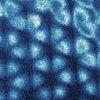
This is what a solid made of electrons looks like
Physicists have imaged elusive ‘Wigner crystals’ for the first time.
-
 +23 +3
1st 'atom tornado' created from swirling vortex of helium atoms
Not much is known about the vortex beams’ properties at the moment, but scientists plan to learn more by crashing them into other particles.
-
 +14 +4
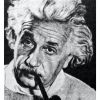
Einstein said light can create matter 106 years ago. Physicists just proved it
IN 1905 ALBERT EINSTEIN wrote four groundbreaking papers on quantum theory and relativity. One was on Brownian motion, one earned him the Nobel Prize in 1921, and one outlined the foundations of special relativity. It became known as Einstein’s annus mirabilis or wonderous year.
-
 +20 +3
Why the foundations of physics have not progressed for 40 years
In the foundations of physics, we have not seen progress since the mid 1970s when the standard model of particle physics was completed. Ever since then, the theories we use to describe observations have remained unchanged. Sure, some aspects of these theories have only been experimentally confirmed later.
Submit a link
Start a discussion