

















-
 +10 +2
Far right, misogynist, humourless? Why Nietzsche is misunderstood
The German philosopher has been adopted by the alt-right, but he hated antisemitism. He has been misappropriated and misread, argues his biographer. Friedrich Nietzsche, Karl Marx and Charles Darwin are the great triumvirate of 19th-century thinkers whose ideas still have huge impact today. Nietzsche was philosophy’s supreme iconoclast; his sayings include “God is dead” and “There are no facts, only interpretations”. Highly relevant, yet his association with concepts such as the Übermensch, master morality, slave morality and, possibly most dangerous, the will to power, have also contributed to him being widely misinterpreted.
-
 +25 +3
Yuval Noah Harari: the myth of freedom
Governments and corporations will soon know you better than you know yourself. Belief in the idea of freedom has become dangerous
-
 +21 +7
How fascism works
“Fascism” is a word that gets tossed around pretty loosely these days, usually as an epithet to discredit someone else’s politics. One consequence is that no one really knows what the term means anymore. Liberals see fascism as the culmination of conservative thinking: an authoritarian, nationalist, and racist system of government organized around corporate power. For conservatives, fascism is totalitarianism masquerading as the nanny state.
-
 +28 +2
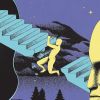
How to Live Better, According to Nietzsche
John Kaag’s fascinating new book about the German thinker seeks to tether philosophy back to the mess of daily experience.
-
 +24 +5
Veganism, abortion, & our tragic lack of moral empathy
Consider two familiar moments at a family reunion. Our host, Uncle Bill, is taking pride in his barbequing skills. But his niece Becky says that she now refuses to eat meat. A groan goes round the table; the family mostly think of this as an annoying picky preference. But if it were viewed as a moral position rather than personal preference – as they might if instead Becky were avoiding meat on religious grounds – it would usually receive a very different reaction.
-
 +11 +1
The limits of reason: Philip Pullman on why we believe in magic
The world of magic defies rational explanation, but beware dismissing it as nonsense. Like religious experience and poetry, it is a crucial aspect of being human, writes the Dark Materials author
-
 +7 +2
+7 +2Why The Mind Is Not the Brain
Let’s start with the title of your latest book. Why is the mind not the brain? The shortest argument goes something like this: there’s what philosophers call a mereological fallacy. Mereology is the discipline which studies the relation between wholes and parts. So imagine someone tells you that David Beckham didn’t score a goal, it was his foot. That would be an odd thing to say because Beckham couldn’t shoot for the goal without his foot, but it was the whole beast, so to speak, which shot the goal.
-
 +15 +2
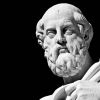
Plato’s Theory of Justice
Plato’stheory of justice quite different from and contrary to the justice as we understand it in constitutional-legal terms, can be precisely summed in following two quotes from the Republic: “Justice is having and doing what is one’s own”and “A just man is a man just in the right place doing his best and giving full equivalent of what he receives”.
-
 +7 +1
+7 +1Materialism vs. Supernaturalism? “Scientific Naturalism” in Context
Huxley’s notion of ‘supernaturalism’ as the anti-figure to his agnostic ‘scientific naturalism’ was a mix of certain theological and popular notions of revelation as infallible divine inspiration on the one hand, and miracles as phenomena that constituted violations of natural law by gods and other ‘supernatural’ beings on the other. By Andreas Sommer.
-
 +19 +3
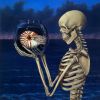
Maximum Alienness
What might make life hard to recognize as life? By Caleb A. Scharf.
-
 +18 +2
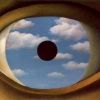
Do you suffer from climate guilt? A dose of philosophy can help
A philosopher's thoughts on how an individual can overcome the feeling of helplessness in the face of global climate change. People cannot engage in something they cannot see or feel. We need concrete reasons to care and act. In this way, climate change presents a threefold intangible challenge:
-
 +19 +2
On the Remembrance of Death
Death is perhaps one of the most terrifying concepts a human being can grapple with... By Mustapha Itani.
-
 +20 +2
5 ways to improve your critical thinking
Critical thinking is essential for us to successfully adapt to both new information and situations so what is it and how can we do it better?
-
 +14 +4
Attending to Attentiveness: Why Teaching Philosophy Should Be at the Core of Education
First of all, I will distinguish between doing philosophy and teaching philosophy. If I ask you a question like ‘Should you do or be good?’ or ‘Are you in control of your life?’ I am inviting you to think about a philosophical question. If you do so, in a suitably philosophical spirit, then you are doing philosophy, whether you know it or not. If I explain to you what philosophers have said about these questions over the years or even explain and attempt to transfer to you the methods philosophers have used to answer such questions...
-
 +19 +3
To Be, Or Not to Be: On Whether Animals Can Commit Suicide
Can animals reflect on, and reject, their conditions of existence? The philosopher Owen Flanagan has pointed out that when Hamlet poses the question that has become the single most powerful query of all English literature, “he is, of course, contemplating suicide.
-
 +27 +3
Physics Needs Philosophy / Philosophy Needs Physics
Philosophy has always played an essential role in the development of science, physics in particular, and is likely to continue to do so. By Carlo Rovelli.
-
 +2 +1
+2 +1Lovers of Wisdom
Diogenes Laertius compiled the sole extant work from antiquity that gives anything like a comprehensive picture of Greek and Hellenistic philosophy. He may have been a flaming mediocrity. He may have been credulous and intellectually shallow. He may have produced a scissors-and-paste job cribbed from other ancient sources. But those other sources are lost, which makes what Diogenes Laertius left behind, to quote the Routledge Encyclopedia of Philosophy, “truly priceless.” By Jim Holt.
-
 +2 +1
+2 +1"You're Going to Die!" Sticks Your Head In The Lion's Mouth - De'Lunula
"You're Going to Die!" has been a staple of our Screeners series. It's also a film that got under the skin of one of our writers. Here's his take on why this five minute short is more powerful than most two-hour movies.
-
 +15 +4
Friedrich Nietzsche: The truth is terrible
Brian Leiter examines Friedrich Nietzsche's views on what makes life worth living.
-
 +12 +3
Life on the slippery Earth
Aztec moral philosophy has profound differences from the Greek tradition, not least its acceptance that nobody is perfect. By Sebastian Purcell.
Submit a link
Start a discussion