


















-
 +17 +1
Childhood lead exposure reduced IQ scores for half of Americans, study says
Exposure to car exhaust from leaded gas slashed hundreds of millions of collective IQ points from about half of the Americans alive today, a new study reports.
-
 +12 +1
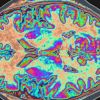
Extensive study finds small drop in brain volume after COVID-19
Infection by SARS-CoV-2 causes a dizzying array of symptoms beyond the respiratory distress that is its most notable feature. These range from intestinal distress to blood clots to the loss of smell, and symptoms vary wildly from person to person.
-
 +9 +1
+9 +1The Neurobiology of Suicide
Research points to specific circuits for active vs. passive suicidal thoughts.
-
 +21 +1
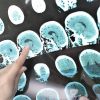
First-ever scan of a dying human brain reveals life may actually 'flash before your eyes'
The accidental finding was made when a man suddenly died during a routine brain scan.
-
 +14 +1
Brains of cosmonauts get ‘rewired’ to adapt to long-term space missions, study finds
Our brain can change and adapt in structure and function throughout our lives. As human exploration of space reaches new horizons, understanding the effects of spaceflight on human brains is crucial. Previous research has shown that spaceflight has the potential to alter both the shape and function of an adult brain.
-
 +26 +1
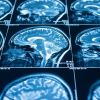
Do our lives flash before our eyes when we die? A new study thinks so
Scientists unintentionally recorded the brain activity of a dying 87 year-old man providing an insight into what happens to our brain when we die. The elderly man was admitted to hospital after a fall and developed epilepsy. Dr Raul Vicente of the University of Tartu, Estonia and his colleagues used continuous electroencephalography (EEG) to detect the seizures and treat the patient.
-
 +18 +1
First-ever recording of dying human brain reveals dreaming-like activity
“My whole life flashed before my eyes” is a phrase we often hear regarding near-death experiences – and there just might be some truth to it. Scientists have recorded the activity of a dying human brain for the first time ever, revealing brain wave patterns related to processes like dreaming and memory recall.
-
 +5 +1
+5 +1Cosmonaut brains are 'rewired' by space missions, scientists find
Our brains change as we age and grow here on Earth. But what happens to the human brain after being in space for a long time?
-
 +25 +1
Notes apps are where ideas go to die. And that’s good.
Insurance for your mind.
-
 +15 +1
Everything we see is a mash-up of the brain's last 15 seconds of visual information
The brain is basically a time machine that ensures what we see is stable and continuous
-
 +12 +1
Elon Musk's Neuralink plans to implant chips in human brains to treat neural disorders
Elon Musk's Neuralink has begun recruiting for a clinical trial director, bringing it one step closer to connecting the human mind to computers
-
 +23 +1
Is Musk’s brain implant company moving closer to human trials?
Elon Musk’s brain implant company Neuralink is now hiring a clinical trial director, an indication that the company’s longstanding goal of implanting chips in human brains is coming closer.
-
 +11 +1
Brain Imaging Predicts Incidence of PTSD
Until now, why posttraumatic stress disorder (PTSD) develops in some and not others following a physical and/ or psychological trauma has remained unknown. Now, however, researchers from the University of California have identified regions in the brain that, depending on their volume, predict an increased risk of developing PTSD three months after brain injury.
-
 +4 +1
+4 +1Disembodied Human Brain Cells Are Learning Pong Faster Than AI
Researchers have placed networks of neurons into dishes, placed them into what amounts to a simple version of The Matrix, and found they can learn Pong faster than an AI. As reported by New Scientist, researchers at Cortical Labs explained that they've grown groups of human neurons into organoid mini-brains (a process also being used to attach Neanderthal brain cells to crab robots) and placed on micro-electrode interfaces. Those interfaces pulse with electricity, used to effectively convince the mini-brains that they are the paddles inside a game of single-player Pong.
-
 +17 +1
Are Rocket Scientists and Brain Surgeons Really Smarter Than Everyone Else?
Despite the commonly used phrases “It’s not rocket science” and “It’s not brain surgery” the findings show that both aerospace engineers and neurosurgeons have similar levels of intelligence to those in the general population. As such, the researchers say that both specialties might be unnecessarily put on a pedestal, and that phrases unrelated to careers such as “It’s a walk in the park” might be more appropriate.
-
 +18 +1
A Common Infection Could Be a Trigger For Multiple Sclerosis, Large Study Finds
For most of the time since the first description of multiple sclerosis (MS) in 1868, the causes of this disabling disease have remained uncertain. Genes have been identified as important, which is why having other family members with MS is associated
-
 +12 +1
A ‘Pacemaker for the Brain’: No Treatment Helped Her Depression — Until This
It’s the first study of individualized brain stimulation to treat severe depression. Sarah’s case raises the possibility the method may help people who don’t respond to other therapies.
-
 +23 +1
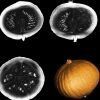
World’s most powerful MRI scanner delivers its first images
The world’s most powerful MRI scanner, which could have profound implications in diagnosing neurological diseases, has delivered its first images - of a pumpkin. Called "Iseult," the machine is the fruit of more than 20 years of research and partnership between the French Atomic Energy Commission (CEA) and German manufacturer Siemens-Healthineers.
-
 +19 +1
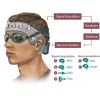
Brain-cleaning sleeping cap gets US Army funding
Everybody knows sleep is important, but there's still a lot we don't understand about what it actually does to the brain – and how its benefits could be boosted.
-
 +23 +1
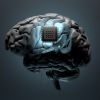
Brain Implants Will Arrive Sooner Than You Think. What Does That Mean?
Picture this: It’s June 11, 2046 and a young designer, Vance, wakes up and puts on an earpiece called Eva. The device, a brain-computer interface (BCI) of the future, decodes neural signals in his brain. Using only his thoughts, he asks the device to report his daily notifications and 13 new “thought messages” appear on his phone.
Submit a link
Start a discussion