


















-
 +20 +1
Real-time tracking of serotonin, dopamine opens new window to the brain
Dopamine and serotonin are brain chemicals implicated in a range of neurological disorders including Parkinson’s and depression, so understanding how they work could be key to the development of more effective treatments for these conditions.
-
 +3 +1
+3 +1We Learn Faster When We Aren’t Told What Choices to Make
The way we decide may even give insight into delusional thinking
-
 +20 +1
New Brain-Computer Interface Transforms Thoughts to Images
Achieving the next level of brain-computer interface (BCI) advancement, researchers at the University of Helsinki used artificial intelligence (AI) to create a system that uses signals from the brain to generate novel images of what the user is thinking and published the results earlier this month in Scientific Reports.
-
 +28 +1
This Company Wants to Help Your Boss Monitor Your Brainwaves at Work
Critics doubt that Emotiv's earphone-style sensors can reliably track things like stress and attention—and some worry the technology will become yet another form of workplace surveillance.
-
 +17 +1
Children Who Play Video Games Are Better at Working Memory Tasks, Says Study
A new study reveals how video games can influence cognitive changes even after years of not playing them.
-
 +18 +1
UCLA-led team of scientists discovers why we need sleep
Prolonged sleep deprivation can lead to severe health problems in humans and other animals. But why is sleep so vital to our health? A UCLA-led team of scientists has made a major advance in answering this question and has shown for the first time that a dramatic change in the purpose of sleep occurs at the age of about 2-and-a-half.
-
 +4 +1
+4 +1How the brain creates the experience of time — study
Researchers get closer to pinning down the neural basis of time, explaining why time flies and crawls in response to various events.
-
 +14 +1
Poor sleep may predict Alzheimer’s onset years before symptoms appear
A robust new study from researchers at UC Berkeley has found a consistent association between poor sleep and greater accumulation of the toxic proteins thought to be the pathological cause of Alzheimer’s disease. The researchers suggest fragmented sleep could be an effective early way to predict…
-
 +3 +1
+3 +1Why ‘one day at a time’ works for recovering alcoholics
A new brain imaging study by Yale researchers sheds light on why — and how — some people who struggle with alcohol use disorder relapse and others do not.
-
 +15 +1
Consciousness is neither a spooky mystery nor an illusory belief
These days it is highly fashionable to label consciousness an ‘illusion’. This in turn fosters the impression, especially among the general public, that the way we normally think of our mental life has been shown by science to be drastically mistaken. While this is true in a very specific and technical sense, consciousness remains arguably the most distinctive evolved feature of humanity, enabling us not only to experience the world, like other animal species do, but to deliberately reflect on our experiences and to change the course of our lives accordingly.
-
 +11 +1
Material found by scientists 'could merge AI with human brain'
Technology could enable new health diagnostics and achieve Elon Musk's goal of integrating with artificial intelligence
-
 +12 +1
The (neuro)science of getting and staying motivated
There is no question that motivation is one of the hardest and yet important factors in life. It’s the difference between success and failure, goal-setting and aimlessness, well-being and unhappiness. And yet, why is it so hard to get motivated – or even if we do, to keep it up?
-
 +12 +1
Scientists Found No Difference in Men and Women's Brains After 100 Years of Searching
American physician Samuel George Morton poured seeds and lead shot into human skulls in an attempt to measure their volumes in the 19th century. Ever since then, humans have become curious about the differences between their brains.
-
 +21 +1
The brain’s response to alcohol varies based on individual preferences
The brain's response to alcohol varies based on individual preferences, according to research published Monday in "eNeuro."
-
 +27 +1
Breakthrough: Scientists Discover New Antibodies That Can Fight Toxic Particles Causing Alzheimer's Disease
This discovery is a potential advance in the fight against Alzheimer’s disease.
-
 +4 +1
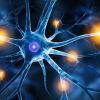
+4 +1Scientists find brain center that 'profoundly' shuts down pain
A research team has found a small area of the brain in mice that can profoundly control the animals' sense of pain. Somewhat unexpectedly, this brain center turns pain off, not on. It's located in an area where few people would have thought to look for an anti-pain center, the amygdala, which is often considered the home of negative emotions and responses, like the fight or flight response and general anxiety.
-
 +20 +1
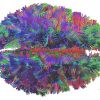
The hidden links between mental disorders
Psychiatrists have a dizzying array of diagnoses and not enough treatments. Hunting for the hidden biology underlying mental disorders could help.
-
 +27 +1
Why time seems to speed up as we get older
Ever wondered where the last year of your life went? Neuroscientist David Eagleman sheds some light on the time-bending power of your brain.
-
 +17 +1
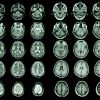
A Brain Implant Restored This Man's Motion and Sense of Touch
After his accident, Ian Burkhart didn’t think he’d ever be able to move or feel his hand again. A small chip in his brain changed everything.
-
 +15 +1
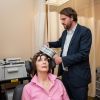
Stanford researchers devise treatment that relieved depression in 90% of participants in small study
Stanford Medicine researchers used high doses of magnetic stimulation, delivered on an accelerated timeline and targeted to individual neurocircuitry, to treat patients with severe depression.
Submit a link
Start a discussion