





















-
 +28 +6
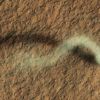
NASA's Perseverance rover captures first-ever sound of dust devil on Mars: "Definitely luck"
What's a dust devil sound like on Mars? A NASA rover by chance had its microphone on when a whirling tower of red dust passed directly overhead, recording the racket. It's about 10 seconds of not only rumbling gusts of up to 25 mph, but the pinging of hundreds of dust particles against the rover Perseverance. Scientists released the first-of-its-kind audio Tuesday.
-
 +17 +5
NASA's retired flying telescope heads to museum
It's not off to the scrapyard quite yet for the historic aircraft that carried NASA's flying telescope. On Sept. 29, NASA and the German Space Agency (DLR) retired their joint Stratospheric Observatory for Infrared Astronomy (SOFIA) aircraft, a modified Boeing 747SP that lofted a 106-inch (2.7-meter) reflective telescope on overnight flights.
-
 +15 +1
With one snapshot, Apollo 17 transformed our vision of Earth forever
Fifty years ago, an astronaut on the Apollo 17 mission snapped a pic of the Earth in its entirety. Space photography hasn't been the same.
-
 +8 +1
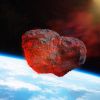
+8 +1An asteroid large enough to destroy life on Earth was found hiding near Venus
The area between Venus and Earth is hard to observe because of the Sun's glare. This newly-observed space rock took astronomers by surprise
-
 +16 +5
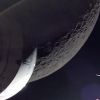
NASA's Orion spacecraft offers last breathtaking views of the moon as it begins journey home
NASA's Orion spacecraft zoomed behind the moon once more, providing stunning views again of Earth and our planetary neighbor, before firing up its engines Monday to set it on course for Earth in the final stages of the Artemis 1 mission.
-
 +3 +1
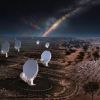
+3 +1This radio telescope will be able to detect a phone in the pocket of an astronaut on Mars
The SKA observatory will be located in two different deserts and will have immense sensitivity. It will bring a new look at the cosmic dawn and many astronomical phenomena. This project started in the 1990s.
-
 +3 +1
+3 +1NASA's Orion capsule makes its closest approach to moon
The uncrewed Orion capsule of NASA's Artemis I mission sailed within 80 miles (130 km) of the lunar surface on Monday, achieving the closest approach to the moon for a spacecraft built to carry humans since Apollo 17 flew half a century ago.
-
 +27 +3
We saw a black hole rip apart a star 8.5 billion light-years away
A black hole engulfing a star has been identified as 8.5 billion light-years from Earth. This is the most distant detection of this type of cataclysmic event. Stars that roam too close to black holes are very reckless. They usually end up torn apart by the extreme gravity of black holes, which readily gobble up this material. We have just detected the most distant of these events, announces the European Southern Observatory (ESO) on November 30, 2022. The detection is detailed in the journal Nature.
-
 +23 +4
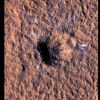
NASA images show a meteor crashed into Mars, triggered a big quake, and kicked up surprise water ice
NASA's InSight lander detected an unusual quake on Mars. Then the Mars Reconnaissance Orbiter spotted a fresh impact crater.
-
 +12 +2
New computer simulation shows a titanic collision could have formed our moon in hours
Scientists have been struggling for decades to answer a question an inquisitive child might ask: Where did the moon come from? Now, the most high resolution computer simulation ever made shows it could have been formed in a matter of hours following a collision between a proto-Earth and a Mars-sized orbital intruder.
-
 +4 +1
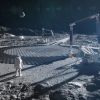
+4 +1Building on the moon: NASA awards Texas company $57 million for lunar construction system
A nascent off-Earth construction system just got a big funding boost. NASA has awarded the Texas-based company ICON $57.2 million for its Project Olympus, which is working to develop technology that will allow humanity to build outposts on the moon and Mars using locally available dirt and rock.
-
 +15 +5
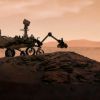
NASA discovery reveals there may have been life on Mars
Caroline Smith, who works at the Natural History Museum, discusses a new discovery made by a NASA rover that may provide evidence of past life on Mars.
-
 +22 +2
SpaceX to launch tomato seeds, other supplies to International Space Station after weather delay
SpaceX will once again try to get a fresh haul of supplies to the International Space Station this weekend after bad weather at the launch site forced the company to wave off its first attempt.
-
 +15 +1
Coming to a moon near you: humans, traffic, and trash
The first mission in NASA’s Artemis program finally took the Orion spacecraft on a trip around the moon, a huge step forward for the ambitious plan to bring humans to the lunar surface as soon as 2025. It’s also the beginning of the White House’s far-reaching ambitions for a permanent outpost on the moon.
-
 +16 +5
NASA releases new close-up images of the moon from Orion spacecraft
NASA has released new close-up images of the far side of the moon, taken from the uncrewed Orion spacecraft.
-
 +14 +2
The coming Moon economy
NASA's successful Moon rocket launch last week will be a boon for private companies, experts tell Axios. Why it matters: As global economic growth slows, space and Moon exploration could become a source of ignition for new ventures and jobs.
-
 +4 +1
+4 +1Japan Will Send an Astronaut to the Upcoming Lunar Space Station
NASA signed an arrangement with the Japanese government that extends Japan’s presence on the International Space Station (ISS) until 2030, in addition to contributing components for a future lunar outpost.
-
 +20 +3
NASA Study: Rising Sea Level Could Exceed Estimates for U.S. Coasts
By 2050, sea level along contiguous U.S. coastlines could rise as much as 12 inches (30 centimeters) above today’s waterline, according to researchers who analyzed nearly three decades of satellite observations. The results from the NASA Sea Level Change Team could help refine near-term projections for coastal communities that are bracing for increases in both catastrophic and nuisance flooding in coming years.
-
 +23 +2
Liftoff! NASA launches mega Moon rocket, ushering new era of exploration
NASA launched the most powerful rocket ever built on a journey to the Moon on Wednesday, in a spectacular blaze of light and sound that marked the start of the space agency's new flagship program, Artemis.
-
 +15 +4
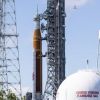
Nasa’s rocket launch to the moon next week aims to close 50-year-long gap
Fifty years ago this month, mission managers at the US space agency Nasa gave the final go-ahead for what would turn out to be humanity’s most recent odyssey to the moon. Few realized at the time it would be more than half a century before Nasa would be ready to return, not least Apollo 17 commander Eugene Cernan, whose belief as he stepped back into the lunar module in December 1972 was that it would be “not too long into the future” that astronauts were there again.
Submit a link
Start a discussion