



















-
 +15 +1
Saudi Arabia plans to spend $1 billion a year discovering treatments to slow aging
The oil kingdom fears that its population is aging at an accelerated rate and hopes to test drugs to reverse the problem. First up might be the diabetes drug metformin.
-
 +15 +1
CBD blunts the negative impact of THC on the brain, according to new neuroimaging research
Cannabidiol (CBD) and delta-9-tetrahydrocannabinol (THC) are the two most prominent psychoactive substances found in the cannabis plant. According to data from two placebo-controlled, double-blind studies, CBD appears to buffer against some of the acute effects of THC on the brain. The new findings, which appear in the Journal of Psychopharmacology, suggest that cannabis strains with greater CBD content may be less harmful.
-
 +22 +4
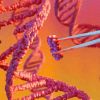
Doctors Gene-Edit Patient's Liver to Make Less Cholesterol
A team of researchers from US biotech company Verve Therapeutics have injected a gene-editing serum into a live patient's liver with the goal of lowering their cholesterol, a watershed moment in the history of gene editing that could potentially save millions from cardiovascular disease and heart attacks, MIT Technology Review reports.
-
 +17 +5
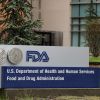
FDA to review first ever over-the-counter birth control pill
Perrigo Company (PRGO.N) said on Monday its unit HRA Pharma has asked the U.S. Food and Drug Administration (FDA) to approve a daily birth control pill for over-the-counter (OTC) sale, the first such request for this type of contraception. The application from the HRA comes on the back of the U.S. Supreme Court's decision in June to overturn the 1973 Roe v. Wade case that legalized abortion nationwide.
-
 +15 +4
England’s health service will use drones to deliver vital chemotherapy drugs
The UK’s National Health Service has announced that it will test delivering vital chemotherapy drugs via drone to the Isle of Wight. The body has partnered with Apian, a drone technology startup founded by former NHS doctors and former Google employees. Test flights are due to begin shortly, and it’s hoped that the system will reduce journey times for the drugs, cut costs and enable cancer patients to receive treatment far more locally.
-
 +24 +2
Placebo Power: Patients Still Feel Relief Even When They Know They are Taking Placebos
You don’t think you’re hungry, then a friend mentions how hungry he is or you smell some freshly baked pizza and whoaaa, you suddenly feel really hungry. Or, you’ve had surgery and need a bit of morphine for pain. As soon as you hit that button you feel relief even though the medicine hasn’t even hit your bloodstream.
-
 +15 +3
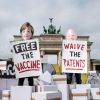
Too Little, Too Late, WTO Finally Eases Patent Rights On COVID Vaccines
In what definitely feels like a case of way too little, way too late, the WTO last week finally decided to grant the TRIPS waiver on COVID vaccines, allowing others to make more of the vaccine with…
-
 +15 +3
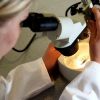
Netflix-style algorithm could help guide cancer treatments, study suggests
It is hoped that one day doctors will be able to look at a patient’s fully sequenced tumour and offer more personalised cancer treatment.
-
 +15 +4
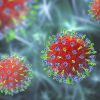
Good news on blocking a virus considered a global threat
Scientists have reported good news on the pandemic preparedness front: A cocktail of four manufactured antibodies is effective at neutralizing a virus from the Henipavirus family, a group of pathogens considered to be a global biosecurity threat.
-
 +21 +2
This experimental drug could change the field of cancer research
A tiny group of people with rectal cancer just experienced something of a scientific miracle: their cancer simply vanished after an experimental treatment. In a very small trial done by doctors at New York's Memorial Sloan Kettering Cancer Center, patients took a drug called dostarlimab for six months. The trial resulted in every single one of their tumors disappearing. The trial group included just 18 people, and there's still more to be learned about how the treatment worked. But some scientists say these kinds of results have never been seen in the history of cancer research.
-
 +22 +7
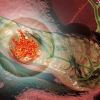
Individualised mRNA vaccine shows promise in pancreatic cancer patients
Phase I study shows that mRNA-based vaccines can be used to stimulate T cells to recognise neoantigens in pancreatic cancer patients.
-
 +25 +4
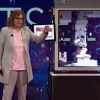
Can we grow a personalized human heart?
Dr. Doris Taylor, who directed regenerative medicine research at Texas Heart Institute in Houston until 2020, shows off groundbreaking technology in which she took a ghost-like shell of a pig's heart, and infused it with beating human stem cells. Her talk took place on stage at the 2022 Life Itself conference, a health and wellness event presented in partnership with CNN.
-
 +14 +2
Why it took 35 years to develop the first malaria vaccine
When the World Health Organization approved a malaria vaccine for the first time in October 2021, it was widely hailed as a milestone. “This is a historic moment,” said WHO director-general Tedros Adhanom Ghebreyesus in a statement that month. The vaccine—dubbed RTS,S—promises a 30 percent reduction in severe malaria in fully vaccinated children.
-
 +14 +2
58% of MS Patients on Aubagio Show No Disease Activity After 2 years
-
 +9 +3
+9 +3"First Time In History": Cancer Vanishes For Every Patient In Drug Trial
A small group of people with rectal cancer just experienced something of a miracle as their cancer simply vanished after an experimental treatment.
-
 +12 +3
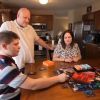
Diabetes drug helps patients lose never-before-seen amounts of weight, study shows
A drug approved to treat Type 2 diabetes is extremely effective at reducing obesity, according to a new study. The drug, called tirzepatide, works on two naturally occurring hormones that help control blood sugar and are involved in sending fullness signals from the gut to the brain.
-
 +16 +1
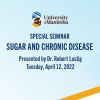
Sugar and Chronic Disease - Robert Lustig
-
 +26 +2
COVID made things taste weird, now 'Paxlovid mouth' sounds disgusting. What causes dysgeusia?
The effects of COVID and a new treatment for it are leaving a bad taste in the mouth for many. How do we detect what’s salty, sweet, bitter, sour or umami?
-
 +12 +1
Monkeypox? A Doctor Explains
-
 +25 +4
Link between COVID-19 and Parkinson’s disease risk grows with new findings
A few years after the 1918 Spanish Flu pandemic doctors around the world began to notice an increase in new Parkinson’s disease cases. This link between viral infection and increased Parkinson’s risk has been an ongoing mystery to scientists for well over a century. And the association isn’t just…
Submit a link
Start a discussion