
















-
 +33 +1
5 Simple Math Problems No One Can Solve
Mathematics can get pretty complicated. Fortunately, not all math problems need to be inscrutable. Here are five current problems in the field of mathematics that anyone can understand, but nobody has been able to solve.
-
 +15 +1
How to Cut Cake Fairly and Finally Eat It Too
Computer scientists have come up with a bounded algorithm that can fairly divide a cake among any number of people. By Erica Klarreich.
-
 +4 +1
+4 +1Euclid as Founding Father
We hold this mathematics to be self evident. By Adam Kucharski.
-
 +26 +1
Game Theory: The Science of Decision-Making
-
 +21 +1
6 Math Concepts Explained by Knitting and Crochet
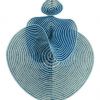
Using yarn and two pointy needles (knitting) or one narrow hook (crochet), pretty much anyone can stitch up a piece of fabric. Or, you can take the whole yarncraft thing light-years further to illustrate a slew of mathematical principles.
-
 +27 +1
Unusual Geometric Cake Designs by Dinara Kasko
When looking at a case of pastries in a bakery it's usually possible to intuit what something might taste like because of its familiar shape or color. Such is not the case with these radically unusual cake designs by Ukrainian pastry chef Dinara Kasko whose experimental techniques result in edible objects unlike anything we’ve ever seen.
-
 +2 +1
+2 +1Perplexing test defended
Good students should have been able to do it - but needed more time, professor says.
-
 +49 +1
How I Rewired My Brain to Become Fluent in Math
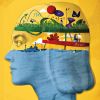
I was a wayward kid who grew up on the literary side of life, treating math and science as if they were pustules from the plague. So it’s a little strange how I’ve ended up now—someone who dances daily with triple integrals, Fourier transforms, and that crown jewel of mathematics, Euler’s equation. It’s hard to believe I’ve flipped from a virtually congenital math-phobe to a professor of engineering. One day, one of my students asked me how I did it—how I changed my brain.
-
 +8 +2
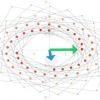
+8 +2Eigenvectors and Eigenvalues explained visually
By Victor Powell and Lewis Lehe
-
 +13 +1
Majority of mathematicians hail from just 24 scientific ‘families’
Most of the world’s mathematicians fall into just 24 scientific 'families', one of which dates back to the fifteenth century. The insight comes from an analysis of the Mathematics Genealogy Project (MGP), which aims to connect all mathematicians, living and dead, into family trees on the basis of teacher–pupil lineages, in particular who an individual's doctoral adviser was.
-
 +5 +1
+5 +1How reliable are bar graphs?
They got the same results when they asked,"How reliable are bar graphs?"
-
 +2 +1
+2 +1Neuroskeptic: “I Just Don’t Believe Those Results”
Are some scientific results so unexpected that we should just reject them?
-
 +5 +1
+5 +1The Perfection of the Continuity Equation, Key to the Foundations of Reality
Physicists want equations that connect behaviors directly to the foundations of reality. With the continuity equation, they actually pull it off. By Brendan Cole.
-
 +3 +1
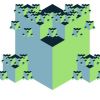
+3 +1sciencevsmagic.net
Mathematical toys by Nico Disseldorp. Play with contstruction, tesselations, fractals and automata.
-
 +8 +1
+8 +1The Unexpected Dangers of Recreational Counting
Deciphering mathematical card tricks is a wonderful pastime, but it can get you into some bizarre predicaments. By Jesse Dunietz.
-
 +2 +1
+2 +1Essence of linear algebra
3Blue1Brown
-
 +8 +1
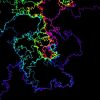
+8 +1A Unified Theory of Randomness
Researchers have uncovered deep connections among different types of random objects, illuminating hidden geometric structures. By Kevin Hartnett.
-
 +2 +1
+2 +1Limits of Logic: The Gödel Legacy
Douglas Hofstadter
-
 +16 +1
Monumental proof to torment mathematicians for years to come
Conference on Shinichi Mochizuki’s work inspires cautious optimism. By Davide Castelvecchi.
-
 +26 +1
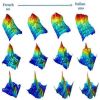
Time travelling to the mother tongue
The sounds of languages that died thousands of years ago have been brought to life again through technology that uses statistics in a revolutionary new way.
Submit a link
Start a discussion