















-
 +12 +1
Walk really fast to stop a wobbly suitcase ruining your holiday
When a suitcase in motion becomes unstable, it can rock back and forth from wheel to wheel. Researchers have determined why that happens and how to stop it
-
 +22 +1
The Impossible Mathematics of the Real World
Near-miss math provides exact representations of almost-right answers.
-
 +26 +1
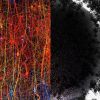
The Human Brain Can Create Structures in Up to 11 Dimensions
Neuroscientists have used a classic branch of maths in a totally new way to peer into the structure of our brains. What they've discovered is that the brain is full of multi-dimensional geometrical structures operating in as many as 11 dimensions.
-
 +23 +1
A Mathematician's Secret: We're Not All Geniuses
For each certified genius, there are at least a hundred great people who helped achieve such outstanding results.
-
 +21 +1
New Math Untangles the Mysterious Nature of Causality
Contrary to conventional scientific wisdom, conscious beings and other macroscopic entities might have greater influence over the future than does the sum of their microscopic components.
-
 +13 +2
What Does Compactness Really Mean?
It took me a long time to understand the mysterious mathematical property of compactness. By Evelyn Lamb.
-
 +17 +1
Time travel is mathematically possible, but don’t expect it anytime soon
The proposed method relies on the invention of a material known as ‘exotic matter.’ By Abigail Beall.
-
 +17 +2
I Am A Number. Am I Prime?
On the search for an efficient algorithm to tell if a number is prime. By Kaneenika Sinha.
-
 +24 +1
Bayes' Theorem: the maths tool we probably use every day, but what is it?
The decisions we make in life often come down to Bayes' Theorem, but most of us don't even realise what it is. So how does it work?
-
 +17 +1
The Tyranny of Simple Explanations
The history of science has been distorted by a longstanding conviction that correct theories about nature are always the most elegant ones. By Philip Ball. (Aug. 11, 2016)
-
 +32 +1
The Balanced Ternary Machines of Soviet Russia
A look at the balanced ternary notation and it’s use in Setun, a Soviet computer. By Andrew Buntine.
-
 +33 +1
Our ability to think in a random way peaks at 25 then declines
It’s harder than you think to make up a random sequence. Our ability to do so changes with age – and could give insight into cognitive decline
-
 +17 +1
List: Math Problems for English Majors
If Elizabeth Bennet’s house is ten miles away from Mr. Darcy’s house, how far will her mother go to arrange a suitable marriage?
-
 +11 +1
Fractal patterns in nature and art are aesthetically pleasing and stress-reducing
Fractals are patterns that repeat at increasingly fine magnifications. They turn up in the natural world and in artists’ work. Research suggests they contribute to making something aesthetically appealing. By Richard Taylor.
-
 +27 +1
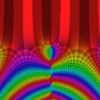
This Paper Could Be the Key to Solving a 160-Year-Old, Million-Dollar Maths Problem
When it comes to the fabled Riemann zeta function, the world's best mathematicians have suffered 160 years of dead-end after dead-end.
-
 +28 +2
Paradoxes of probability and other statistical strangeness
Sometimes statistics and probability can produce unexpected or counter-intuitive results. If we're hoping to use numbers to make good decisions, we should be wary of the traps.
-
 +6 +1
+6 +1A Long-Sought Proof, Found and Almost Lost
When a German retiree proved a famous long-standing mathematical conjecture, the response was underwhelming.
-
 +27 +1
Retired man solves one of hardest maths problems in the world and no one notices
A retired German man has found the proof to a complex geometry and probability problem that experts have tried to solve for decades, only for his achievement to go largely unnoticed. Thomas Royen found the solution to the conjecture, known as the Gaussian correlation inequality (GCI).
-
 +37 +1
Filming mosquitoes reveals a completely new approach to flight
Mosquitos generate lift via three mechanisms, two of them new to us.
-
 +19 +1
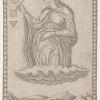
Artistic Expressions of Math Over Seven Centuries
"Picturing Math" at the Metropolitan Museum of Art has prints dating back to the 15th century, all expressing the beauty of mathematics.
Submit a link
Start a discussion