





















-
 +37 +12
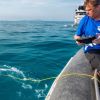
Underwater Robot Has Potential To Help Revive The World's Dwindling Coral Reefs
Underwater robot has delivered over 100k baby corals in attempt to restore part of the Great Barrier Reef
-
 +24 +6
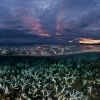
Ocean Warming Is Accelerating Faster Than Thought, New Research Finds
An analysis concluded that Earth’s oceans are heating up 40 percent faster on average than a United Nations panel estimated five years ago, a finding with dire implications for climate change.
-
 +3 +1
+3 +1Why Scientists Are Starting to Care About Cultures That Talk to Whales
Harry Brower Sr. was lying in a hospital bed in Anchorage, Alaska, close to death, when he was visited by a baby whale. Although Brower’s body remained in Anchorage, the young bowhead took him more than 1,000 kilometers north to Barrow (now Utqiaġvik), where Brower’s family lived. They traveled together through the town and past the indistinct edge where the tundra gives way to the Arctic Ocean.
-
 +15 +6
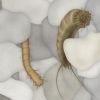
Fish Parasites Are on the Rise
Some fish parasites are on the rise, bringing with them risks to human health and fisheries-based economies. Now researchers have a new way to track their numbers—by digging into old records and museum samples. Recent years have seen alarming outbreaks of disease in fish and other marine species, including one that caused a massive die-off of sea stars in the northeast Pacific starting in 2013. But it has not been clear whether this uptick in illnesses was due to an actual increase in the number of pathogens...
-
 +22 +5
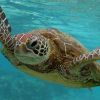
Microplastics found in gut of every sea turtle in new study
Plastic was found in the gut of every single sea turtle examined in a new study, casting fresh light on the scale of plastic pollution in the world's oceans. The research, published in the journal Global Change Biology, examined more than 100 sea turtles of all seven species, across the Atlantic, Pacific and Mediterranean.
-
 +25 +2
Groundbreaking Coral Reef Recovery Method Accidentally Discovered By A Scientist
As he was working with corals at the Mote Marine Laboratory in Florida, Dr. David Vaughan accidentally discovered a groundbreaking coral reef recovery method that makes corals grow by 40 times faster than usual.
-
 +38 +7
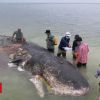
Whale 'had 115 plastic cups' in stomach
The dead sperm whale, which washed ashore in Indonesia, had ingested nearly 6kg of plastic waste.
-
 +15 +3
Cephalopods could become an important food source in the global community
With a growing world population and climate challenges that are causing agricultural areas to shrink, many are wondering where sustainable food will come from in the future. A professor of gastrophysics from the Department of Food Science at the University of Copenhagen and a chef offer a suggestion in a new research article: The cephalopod population (including squid, octopus and cuttlefish) in the oceans is growing and growing – let’s get better at cooking them so that many more people will want to eat them!
-
 +17 +2
World's top fishing nations to be given millions to protect oceans
Bloomberg Philanthropies to launch major grant for coastal communities to improve the health of oceans
-
 +17 +2
Humans Are Screwing Up Dolphins' Abilities To Talk To Each Other
Noise from ships and boats are causing dolphins to make their calls less complex, according to a new study.
-
 +7 +1
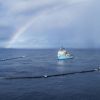
+7 +1System 001 is Deployed in The Great Pacific Garbage Patch
This week, we deployed System 001 in the Great Pacific Garbage Patch. In the upcoming months, we are hoping to confirm its plastic capturing efficiency and survivability; thus proving our technology. Read more in our latest update. Watch Project Manager Henk van Dalen explain the progress for System 001, a.k.a. Wilson in the video above.
-
 +15 +6
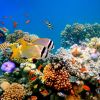
We can save coral reefs by putting them on ice
The planet’s coral reefs are in trouble. Thanks to warming and acidifying oceans, the animals that make up coral reefs are dying, turning the reefs themselves into algae-covered ghost towns. This represents a loss of habitat for numerous nearby creatures, many of which evolved to only live in the reefs. So the deaths of the corals can lead to the deaths of many other species. From monitoring the reefs by listening to them to local action and working to understand the dynamics of coral illness, scientists and conservationists...
-
 +33 +7
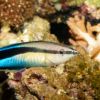
A Fish Has Passed The Benchmark Test Of Self-Awareness
For the first time, a species of fish has demonstrated evidence of possible self-awareness by passing the famous mirror test.
-
 +19 +2
Salmon Farmers Are Scanning Fish Faces to Fight Killer Lice
New technology will use facial recognition to build individual medical records for millions of fish.
-
 +9 +2
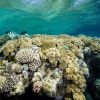
+9 +2Divers are attempting to regrow Great Barrier Reef with electricity
A trial is underway to restore damaged coral on the Great Barrier Reef using electricity. The reef has been severely assaulted in recent years by cyclones and back-to-back heatwaves. Nathan Cook at conservation group Reef Ecologic and his colleagues are attempting to regrow surviving coral fragments on steel frames. The frames are placed on damaged parts of the reef and stimulated with electricity to accelerate the coral’s growth (see video).
-
 +20 +4
How the octopus got its smarts
Did the octopus evolve its unique intelligence by playing fast and free with the genetic code? Elizabeth Finkel investigates.
-
 +37 +8
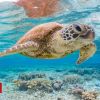
'Single piece of plastic' can kill turtles
New study: Ingesting even a single piece of plastic exposes sea turtles to a 20% chance of death.
-
 +3 +1
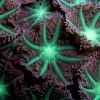
+3 +1Giant deep sea coral reef discovered off South Carolina coast
It stretches for at least 85 miles and is likely the keystone source of the region's fisheries.
-
 +25 +5
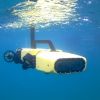
Robot reef protector sees a new way to check Great Barrier Reef health
An underwater drone that can keep watch on reef health and accurately identify and inject the devastating crown-of-thorns starfish is ready to be put to the test on the Great Barrier Reef, as a result of a collaboration between QUT, Google and the Great Barrier Reef Foundation.
-
 +23 +3
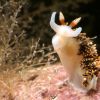
This Adorable Sea Slug is a Sneaky Little Thief
Nudibranchs may look cute, squishy and defenseless ... but watch out. These brightly-colored sea slugs aren't above stealing weapons from their prey.
Submit a link
Start a discussion