





















-
 +29 +7
Bad T-Shirts (NSFW)
In our world of rich diversity and language, let's take a moment to laugh at some bad translations.
-
 +35 +7
‘Dumpster fire’ named 2016’s phrase of the year
According to the American Dialect Society, 2016 can be summed up with one term: “dumpster fire.” The ADS’s phrase of the year is defined as “an exceedingly disastrous or chaotic situation.” Many view it as a fitting descriptor for the year, which saw a heated presidential election, Brexit and countless celebrity deaths.
-
 +10 +4
The Voices in Our Heads
Why do people talk to themselves, and when does it become a problem? By Jerome Groopman.
-
 +26 +4
Things you were taught at school about grammar that are wrong
Were your teachers right about when to use commas, and about not starting sentences with 'and'?
-
 +13 +2
Take a butcher’s at this: a new history of slang
"Vulgar Tongues: an Alternative History of English Slang" gathers material from a mind-boggling range of sources – but still leaves you wanting more. By Lynne Truss.
-
 +3 +1
+3 +1A No-Nonsense Machiavelli
Translators come to The Prince with prejudices; one is tempted to play to the reader’s expectations, laying on Machiavelli’s supposed cynicism at the expense of the text’s surprising subtlety. By Tim Parks.
-
 +40 +4
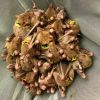
Researchers “Translate” Bat Talk. Turns Out, They Argue—A Lot
A machine learning algorithm helped decode the squeaks Egyptian fruit bats make in their roost, revealing that they “speak” to one another as individuals. By Jason Daley.
-
 +9 +2
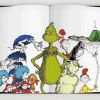
+9 +2How the Rhymes of Dr. Seuss Helped Teach Us Language
Kaptain Kristian’s latest explainer video is a fun one: he explains how the anapestic tetrameter rhyming style of Dr. Seuss helped us better understand language as kids, all while rhyming in the video himself. It’s stupid catchy (obviously, because it’s done in the style of Dr. Seuss) and so easy to listen to, which is the point because that catchiness and fun is basically a trick Dr. Seuss books used to make us all want to read on our own.
-
 +30 +7
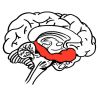
The Seahorse In Your Brain: Where Body Parts Got Their Names
What are those dog ears doing on my heart? Ancient anatomists named body parts after things they resembled in real life. So you’ve got a rooster comb in your skull and a flute in your leg. By Joy Ho, Erin Ross.
-
 +32 +3
Whether You Say Freakin', Friggin', Or Frickin' Depends On Where You’re From
F-word substitutes vary by region.
-
 +30 +9
Are Dictionaries Prejudiced?
Dictionaries are typically viewed as being value neutral. But they are just as steeped in culture and bias as the rest of the world—and they have the power to shape what we see as “normal.”
-
 +9 +2
+9 +2The Poem that Foretold Modernism
How Stéphane Mallarmé's greatest work was forged from tragedy. By Ellen Handler Spitz.
-
 +2 +1
+2 +1We went in search of the world’s hardest language
A certain genre of books about English extols the language’s supposed difficulty and idiosyncrasy. “Crazy English”, by an American folk-linguist, Richard Lederer, asks “how is it that your nose can run and your feet can smell?”. Bill Bryson’s “Mother Tongue: English and How It Got That Way” says that “English is full of booby traps for the unwary foreigner…Imagine being a foreigner and having to learn that in English one tells a lie but the truth.”
-
 +22 +6
10 Ancient Languages With Unknown Origins
The unnerving truth that our past might be shrouded in a mystery we might never solve... By Robert Giametta.
-
 +1 +1
+1 +1The Running Conversation in Your Head
Language is the hallmark of humanity—it allows us to form deep relationships and complex societies. But we also use it when we’re all alone; it shapes even our silent relationships with ourselves. In his book, The Voices Within, Charles Fernyhough gives a historical overview of “inner speech”—the more scientific term for “talking to yourself in your head.” Fernyhough, a professor at Durham University in the U.K., says that inner speech develops alongside social speech. This idea was pioneered by Lev Vygotsky, a Russian psychologist who studied children in the 1920s and noted that...
-
 +38 +9
Which Language Uses the Most Sounds? Click 5 Times for the Answer
With five distinct kinds of clicks, multiple tones and strident vowels — vocalized with a quick choking sound — the Taa language, spoken by a few thousand people in Botswana and Namibia, is believed by most linguists to have the largest sound inventory of any tongue in the world. This sentence in !Xoon, translated as “I eat porridge,” includes a strident vowel at the end. The exact count differs among scholars. Studies commonly cite more than 100 consonants, and some say there are as many as 164 consonants and 44 vowels. English, by comparison, has about 45 sounds at its disposal, total.
-
 +7 +1
+7 +1The Running Conversation in Your Head
What a close study of "inner speech" reveals about why humans talk to themselves. By Julie Beck.
-
 +39 +8
Artificial intelligence can lip-read better than a trained professional
A pair of new studies show that a machine can understand what you’re saying without hearing a sound.
-
Analysis+20 +6
Crow Agency School builds language class from ground up
(AP) — During lunch at Crow Agency Elementary School, students hunch over the table, eating oranges. [...] this is the first year the school is coordinating a cohesive approach, anchored by a kindergarten immersion class. School principal Jason Cummins is trying to shift how the school thinks about language, especially for students who don't come from Crow-speaking homes. The language learning level in Real Bird's classroom mirrors kindergarten content. Carjuzaa visited the school earlier in October with a group of teaching students from countries around the world. Some language advocates argue for a more informal approach; during a...
-
 +21 +5
The Alphabet That Will Save a People From Disappearing
As kids, two Guinean brothers invented a new script for their native language. Now they’re trying to get it on every smartphone.
Submit a link
Start a discussion