



















-
 +12 +1
LiFi internet breakthrough: 224Gbps connection broadcast with an LED bulb
Researchers at the University of Oxford have reached a new milestone in networking by using light fidelity (Li-Fi) to achieve bi-directional speeds of 224 gigabits per second (Gbps). To put this in perspective, 100Gbps fibre optic core networks have only become a reality in recent years and have yet to become ubiquitous. Li-Fi is still a long way from being used commercially, but by way of illustration, using a 224Gbps speed would technically allow for 30 movies...
-
 +19 +1
Honey on Tap directly from your Beehive
It's the beekeepers dream, turn a tap right on your beehive and watch pure fresh honey flow right out of your FLOWhive and into your Jar! No mess no fuss and the bees are hardly disturbed.
-
 +10 +1
Scientists achieve X-ray vision with safe, visible light
If you think X-rays and other forms of radiation have a monopoly on penetrating opaque objects, visible light begs to differ. It actually can pass through things like paint and human tissue, which has powerful implications for medical research and other fields. Regular lightwaves could one day replace X-rays or even allow scientists to remove tumors with lasers instead of risky surgery. The problem is, such light is either absorbed or scattered once it passes through non-transparent items...
-
 +42 +1
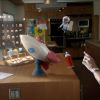
Our Exclusive Hands-On With Microsoft's Unbelievable New Holographic Goggles
The prototype is amazing. It amplifies the special powers that Kinect introduced, using a small fraction of the energy. Project HoloLens’ key achievement—realistic holograms—works by tricking your brain into seeing light as matter.
-
 +22 +1
Water-Resistant Takes On Whole New Meaning With This Metal
You probably haven’t seen something this water-resistant before. A team of scientists at the University of Rochester have created a metal so water-resistant, it bounces off of it.
-
 +11 +1
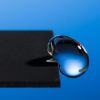
Laser-generated surface structures create extremely water-repellent metals
Scientists at the University of Rochester have used lasers to transform metals into extremely water repellent, or super-hydrophobic, materials without the need for temporary coatings. Super-hydrophobic materials are desirable for a number of applications such as rust prevention, anti-icing, or even in sanitation uses. However, as Rochester's Chunlei Guo explains, most current hydrophobic materials rely on chemical coatings.
-
 +16 +1
Flying Bird Weight Riddle Solved
Scientists at Stanford University in the US have developed a super-sensitive device that can measure the weight of a bird in flight.
-
 +10 +1
How to Kill Insects with Visible Light
Zzzzzzap! Ahhh, the gratifying sound of another insect biting the dust on a humid summer night. The hauntingly seductive blue glow of the bug zapper attracts thousands of unsuspecting insects to their untimely demise. Phototactic creepy-crawlies simply cannot resist moving toward the light, and when they arrive, a 2,000-volt wire mesh awaits them. As handy as these tiny execution chambers are, they are not at all useful for farmers who are trying to protect precious stored grains...
-
 +14 +1
Graphene: Fast, Strong, Cheap, and Impossible to Use
Until Andre Geim, a physics professor at the University of Manchester, discovered an unusual new material called graphene, he was best known for an experiment in which he used electromagnets to levitate a frog. Geim, born in 1958 in the Soviet Union, is a brilliant academic—as a high-school student, he won a competition by memorizing a thousand-page chemistry dictionary—but he also has a streak of unorthodox humor.
-
 +30 +1
New 'high-entropy' alloy is as light as aluminum, as strong as titanium alloys
Researchers from North Carolina State University and Qatar University have developed a new "high-entropy" metal alloy that has a higher strength-to-weight ratio than any other existing metal material. High-entropy alloys are materials that consist of five or more metals in approximately equal amounts. These alloys are currently the focus of significant attention in materials science and engineering because they can have desirable properties.
-
 +19 +1
3D LED printer makes a contact lens display possible
When researchers from the University of Washington began constructing prototypes for contact lens displays, their biggest impediment was the fabrication of parts. On a theoretical level it’s not hard to build a display in a contact lens, but actually building and placing all the tiny, interrelated parts on a tiny polymer disk is difficult even today. It’s annoying to have to come up with an all-new fabrication process for every single part in a display, just because the display happens...
-
 +14 +1
How the Word “OK” Was Invented 175 Years Ago
"OK" is one of the most common words in the English language, but linguistically it's a relative newbie. It's just 150 years old, and traces its roots back to 19th century Boston. Rather than anyone purposefully inventing "OK," it's actually editorial joke that inadvertently went viral.
-
 +23 +1
Scientists Have Created Crystals That Make Breathing Underwater a Reality
And there are applications for medical science too.
-
 +18 +1
A Retired Clorox Chemist Has Come up With a Laundry Product That Could Revolutionize Washing Your Clothes
The pre-treating, soaking, scrubbing and hoping that those stains are gone before you put your favorite shirt into the dryer could be a thing of the past if the clothing repelled the stain in the first place. That's what a new laundry product hopes to achieve.
-
 +3 +1
+3 +1Danville Inventor Develops ‘Permanent’ Stain Repellent
An East Bay inventor claims he has developed a permanent stain repellent. Greg Van Buskirk’s project began fourteen years ago when he worked at Clorox as a chemist. But, the company eventually pulled the plug on the repellant.
-
 +16 +1
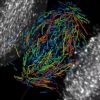
New Microscope Allows Scientists To View The World Like Never Before
Developed at Howard Hughes Medical Institute, a powerful new microscope can record the activity of living cells, molecules, and embryos in 3D and in real-time. Just check out the video above that shows a HeLa cell dividing, and prepare for your mind to be blown.
-
 +21 +1
How many years does it take to change a light bulb?
Our homes have changed radically over the past century. So why do we still use lighting that's based on 19th century technology? Well, that's all about to change. With Philips hue you can use your lighting to change your decor, keep your home safe, help you focus and even let you know when a loved one sends an email. Lighting has changed.
-
 +12 +1
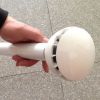
This new umbrella creates a force-field of air to protect you from the rain
Is this the end for awkward and unwieldy umbrellas? Designers in China have teamed up with university students to invent a better kind of umbrella - a device that creates a force-field of air around you to shield you from the rain.
-
 +4 +1
+4 +1The Undiscovered World of Thomas Edison
Historians, sorting through a treasure trove of Edison's papers, are discovering revealing details that enrich our portrait of one of America's most accomplished inventors
-
 +19 +1
A Start-up Has Invented Veggie Burgers That ‘Bleed’
A biochemist named Patrick Brown has come up with yet another alternative strategy to produce entirely meatless hamburgers that look and taste very much like meat. That's one above, looking sufficiently burgerlike; it's even got that pristine medium-rare thing going on. Patties now being made by Brown's Impossible Foods are suffused with something called heme, it turns out, a molecule that comes from the roots of nitrogen-fixing plants but has the iron-tinged character of hemoglobin.
Submit a link
Start a discussion