





















-
 +16 +1
Half the planet should be set aside for wildlife – to save ourselves
If we want to avoid mass extinctions and preserve the ecosystems all plants and animals depend on, governments should protect a third of the oceans and land by 2030 and half by 2050, with a focus on areas of high biodiversity. So say leading biologists in an editorial in the journal Science this week.
-
 +45 +1
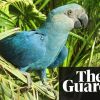
Eight bird species are first confirmed avian extinctions this decade
Most of the extinctions were caused by deforestation in South America, a new study of endangered birds shows
-
 +6 +1
+6 +1Before the dinosaurs, a million-year long volcanic eruption destroyed the ozone layer
It's known as the "Great Dying," an extinction event even more powerful than the one that killed the dinosaurs 65 million years ago. It's called the Permian-Triassic extinction event, and it took place 250 million years ago, before dinosaurs ruled the Earth. Scientists previously believed the Permian-Triassic extinction event happened because of a volcanic eruption. And not just any volcanic eruption... the volcanic eruption. Called the "Siberian Flood Basalts," this million-year-long volcanic eruption potentially caused the extinction of up to 96 percent of marine life, along with 70 percent of terrestrial vertebrate species.
-
 +8 +1
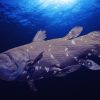
+8 +1Older than dinosaurs: last South African coelacanths threatened by oil exploration
Bright blue, older than dinosaurs and weighing as much as an average-sized man, coelacanths are the most endangered fish in South Africa and among the rarest in the world. Barely 30 of these critically-endangered fish are known to exist off the east coast of South Africa, raising concern that a new oil exploration venture in the area could jeopardise their future.
-
 +9 +1
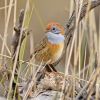
+9 +1Back from extinction: The Mallee emu wren makes a comeback in South Australia - ABC News (Australian Broadcasting Corporation)
After a series of catastrophic wildfires in 2014, the Mallee emu wren became extinct in South Australia, but the birds are making a comeback in the state with the help of environmentalists. When the tiny bird — weighing only as much as a 10 cent piece — could no longer be found in SA, there were still numbers that existed in parts of Victoria's north-west, but they were listed as endangered.
-
 +15 +1
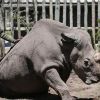
Test-tube rhinos? Experiment aims to save a vanishing species
Scientists say they’ve used human test-tube baby techniques to try to save the nearly extinct northern white rhino. In an improbable experiment, they are trying to resurrect an entire subspecies using dead males, two infertile remaining females, and some closely related southern white rhinos. And they say they also plan to use stem-cell technology to try to create a population of pure northern white rhinos in the lab.
-
 +5 +1
+5 +1How a Salamander Pyramid Scheme Doomed the World’s Largest Amphibians
It turns out that the Chinese giant salamander is actually five different species—and they’re all probably facing extinction.
-
 +24 +1
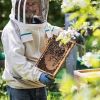
Bees are being 'driven to the edge' as humans and climate change destroy their havens
A third of Irish bee species are threatened with extinction with bumblebee populations falling year-on-year due to removal of hedgerows and ditches, use of pesticides and insecticides and climate change. Tomorrow is the first ever global World Bee Day and experts hope an EU ban on insecticides linked to declining bee populations will help prevent further deterioration of the vital pollinators here. Local authorities and homeowners could also help by planting bee-friendly flowers including snowdrops...
-
 +9 +1
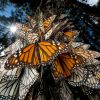
+9 +1Climate change on track to cause major insect wipeout, scientists warn
Global warming is on track to cause a major wipeout of insects, compounding already severe losses, according to a new analysis. Insects are vital to most ecosystems and a widespread collapse would cause extremely far-reaching disruption to life on Earth, the scientists warn. Their research shows that, even with all the carbon cuts already pledged by nations so far, climate change would make almost half of insect habitat unsuitable by the end of the century, with pollinators like bees particularly affected.
-
 +14 +1
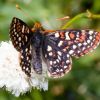
The Evolutionary Trap That Wiped Out Thousands Of Butterflies
Changing land use in an isolated Nevada meadow has driven the extinction -- and subsequent recolonization -- of a local population of checkerspot butterflies
-
 +11 +1
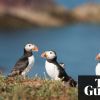
One in eight birds is threatened with extinction, global study finds
One in eight bird species is threatened with global extinction, and once widespread creatures such as the puffin, snowy owl and turtle dove are plummeting towards oblivion, according to the definitive study of global bird populations. The State of the World’s Birds, a five-year compendium of population data from the best-studied group of animals on the planet, reveals a biodiversity crisis driven by the expansion and intensification of agriculture.
-
 +6 +1
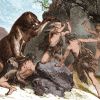
+6 +1New Study Says Ancient Humans Hunted Big Mammals To Extinction
Over the past 125,000 years, the average size of mammals on the Earth has shrunk. And humans are to blame. That's the conclusion of a new study of the fossil record by paleo-biologist Felisa Smith of the University of New Mexico. Smith studied fossils going back 65 million years, when dinosaurs died and mammals came into their own. Many of the early mammals went on to get big. Among the giant creatures: "Llamas and camels and sloths and five species of pronghorn [antelope] actually," she says, "and certainly mammoths.
-
 +16 +1
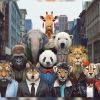
Animal Extinction Hidden in Plain Sight
A new study suggests that the overrepresentation of wild animals—lions, tigers, giraffes, etc.—in our everyday lives (toys, films, ads) makes us forget that they are on the verge of extinction. Researchers believe companies should pay 'image rights' when using such animals to help conservation efforts. The study's principal author ecologist Franck Courchamp explains.
-
 +31 +1
Inside the high-tech plot to save the northern white rhino from extinction
‘The northern white rhino is emblematic of our times, about the impact of humans on wildlife.’
-
 +13 +1
Worst species decline since dinosaurs' extinction, says UN
Climate change will become a steadily bigger threat to biodiversity by 2050, adding to damage from pollution and forest clearance to make way for agriculture, according to more than 550 experts in a set of reports approved by 129 governments. “Biodiversity, the essential variety of life-forms on earth, continues to decline in every region of the world,” the authors wrote after talks in Colombia. “This alarming trend endangers the quality of life of people everywhere.”
-
 +17 +1
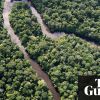
World’s great forests could lose half of all wildlife as planet warms – report
The world’s greatest forests could lose more than half of their plant species by the end of the century unless nations ramp up efforts to tackle climate change, according to a new report on the impacts of global warming on biodiversity hotspots. Mammals, amphibians, reptiles and birds are also likely to disappear on a catastrophic scale in the Amazon and other naturally rich ecosysterms in Africa, Asia, North America and Australia if temperatures rise by more than 1.5C, concludes the study by WWF, the University of East Anglia and the James Cook University.
-
 +25 +1
Endangered animals could get life-saving boost from oil, gas funds under new bill
The Recovering America’s Wildlife Act would shift $1.3 billion a year in oil and gas royalties to state wildlife conservation measures.
-
 +15 +1
Bill to protect sharks, rays moves to House
A bill that would protect sharks and expand protections to all rays within state waters is cruising through the state Legislature. Senate Bill 2079, co-introduced by Democratic Sens. Mike Gabbard of Oahu and Russell Ruderman of Puna and four co-sponsors, seeks to protect the animals for ecological purposes and their value to Native Hawaiian cultural practices and the ocean recreation industry.
-
 +30 +1
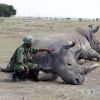
Last of the Northern White Rhinos
A warden watches over Najin and her daughter Patu, the last two northern white rhino females, in their enclosure at the Ol Pejeta Conservancy in Laikipia National Park, Kenya, March 7, 2018.
-
 +13 +1
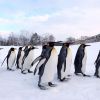
Will king penguins become extinct due to climate change? Study says majority of the birds may disappear soon
Around 70 percent of the world's current king penguin population could face extinction in the near future if proper steps are not taken to constrain climate change, a new study has said. In a report published in the journal Nature Climate Change, scientists have warned that climate change and overfishing can cause a major reduction in the birds' population. They studied the birds' fragmented population in the Southern Ocean.
Submit a link
Start a discussion