





















-
 +50 +3
Devoted to Terror: How the Camps Were Run
Thomas Laqueur reviews “KL: A History of the Nazi Concentration Camps” by Nikolaus Wachsmann.
-
 +1 +1
+1 +1Right Does Not Make It Right
On the difference between a constitutional right to free speech and what we consider morally appropriate speech.
-
 +2 +1
+2 +1Challenge Harper government’s cruel treatment of refugees this election
Canadian Doctors for Refugee Care urges voters to support parties that will reinstate refugee health coverage
-
 +2 +1
+2 +1Business Schools Breed Unethical Businessmen
An ethicist explains why the Volkswagen scandal didn't shock him.
-
 +26 +2
Lying for science
Psychologists used to manipulate and deceive their subjects with impunity. Did the end justify the means? By Antonio Melechi.
-
 +19 +3
Dignity in a Diverse, Decentered, and Digital Age
Imagine two worlds—one horrendous, the other hopeful, but both actual. By Thong Nguyen.
-
 +19 +1
Children of the Tribes
In this country, we celebrate the First Amendment, which prevents the government from interfering with religious beliefs and practices. But what if those beliefs and practices make children suffer? By Julia Scheeres.
-
 +37 +3
Learning Empathy From the Dead
The first-year dissection is often an experience that teaches medical students to emotionally detach from their patients. By forcing future doctors to learn about the lives of their cadavers, some medical schools are trying to reverse the effect. By John Tyler Allen. (July 28)
-
 +25 +2
On Being a Doctor: Our Family Secrets
One day in January, I was facilitating a fourth-year elective course with eight medical students. It was a medical humanities class, and the topic that afternoon was the virtue of forgiveness. A student named David led the discussion, and I listened as they exchanged ideas. When their energy waned, I asked, “Do any of you have someone to forgive from your clinical experiences? Did anything ever happen that you need to forgive or perhaps still can't forgive?”
-
 +17 +2
Animal rights groups denounce NSW surfers’ call for shark cull as ‘morally wrong’
Push for a cull in northern NSW comes after recent spike in shark sightings and attacks which have kept people out of the water and away from the region
-
 +14 +2
Twilight of the Bomb
One of the last surviving Manhattan Project scientists returns to the crater of the first nuclear bomb on its 70th birthday. By Brian Merchant.
-
 +22 +5
Does Jesus deserve partial credit?
I would argue that most of Jesus’ ethical teachings are entangled in his false apocalyptic paradigm and are disastrous if taken seriously (see: a previous post). Obviously not everyone agrees (even in the secular world) and I’d like to see if there are any good arguments to be made to reasonably salvage some good Jesus. As far as my ongoing “Judging Jesus” project goes, one might call this a matter of, “seeking disconfirming evidence.”
-
 +35 +2
When is it ethical to euthanize your pet?
In the past, owners were quick to put their pets down. Now, with many viewing pets as family members, are they waiting too long?
-
 +17 +3
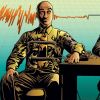
What Happens When a Failed Writer Becomes a Loyal Spy?
Are you the Socrates of the National Security Agency? That was the question the NSA asked its workforce in a memo soliciting applications for an in-house ethicist who would write a philosophically minded column about signals intelligence. By Peter Maass.
-
 +25 +3
‘We Are Creatures That Should Not Exist’
The Theory of Anti-Natalism. By David Benatar.
-
 +4 +1
+4 +1Clicking With a Conscience
How much is your attention on the Internet really worth? By Tim Hwang.
-
 +16 +3
Why an increase in boring study results is an important advance for medicine
Positive results are exciting. We have a natural curiosity about the powerful new cholesterol-lowering drug or fresh research showing spicy food might stave off diseases of aging. But for years it's been increasingly apparent that this interest in positive results is skewing what we know about science, with the ho-hum results that show a drug didn't really work or an experiment failed falling through the cracks... By Carolyn Johnson.
-
 +11 +2
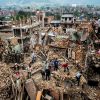
The Tricky Ethics of the Lucrative Disaster Rescue Business
In retrospect, the choice to book a ground-floor room was a sound one. On Saturday, April 25, Andy Fraser lay in bed at the Rokpa Guest House, a modest three-story hotel in Nepal’s ancient capital, a city of 1 million sunk in a valley bordered by the Himalayan range. Fraser, a powerfully built 38-year-old British wilderness paramedic with a shaved head and prominent brow, had arrived a few weeks earlier for an extended business trip.
-
 +18 +2
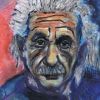
Einstein’s Morality
Ching-Hung Woo looks at the many facets of Albert Einstein’s approach to ethics.
-
 +26 +5
How A Small-Time Drug Dealer Rescued Dozens During Katrina
To the cops, Jabbar Gibson was just a low-level drug pusher. But to the residents of a New Orleans public housing complex, he’s the man who rescued them from Hurricane Katrina when no one else would. By Joel Anderson.
Submit a link
Start a discussion