




















-
 +15 +2
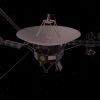
Voyager Probes Spot Previously Unknown Phenomenon in Deep Space
NASA’s Voyager spacecraft may be billions of miles away and over 40 years old, but they’re still making significant discoveries, as new research reveals. A paper published today in the Astronomical Journal describes an entirely new form of electron burst, a discovery made possible by the intrepid Voyager probes.
-
 +19 +5
Scientists Develop New Device to Convert Unusable Mars Water into Useful Fuel and Oxygen
Water which exists on Mars is either frozen or salty which means it cannot be used by humans. But the water discovery on the Martian surface triggered new questions among the scientists—How can humans use the Martian water?
-
 +3 +1
+3 +1Archaeologists Believe They've Unearthed Jesus's Childhood Home
Archaeologists have unearthed evidence at a place believed to be the historical Jesus of Nazareth’s birthplace. Researcher Ken Dark, a professor at the University of Reading, has a new book about more than a century of archaeological digs at the Nazareth Convent site in the north of modern-day Israel.
-
 +13 +2
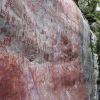
Prehistoric Rock Art Depicting Now-Extinct Animals Discovered in Colombia
One year ago, a team of British-Colombian researchers that was funded by the European Research Council came upon a remarkable discovery in the Serranía de la Lindosa, an extremely remote part of the Colombian Amazon. The discovery is a remarkably monumental example of prehistoric art: a nearly eight-mile stretch of paintings of both humans and mysterious animals that spans a steep cliffside, and which has been referred to as the “Sistine Chapel of the ancients.”
-
 +15 +4
Archaeologists Discover 12,500-Year-Old Rock Art Portraying Humans and Animals in Remote Amazon Forest
Archaeologists have found tens of thousands of ice-age paintings showcasing animals and humans across a cliff that stretches nearly eight miles in Columbia, from almost 12,500 years ago in the Amazon rainforest.
-
 +22 +4
Scientists Discover Billions of Gallons of Hidden Freshwater off Hawaii Coast
The island communities like Hawaii, which are surrounded by Ocean water, have to rely on collecting freshwater stored in the ground for drinking, irrigation, and commercial industries. The American state located in the Pacific Ocean is at serious risk due to climate-driven droughts and less rainfall. But scientists found a new way to solve the problem.
-
 +22 +2
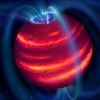
Scientists find hidden ‘super planet’ in breakthrough observation
Astronomers have discovered a cold brown dwarf – otherwise known as a “super planet” – for the first time using a radio telescope. Brown dwarfs are vast, sized between 15 and 75 times the mass of Jupiter, and have gaseous atmospheres similar to some of the planets in our solar system. They are also often known as “failed stars” because of the way that they shine.
-
 +13 +2
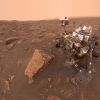
Curiosity rover finds evidence of ancient megafloods on Mars
Previous images of large channels on Mars and giant wave-like features on its surface called “megaripples” indicate that the planet suffered from catastrophic floods in the past. Now, a team of scientists has used data gathered by the Curiosity rover to prove that megafloods swept across the Gale crater around 4 billion years ago. “We identified megafloods for the first time using detailed sedimentological data observed by the rover Curiosity,” said Alberto G. Fairén, co-author of the paper published by Nature. “Deposits left behind by megafloods had not been previously identified with orbiter data.”
-
 +13 +2
BREAKING: New Species Discovered in Waters Off Puerto Rico
A new species has been discovered in the deep sea by NOAA and TheVast has captured the details to share! The new species is a comb jelly from the waters near Puerto Rico.
-
 +19 +5
‘Fossil galaxy’ found hidden in the Milky Way
A "fossil galaxy" has been found hidden inside of our Milky Way. The discovery of the long-dead galaxy could change our understanding of the history of the Milky Way, and how it became the vast web of stars that surrounds us today. The fossil, known as Heracles, is thought to have collided with the Milky Way 10 billion years ago, when our galaxy was still at a very young age.
-
 +30 +5
Sun-Like Star Identified As the Potential Source of the Wow! Signal
The Big Ear Radio Telescope in Delaware, Ohio, was disassembled in 1998 having operated for over 30 years. It was replaced by a golf course. Big Ear was never the world’s biggest radio telescope, nor its most sensitive. But Big Ear nevertheless made one of the most famous observations in the history of astronomy, one that till this day has never been explained.
-
 +2 +1
+2 +1Scientists find more bright blasts of energy coming from space – and they’re getting closer to knowing where they are coming from
Scientists have detected two bright radio bursts from a magnetar in our galaxy, as they get closer to discovering the source of the blasts. Earlier this month, scientists discovered that fast radio bursts were coming from the object, in a major breakthrough in the search for the source of those mysterious blasts of energy. It was the first time an FRB had been detected coming from inside our Milky Way, and also the first time such a blast had been traced back to a particular source.
-
 +17 +6
Archaeologists find 2,150-year-old Petra monument ‘hiding in plain sight’
The archaeologists used satellite imagery to find the platform, which is 184 feet by 161 feet. An interior platform had columns along one end and a huge staircase. Based on pottery studies, the researchers think the platform could be at least 2,150 years old.
-
 +17 +2
Scientists discover bizarre hell planet where it rains rocks and oceans are made of lava
If you thought living on Earth in 2020 was comparable to hell, planet K2-141b is here to prove you wrong. On the scorching hot planet, hundreds of light-years away, oceans are made of molten lava, winds reach supersonic speeds and rain is made of rocks. Scientists have referred to the bizarre, hellish exoplanet as one of the most "extreme" ever discovered.
-
 +19 +3
Russian Scientists Find A 5,000 Year-Old Skull Of A Person Who Seems To Have Undergone A Failed Brain Surgery
Archeologists have discovered away from an old surgery, called trepanation which included penetrating little openings in the skull. Archeologists have uncovered the skull of a 5,000-year-elderly person in Crimea who went through the antiquated cerebrum medical procedure during the Bronze Age.
-
 +18 +3
Great Fox-Spider Assumed Extinct in UK Found at British Army Training Area After 27 Years
One of Britain's largest spiders, the Great Fox Spider, once thought to have gone extinct, has been spotted for the first time after 27 years at a Ministry of Defence training ground in Surrey. After being untraceable for more than a quarter of a century in the UK, finally this year the conservationists report the sighting of 22 Great Fox Spiders, including mature males and one mature female.
-
 +17 +6
Scientists discover 500 metre-tall skyscraper coral reef at Australia's Great Barrier Reef
Australian scientists have discovered a detached reef more than 500 metres high – taller than the Empire State Building – at the northern end of the Great Barrier Reef. The “blade-like” vertical reef about 130km off Cape York, Australia’s north-eastern tip, was found during a 3D seabed mapping exercise conducted from a ship owned by the Californian non-profit Schmidt Ocean Institute.
-
 +2 +1
+2 +1Ancient Maya Built Sophisticated Water Filters
Ancient Maya in the once-bustling city of Tikal built sophisticated water filters using natural materials they imported from miles away, according to the University of Cincinnati. UC researchers discovered evidence of a filter system at the Corriental reservoir, an important source of drinking water for the ancient Maya in what is now northern Guatemala.
-
 +15 +3
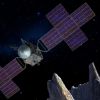
NASA Discovers a Rare Metal Asteroid That’s Worth $10,000,000,000,000,000,000
Forget water on the moon, NASA has now struck gold. NASA’s Hubble Space Telescope has discovered a rare, heavy and immensely valuable asteroid called “16 Psyche” in the Solar System’s main asteroid belt between Mars and Jupiter.
-
 +3 +1
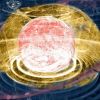
+3 +1This Breakthrough Could Fix the Fatal Flaw in Fusion Reactors
In the long road to nuclear fusion, scientists continue to confront one of the more prominent (and literal) bumps: edge localized modes (ELMs). These blobs form at the edge of a tokamak’s plasma swirl, caused by the interaction of the powerful, containing magnetic field and the sun-hot plasma.
Submit a link
Start a discussion