



















-
 +4 +1
+4 +1The Dunning-Kruger Effect Is Probably Not Real
I want the Dunning-Kruger effect to be real. First described in a seminal 1999 paper by David Dunning and Justin Kruger, this effect has been the darling of journalists who want to explain why dumb people don’t know they’re dumb. There’s even video of a fantastic pastiche of Turandot’s famous aria, Nessun dorma, explaining the Dunning-Kruger effect. “They don’t know,” the opera singer belts out at the climax, “that they don’t know.”
-
 +23 +1
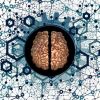
Machine Intelligence Accelerates Research Into Mapping Brains
Their development, published on December 18th in Scientific Reports, gives researchers more confidence in using the technique to untangle the human brain’s wiring and to better understand the changes in this wiring that accompany neurological or mental disorders such as Parkinson’s or Alzheimer’s disease.
-
 +15 +1
Monkey brain study reveals the 'engine of consciousness'
Studies on the central lateral thalamus might lead to new therapies for people dealing with brain traumas, injuries, or disorders of consciousness.
-
 +14 +1
Story of The Discovery of the Mind
The Discovery of the Mind is a great development in the history of humankind. In the journey of this quest, from the soul(spirit) to the psyche(mind) , many civilizations and philosophers are involved
-
 +14 +1
Can lab-grown brains become conscious?
A handful of experiments are raising questions about whether clumps of cells and disembodied brains could be sentient, and how scientists would know if they were.
-
 +14 +1
New theory of consciousness proposed by Surrey Scientist
Publishing his theory in the eminent Oxford University Press journal Neuroscience of Consciousness, Professor McFadden posits that consciousness is in fact the brain’s energy field. This theory could pave the way towards the development of conscious AI, with robots that are aware and have the ability to think becoming a reality.
-
 +4 +1
+4 +1How much do our genes restrict free will?
MANY OF US BELIEVE WE ARE MASTERS OF OUR OWN DESTINY, but new research is revealing the extent to which our behavior is influenced by our genes. It’s now possible to decipher our individual genetic code, the sequence of 3.2 billion DNA “letters” unique to each of us, that forms a blueprint for our brains and bodies.
-
 +14 +1
Study on gender differences in anxiety uncovers psychophysiological differences in response to unpredictable threat
New research provides evidence that women tend to have greater sensitivity to unpredictable threat compared to men. The findings, published in the International Journal of Psychophysiology, could help explain why anxiety disorders disproportionately impact women.
-
 +22 +1
New study uncovers people's neuropsychological response to reading Donald Trump's negative tweets
A new study suggests that engaging with negative content on social media can lead to reduced activation of the prefrontal cortex and impairments in executive functioning. The findings were published in Social and Affective Neuroscience. While it has been established that emotional stimuli can affect cognition, little is known about the neural consequences of consuming emotionally-arousing content on social media. Researchers Sarah M. Tashjian and Adriana Galván set out to explore this topic, by examining the cognitive consequences of reading negative, discriminatory tweets published by President Trump.
-
 +17 +1
Why you don’t know your own mind
The scientific work that I do on the brain basis of consciousness is sometimes misunderstood - a misunderstanding which I think comes mainly from the political divide between mystics and materialists. I am a materialist, and reactions to my work tend to follow along the lines of: ‘keep your scientific hands off my consciousness mystery’.
-
 +17 +1
Study uncovers how brain damage increases religious fundamentalism
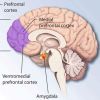
Research has found religious belief is associated with certain regions of the human brain, but there is still much to learn about how these areas influence religious belief. A new study in the journal Neuropsychologia found that lesions in a particular brain region tend to increase religious fundamentalism.
-
 +4 +1
+4 +1Scientists Are Totally Rethinking Animal Cognition
Amid the human crush of Old Delhi, on the edge of a medieval bazaar, a red structure with cages on its roof rises three stories above the labyrinth of neon-lit stalls and narrow alleyways, its top floor emblazoned with two words: birds hospital.
-
 +21 +1
New study confirms some of the neurophysiological predictors of creativity
Two brain networks appear to play a key role in creativity, according to new research published in the journal NeuroImage. The findings confirm past research that suggested increased cooperation between brain regions linked to both cognitive control and spontaneous processes is associated with heightened creative ability.
-
 +20 +1
Simply Imagining Other People Can Change Our Own Sense Of Self
So begins a new paper, published in the Journal of Experimental Psychology, which reveals that who you “are” can easily be manipulated. Just imagining somebody else can alter all kinds of aspects of how you see yourself, even including your personality and memories.
-
 +11 +1
When False Claims Are Repeated, We Start To Believe They Are True — Here’s How Behaving Like A Fact-Checker Can Help
If you hear an unfounded statement often enough, you might just start believing that it’s true. This phenomenon, known as the “illusory truth effect”, is exploited by politicians and advertisers — and if you think you are immune to it, you’re probably wrong. In fact, earlier this year we reported on a study that found people are prone to the effect regardless of their particular cognitive profile.
-
 +16 +1
Religious involvement may improve cognitive health
People over 50 who attend religious services and pray privately may notice better memory performance, a new study from the University of Michigan found. According to the study’s findings, frequent religious service attendance and private prayer was linked to stronger cognitive health among blacks, Hispanics and whites.
-
 +8 +1
+8 +1Higher Intelligence And An Analytical Thinking Style Offer No Protection Against “The Illusory Truth Effect”
It’s a trick that politicians have long exploited: repeat a false statement often enough, and people will start believing that it’s true. Psychologists have named this phenomenon the “illusory truth effect”, and it seems to come from the fact that we find it easier to process information that we’ve encountered many times before. This creates a sense of fluency which we then (mis)interpret as a signal that the content is true.
-
 +18 +1
New findings about why some people fall for fake news and pseudo-profound bullshit
People who overclaim their level of knowledge and are impressed by pseudo-profound bullshit are also more likely to believe fake news, according to new research published in the Journal of Personality. “I’ve long had an interest in the pitfalls (and strengths) of human reasoning and had published some work on why people fall for bullshit,” explained study author Gordon Pennycook (@GordPennycook), an assistant professor at the University of Regina.
-
 +4 +1
+4 +1Intellectually humble people tend to possess more knowledge, study finds
People who are intellectually humble tend to score better on a test of general knowledge, according to new research published in The Journal of Positive Psychology. The new findings also provide some insights into the particular traits that could explain the link between intellectual humility and knowledge acquisition.
-
 +3 +1
+3 +1People who read Facebook article previews think they know more than they actually do
“Social media are so different from traditional types of media. In decades past, audiences had to choose to turn on the TV or open a newspaper to receive political information. Today, we receive that information inadvertently while scrolling through our Facebook and Twitter feeds. What’s more, that information can come from our friends and family members. I find these new dynamics fascinating,” said study author Nicolas Anspach, an assistant professor of political science at York College of Pennsylvania.
Submit a link
Start a discussion