





















-
 +17 +1
New Zealand announces its biggest emissions reduction project in history
Move to power Glenbrook steel plant with electricity from renewables rather than coal will reduce emissions by 1% – or the equivalent of taking 300,000 cars off the road
-
 +15 +1
How climate change is making our allergies worse
Between April and May, the birch pollen season is in full swing. Eyes water, throats sting, noses run: doctors call these immune reactions "allergic rhinitis." In France, nearly one adult in three is said to suffer from a pollen allergy, according to the French National Agency for Food, Environmental and Occupational Health Safety (ANSES).
-
 +2 +1
+2 +1State lawmakers agree to 'historic' environment and climate bill
Backers say this is a historic environment, energy and climate budget bill that will make transformative investments to help Minnesota combat climate change and move more aggressively toward a carbon-free economy.
-
 +16 +1
Why Nuclear Fusion Won’t Solve the Climate Crisis
In December 2022 scientists at the U.S. National Ignition Facility (NIF) announced a breakthrough in the decades-long effort to create an energy source based on the same nuclear fusion reactions that power the sun. An “engineering marvel beyond belief,” they proclaimed, as major newspapers quickly followed with breathless coverage.
-
 +4 +1
+4 +1Greenhouse gases have changed El Niño and La Niña, significant new study finds
CSIRO has found greenhouse gas emissions have likely been making El Niño and La Niña events more frequent and extreme since the 1960s. Up until now little was known about the role it played.
-
 +4 +1
+4 +1Global warming set to break key 1.5C limit for first time
The world is likely to hit 1.5C of warming within the next five years because of rising carbon emissions.
-
 +19 +1
Are New Zealand’s marine heatwaves a warning to the world?
As seas around Aotearoa heat at an unparalleled rate, scientists are starting to understand what it might mean for marine ecosystems
-
 +18 +1
We’re About to See a Rare and Record-Setting May Heat Wave
A potentially record-setting heat wave is headed for the Pacific Northwest and western Canada, a sign of the shift to hotter—and earlier—summers
-
 +12 +1
US Has Already Seen 7 Different Billion-Dollar Weather Disasters This Year: NOAA
Seven different billion-dollar or more extreme weather events struck the U.S. during the first four months of 2023. That's one of the "notable" findings from the National Oceanic and Atmospheric Administration's (NOAA) April State of the Climate report, released Monday.
-
 +21 +1
Energy of '25 billion atomic bombs' trapped on Earth in just 50 years, all because of global warming
Global warming has trapped an explosive amount of energy in Earth's atmosphere in the past half century — the equivalent of about 25 billion atomic bombs, a new study finds. In the paper, published April 17 in the journal Earth System Science Data(opens in new tab), an international group of researchers estimated that, between 1971 and 2020, around 380 zettajoules — that is, 380,000,000,000,000,000,000,000 joules — of energy has been trapped by global warming.
-
 +4 +1
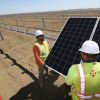
+4 +1Environmentalists sue California over reduced solar incentives
The fate of California’s wildly successful rooftop solar incentives will be decided in court. In a lawsuit filed Wednesday — and shared exclusively with The Times — three environmental groups argue that the California Public Utilities Commission acted illegally when it slashed compensation payments for power generated by solar panels.
-
 +18 +1
Human-driven climate crisis fuelling Horn of Africa drought – study
Region is suffering its worst drought in 40 years after five consecutive years of below-average rainfall
-
 +25 +1
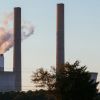
E.P.A. to Propose First Controls on Greenhouse Gases From Power Plants
If the regulation is implemented, it will be the first time the federal government has limited carbon emissions from existing power plants, which generate 25 percent of U.S. greenhouse gases.
-
 +20 +1
The climate crisis and biodiversity crisis can't be approached separately, says study
Human beings have massively changed the Earth system. Greenhouse-gas emissions produced by human activities have caused the global mean temperature to rise by more than 1.1°C compared to the preindustrial era. And every year, there are additional emissions of carbon dioxide, methane and other greenhouse gases, currently amounting to more than 55 gigatons of carbon dioxide equivalent.
-
 +18 +1
World’s first carbon import tax gets green light
The European Parliament on Tuesday approved the world’s first “carbon tax” for imported goods, imposing tariffs based on the amount of emissions generated in their production.
-
 +20 +1
World may face record heat this year as El Nino returns
During El Nino, winds blowing west along the equator slow down, and warm water is pushed east, creating warmer surface ocean temperatures.
-
 +16 +1
Climate change: How can Paris adapt to 50°C heat waves?
A fact-finding mission makes 85 recommendations to prevent the French capital from becoming uninhabitable for part of the year.
-
 +4 +1
+4 +1Could removing carbon from the ocean be a climate change solution?
New technology developed by UCLA engineering faculty seeks to remove carbon dioxide from the ocean as a way to slow down climate change.
-
 +23 +1
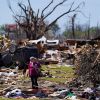
Tornado alley is expanding — and scientists don’t know why
Tornadoes are becoming more frequent in populated parts of the United States and are often occurring as damaging clusters — a development seen in recent deadly outbreaks from Alabama to Michigan. The number, damage and deadliness of individual tornadoes has held roughly steady over the past 50 years, federal experts with the National Oceanographic and Atmospheric Administration told The Hill.
-
 +14 +1
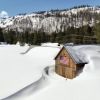
California’s ‘big melt’ has begun and could bring perilous flooding with it
Spring has offered California a welcome reprieve from the record rains and historic snowfall that hammered the state in recent weeks, but a new danger wrought by the warming weather looms large. The state’s enormous snowpack will soon begin to melt – and communities are bracing for waters to rise yet again. Trillions of gallons of water packed within the record level of snow blanketing the Sierra Nevada range are expected to rush into rivers and reservoirs as the weather heats up, heightening flood risks in areas already saturated by the state’s extremely wet winter.
Submit a link
Start a discussion