


















-
 +8 +1
+8 +1Invisibilia
Invisibilia (Latin for invisible things) is about the invisible forces that control human behavior – ideas, beliefs, assumptions and emotions. Co-hosted by Lulu Miller, Hanna Rosin and Alix Spiegel, Invisibilia interweaves narrative storytelling with scientific research that will ultimately make you see your own life differently.
-
 +10 +1
The Mandela Effect.
The Mandela Effect is a term for where a group of people all mis-remember the same detail, event or physicality.
-
 +26 +1
Parkinson's law
Parkinson's law states: 'Work expands so as to fill the time available for its completion.' Which means that if you have an assignment due to next week, the assignment will only be finished next week.
-
 +14 +1
Is it too late to stop the trolls trampling over our entire political discourse?
Political debate, a crucial element of any democracy, is becoming ever more poisoned. Social media has helped to democratise the political discourse, forcing journalists – who would otherwise simply dispense their alleged wisdom from on high – to face scrutiny. Some take it badly. They are used to being slapped affectionately on the back by fellow inhabitants of the media bubble for their latest eloquent defence of the status quo.
-
 +6 +1
+6 +1Girls Who Steal
Girls stole from me. It started my first year of high school. They didn't mean any harm by it. It was always little things they stole, the kind of thing that could be taken easily from a careless person. I was a careless person. They were magpies... By Priya-Alika Elias.
-
 +4 +1
+4 +1Genetically engineered ‘Magneto’ protein remotely controls brain and behaviour
“Badass” new method uses a magnetised protein to activate brain cells rapidly, reversibly, and non-invasively. By Mo Costandi. (Mar. 24)
-
 +30 +1
Horses Can Read Human Facial Expressions
And they don't always like what they see. By Lauren Cassani Davis.
-
 +26 +1
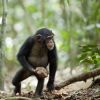
Mysterious chimpanzee behaviour may be evidence of ‘sacred’ rituals
Groundbreaking video footage could change the way we look at our closest relatives. By Laura Kehoe.
-
 +18 +1
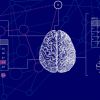
Coincidences and the Meaning of Life
The surprising chances of our lives can seem like they’re hinting at hidden truths, but they’re really revealing the human mind at work.
-
 +36 +1
Why Don’t People Manage Debt Better?
Psychology experiments show why even the financially savvy have a hard time following sensible strategies. By Emory Nelms and Dan Ariely.
-
 +27 +1
Hunting for the neuroscience of heat and violence
Economists and psychologists tell us that increased temperatures can drive conflict. Is there any brain science here? By Clayton Aldern.
-
 +28 +1
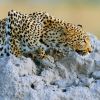
A Parasite, Leopards, and a Primate’s Fear and Survival
The parasite Toxoplasma gondii may affect the behavior of chimpanzees — and possibly other primates — toward a natural predator, a study finds. By Carl Zimmer. (Feb. 16)
-
 +20 +1
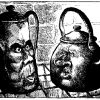
Subjective Tastes & Character Judgments—Two Great Flavors that Taste Lousy Together
To be very clear: I’m not talking about subjective tastes that have a genuine moral component. I understand that there are moral issues with, for instance, food (eating meat or not?); consumer items (were they made by exploited laborers?); choice of transportation (does it pollute?); and lots of other examples. I’m also not talking about subjective choices that actually do immediately infringe on other people, like playing loud music at three in the morning and keeping the neighbors awake.
-
 +15 +1
Why people fall for pseudoscience (and how academics can fight back)
Ingrained cognitive biases play a role, as does inverted snobbery about educational privilege. But we must battle on, says this scientist
-
 +31 +2
Mental depletion complicates financial decisions for the poor
Now imagine that you’re poor, and you have a decision in the morning about whether to take the bus or to have breakfast, and you have a decision to make in the day on whether to buy medications or put money aside for rent. Those decisions are incredibly depleting. It’s just an exhausting way to live.
-
 +37 +1
Natural-born paedophiles
Some paedophiles might be hard-wired to commit their abusive acts. Should that alter their crime in the eyes of the law? By Caren Chesler.
-
 +37 +2
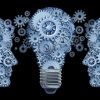
13 cognitive biases that impede our rational thinking ability
Your father prepares dinner, saying that he tried a brand new recipe. He assures you that you’ll have eaten nothing like it before. When you take your first bite, you realize it really is nothing like you've eaten before, but not in a good way.
-
 +21 +2
The 5 Gifts of Failure
Failure isn't always avoidable. And even when it is, the lessons it can teach us can be more rewarding than the benefits that come with success. To reach these benefits, you need to approach failure with the right frame of mind.
-
 +36 +2
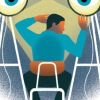
Eye Contact: How Long Is Too Long?
There's a reason your mother told you to look people in the eye when you talk to them: eye contact conveys important social cues. Yet when someone holds your gaze for more than a few seconds, the experience can take on a different tenor. New work elucidates the factors that affect whether we like or loathe locking eyes for a lengthy period.
-
 +26 +1
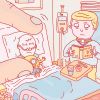
The League of Extraordinary Assholes
There's a jerk in every room. Is it you?
Submit a link
Start a discussion