




















-
 +14 +1
Prehistoric teeth hint at Stone Age sex with Neanderthals
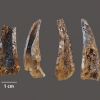
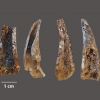
A new analysis of 11 teeth found in a cave in Jersey, an island in the English Channel, suggests that some of them could have belonged to individuals that had mixed Neanderthal and early modern human ancestry.
-
 +15 +1
The aroma of distant worlds: New evidence that spices, fruits from Asia had reached the Mediterranean earlier than thought
Asian spices such as turmeric and fruits like the banana had already reached the Mediterranean more than 3000 years ago, much earlier than previously thought. A team of researchers has shown that even in the Bronze Age, long-distance trade in food was already connecting distant societies.
-
 +13 +1
New Research Bolsters Claim That Neanderthals Buried Their Dead
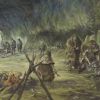
A re-analysis of the skeleton of a 2-year-old Neanderthal is providing some of the strongest evidence yet that Neanderthals deliberately buried their dead.
-
 +24 +1
Neanderthals And Humans Were at War For Over 100,000 Years, Evidence Shows
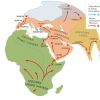
Around 600,000 years ago, humanity split in two. One group stayed in Africa, evolving into us. The other struck out overland, into Asia, then Europe, becoming Homo neanderthalensis – the Neanderthals. They weren't our ancestors, but a sister species
-
 +32 +1
Archery Could Date Back 48,000 Years in South Asia
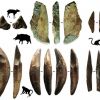
Ancient bow-and-arrow technology dating back some 48,000 years has been discovered in a Sri Lankan cave, making it the oldest evidence of archery to be found in this part of the world.
-
 +1 +1
+1 +1Why Are There So Many Humans?
The populations of the great apes were once nearly equal. Now, one great ape species outnumbers the rest. How did we do it?
-
 +12 +1
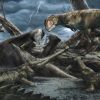
Palaeontologists reveal 'the most dangerous place in the history of planet Earth'
100 million years ago, ferocious predators, including flying reptiles and crocodile-like hunters, made the Sahara the most dangerous place on Earth.
-
 +4 +1
+4 +1Neandertals had older mothers and younger fathers
When the ancestors of modern humans left Africa 50,000 years ago they met the Neandertals. In this encounter, the Neandertal population contributed around two percent of the genome to present day non-African populations. A collaboration of scientists from Aarhus University in Denmark, deCODE Genetics in Iceland, and the Max Planck Institute for Evolutionary Anthropology in Leipzig, Germany, have conducted the most comprehensive study to date using data obtained from 27,566 Icelanders, to figure out which parts of our genomes contain Neandertal DNA and what role it plays in modern humans.
-
 +35 +1
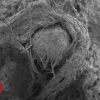
50,000-year-old string found at Neanderthal site
A three-ply cord fragment made from bark was spotted on a stone tool recovered at a cave in France.
-
 +28 +1
Recent human ancestors may have regularly climbed trees, study suggests
Hip joints provide clues as to how ancient hominins used their limbs
-
 +41 +1
Neanderthals Feasted on Seafood, Seabirds, Perhaps Even Dolphins
Scientists say that a discovery in a seaside Portuguese cave further challenges popular images of Neanderthals as meat-eating brutes.
-
 +3 +1
+3 +1Neanderthals Feasted on Seafood, Seabirds, Perhaps Even Dolphins
Scientists say that a discovery in a seaside Portuguese cave further challenges popular images of Neanderthals as meat-eating brutes.
-
 +22 +1
Why We Buy Weird Things in Times of Crisis
With COVID-19 making its way around the United States, people are emptying stores of toilet paper. Archaeology throws a light on other bouts of odd consumer behavior.
-
 +3 +1
+3 +1Did Neanderthals bury their dead with flowers? New skeleton find suggests so
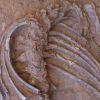
Half a century after archaeologists found pollen around the skeleton of a Neanderthal, the discovery of new remains could reveal more about ancient death practices among these human cousins.
-
 +1 +1
+1 +1The real ‘paleo diet’ may have been full of toxic metals
Study finds high levels of dangerous metals in foods favored by prehistoric humans
-
 +4 +1
+4 +1Scientists find evidence of 'ghost population' of ancient humans
Researchers 'do not have a clear identity for this archaic group' but believe it may have split from ancestors of Homo sapiens 625,000 years ago
-
 +21 +1
'Ghost' DNA In West Africans Complicates Story Of Human Origins
Modern genomes from Nigeria and Sierra Leone show signals that scientists call "ghost" DNA — from an unknown human ancestor. That means that prehistoric humans likely procreated with an unknown group.
-
 +19 +1
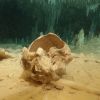
An ancient skeleton from an underwater Mexican cave sheds light on early Americans
A nearly 10,000-year-old skeleton discovered in a submerged Mexican cave provides more clues to how and when people settled the Americas.
-
 +16 +1
Ancient human IQ can't be measured in the brain, but somewhere else — study
How did human intelligence evolve? Anthropologists have studied this question for decades by looking at tools found in archaeological digs, evidence of the use of fire, and so on, and changes in brain size measured from fossil skulls.
-
 +16 +1
Ancient skulls tell new story about our first settlers
An analysis of four ancient skulls found in Mexico suggests that the first humans to settle in North America were more biologically diverse than scientists had previously believed.
Submit a link
Start a discussion