




















-
 +10 +4
Six children killed 'for body parts'
Six children in south-western Tanzania have been killed and had their ears and teeth removed, the authorities say. Some of the bodies of the children, aged between two and nine years old, were also missing limbs. "This is all about superstitious beliefs and many believe they will get help from witchcraft," Njombe District Commissioner Ruth Msafiri said. Other local children are also missing and Ms Msafiri said people should work together to deal with the issue.
-
 +1 +1
+1 +1South Sudan institutions ban bleaching creams – KMAUPDATES
JUBA, South Sudan South Sudan’s Drug and Food Control Authority has banned all bleaching products in the country especially those containing mercury and hydro-quinone.
-
 +1 +1
+1 +1A “pacemaker” for North African climate
The Sahara desert is one of the harshest, most inhospitable places on the planet, covering much of North Africa in some 3.6 million square miles of rock and windswept dunes. But it wasn’t always so desolate and parched. Primitive rock paintings and fossils excavated from the region suggest that the Sahara was once a relatively verdant oasis, where human settlements and a diversity of plants and animals thrived.
-
 +19 +3
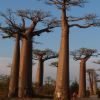
Ancient Baobab trees in Southern Africa are dying. Scientists blame climate change
Driving beyond South Africa's Limpopo province, into the village of Chivadini, people and grassland are scarce. But the oldest living organisms in Africa -- baobab trees -- are abundant. These spectral behemoths blend into the Saharan countryside and have been an icon of the African savannah since millennia. As the oldest seed producing trees in the world, their resilience -- some are more than 2,000 years old -- have earned them many names in myths, legends and folklore.
-
 +14 +4
The Mysterious Lost City of the Kalahari
In 1885, an explorer ventured out into an uncharted area of the Kalahari Desert and would lay eyes upon a great mystery that still remains unexplained. By Brent Swancer.
-
 +30 +3
Tanzania announces 'surveillance squad' to hunt down homosexuals
Residents in Tanzania’s biggest city have been urged to inform on their neighbours and friends ahead of a police operation to hunt down and jail homosexuals.
-
 +20 +5
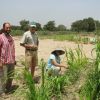
How one tough shrub could help fight hunger in Africa
The trick to boosting crops in drought-prone, food-insecure areas of West Africa could be a ubiquitous native shrub that persists in the toughest of growing conditions. Growing these shrubs side-by-side with the food crop millet increased millet production by more than 900 percent.
-
 +13 +1
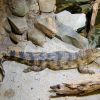
Africa’s slender-snouted crocodile is not one but two species
At first glance, the slender-snouted crocodiles living in Lake Tanganyika in Central Africa look very similar to the ones in the Gambia River in West Africa. But as it turns out, the crocodile is not one but two distinct species: one unique to West Africa and the other to Central Africa.
-
 +20 +3
Using technology to fight counterfeit medicines in Africa and South Asia
Hundreds of thousands of people have died in Africa and South Asia due to the widespread scourge of counterfeit medicines. So social entrepreneur Bright Simons founded a company to use technology to let people verify a medicine’s authenticity with a simple text message.
-
 +10 +3
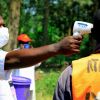
Africa could be on the cusp of its second epidemic this decade
AID agencies say the Ebola outbreak in Democratic Republic of Congo could be tipping into a wider crisis as the number of new cases spiked and violence grounded health workers for a second time.
-
 +10 +1
Unprotected
An acclaimed American charity said it was saving some of the world’s most vulnerable girls from sexual exploitation. But from the very beginning, girls were being raped.
-
 +14 +2
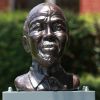
The Power of Untold Slave Narratives
In 'Barracoon,' Zora Neale Hurston challenges the American public’s narrow view of the African continent, the transatlantic slave trade, and the diasporic cultures that came as a result of it.
-
 +19 +2
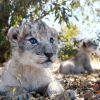
World’s first test tube lions are thriving and raising hopes more big cats could be saved from extinction
The world’s first test tube lions are thriving a month after they were born, raising hopes the process could be used to save endangered big cats from extinction. The two cubs, named Viktor and Isabel, arrived following the artificial insemination of their mother by scientists at the University of Pretoria in South Africa. Experts say the pioneering IVF – in which a male’s sperm was placed into the female egg – could now be used to breed species of tiger, lynx and snow leopard, whose numbers are all falling.
-
 +15 +1
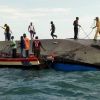
Man saved from air pocket in sunken ferry
A man has been rescued from a ferry that capsized on Lake Victoria, Tanzania, two days after it overturned with the loss of at least 207 lives. The engineer, named locally as Alphonce Charahani, reportedly survived in an air pocket inside the MV Nyerere ferry, which capsized near Ukara island on its way from Bugorora on Thursday. He is said to be in a serious condition.
-
 +11 +3
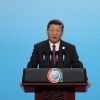
China's Xi offers another $60 billion to Africa, but says no to 'vanity' projects
Chinese President Xi Jinping offered another $60 billion in financing for Africa on Monday and wrote off some debt for poorer African nations, while warning against funds going toward “vanity projects”. Speaking at the opening of a major summit with African leaders, Xi promised development that people on the continent could see and touch, but that would also be green and sustainable.
-
 +10 +2
Ancient livestock dung heaps are now African wildlife hotspots
Often viewed as wild, naturally pristine and endangered by human encroachment, some of the African savannah’s most fertile and biologically diverse wildlife hotspots owe their vitality to heaps of dung deposited there over thousands of years by the livestock of wandering herders, suggests new research in the journal Nature.
-
 +10 +2
'It's true that whites stole our land, but they're also Namibians,' says President Geingob
Namibia's President Hage Geingob on Sunday urged citizens to take part in the debate over mooted land reforms, including the expropriation of land, in order to avoid chaos. The southern African country will hold a "national land conference" from October 1-5, for discussion of policies that will accelerate the land reform programme.
-
 +32 +2
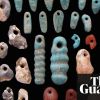
Kenya burial site shows community spirit of herders 5,000 years ago
Large-scale cemetery in Africa points to shared workload without social hierarchy
-
 +20 +3
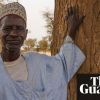
The great African regreening: millions of 'magical' new trees bring renewal
Farmers in Niger are nurturing gao trees to drive Africa’s biggest environmental change
-
 +6 +1
+6 +1African palm oil expansion is bad news for the continent’s primates
Palm oil is ubiquitous and is set to become more so over the next few decades. The oil is used in food, cleaning, and beauty products and as biofuel, so demand is set to grow rapidly. With this skyrocketing demand comes a need for the land on which to grow more oil palms—and a threat to the ecosystems currently using that land.
Submit a link
Start a discussion