






















10 years ago
1
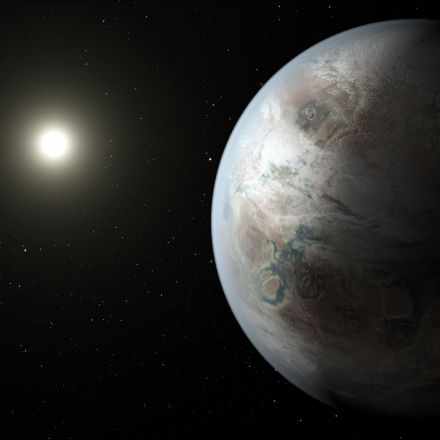
NASA’s Kepler Mission Discovers Bigger, Older Cousin to Earth
NASA's Kepler mission has confirmed the first near-Earth-size planet in the “habitable zone” around a sun-like star. This discovery and the introduction of 11 other new small habitable zone candidate planets mark another milestone in the journey to finding another “Earth.”
Continue Reading http://www.nasa.gov
Additional Contributions:
-
+2Submitted 10 years ago by GingerBreadMan
-
+1Submitted 10 years ago by thraenthraen

-
+1Submitted 10 years ago by thraenthraen

-
+1Submitted 10 years ago by thraenthraen




Join the Discussion
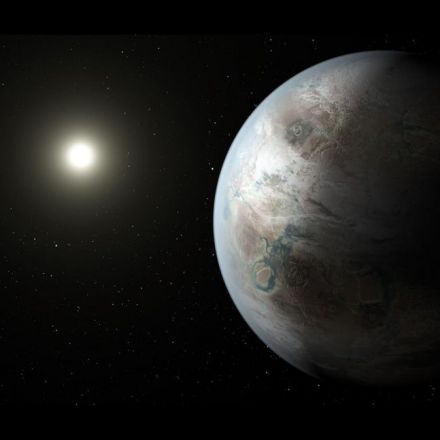
What we know about Kepler 452-b:
- It's the smallest exoplanet discovered to date discovered orbiting in the habitable zone of a G2-class star, just like the Earth and the Sun.
- Kepler-452b is 60 percent larger in diameter than Earth and is considered a super-Earth-size planet.
- It's likely rocky.
- While Kepler-452b is larger than Earth, its 385-day orbit is only 5 percent longer.
- The planet is 5 percent farther from its parent star Kepler-452 than Earth is from the Sun.
- Kepler-452 is 6 billion years old, 1.5 billion years older than our sun, has the same temperature, and is 20 percent brighter and has a diameter 10 percent larger.
- The Kepler-452 system is located 1,400 light-years away in the constellation Cygnus. (Currently, it would take us 42 generations to get there.)
- They also said that the planet is likely to have lots of clouds and possibly active volcanoes.
- They also said that it receives about 10% more energy than the earth does because of the proximity and age of the nearby star, I think this would mean it would have a little bit of a higher temperature.
- Also since it is 6 billion years old there is way more time than we have had on Earth for life to have developed given the chance.
- For clarity, Kepler-452 is the star, and Kepler-452b is the planet.