





















-
 +19 +2
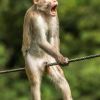
Monkey's unfortunate incident wins funniest animal photo award
The Comedy Wildlife Photography Awards dub a monkey's painful pose on a taut wire the funniest animal photo of the year.
-
 +18 +4
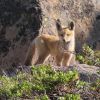
Rare Sierra Nevada red foxes survive massive Dixie fire that burned habitat
There might be something to the adage “clever as a fox.” When the monstrous Dixie fire scorched a northeastern California expanse that the elusive Sierra Nevada red fox calls home, wildlife officials were worried.
-
 +21 +3
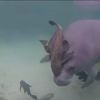
Invasive armored catfish causing harm to Florida's manatees
There is another invasive species causing problems in Florida. It's a fish, with a suit of armor, known as Plecostomus, or "Pleco" or the Armored Catfish.
-
 +16 +6
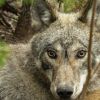
Fight over U.S. wolf protections heads to federal courtroom
A U.S. government attorney urged a federal judge Friday to uphold a decision from the waning days of the Trump administration that lifted protections for gray wolves across most of the country, as Republican-led states have sought to drive down wolf numbers through aggressive hunting and trapping.
-
 +16 +3
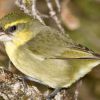
Critically Endangered Bird Believed Dead Spotted Alive in Hawaiian Islands
A golden, thick-billed bird thought to have died more than 1.5 years ago was seen alive on the slopes of a Maui volcano. The discovery is giving researchers hope for the critically endangered species. The Kiwikiu, or Maui parrotbill, is recognized as an endangered species by the U.S. Fish and Wildlife Services and is endemic to the island.
-
 +4 +1
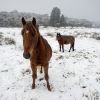
+4 +1Scientists say Australian plan to cull up to 10,000 wild horses doesn’t go far enough
A fast-growing population of feral horses in an alpine national park needs to be substantially reduced in number, researchers argue.
-
 +4 +1
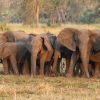
+4 +1Elephants have evolved to be tuskless because of ivory poaching, a study finds
A hefty set of tusks is usually an advantage for elephants, allowing them to dig for water, strip bark for food and joust with other elephants. But during episodes of intense ivory poaching, those big incisors become a liability.
-
 +3 +1
+3 +1‘I was terrified’: the vet sterilizing Pablo Escobar’s cocaine hippos
When Gina Paola Serna studied to become a biologist and veterinarian in Colombia, she never expected to one day be tasked with neutering an invasive herd of hippos that once belonged to Pablo Escobar.
-
 +4 +1
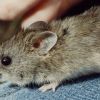
+4 +1'A dumpling on legs': Native mouse thought extinct found on Flinders Island
A native species of mouse that was last seen in Tasmania's north-east 17 years ago has been caught on camera on Flinders Island — sniffing a stick dipped in peanut butter.
-
 +12 +1
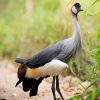
Rwandan conservationist helps to save hundreds of cranes
The Umusambi Village has rescued more than 200 cranes from captivity over the years, helping to boost the population of the endangered birds to 881 from 487 just four years ago.
-
 +2 +1
+2 +1Vast area of Scottish Highlands to be rewilded in ambitious 30-year project
A large swathe of the Scottish Highlands stretching between the west coast and Loch Ness is to be rewilded as part of a 30-year project to restore nature. The Affric Highlands initiative aims to increase connected habitats and species diversity over an area of 200,000 hectares (500,000 acres), incorporating Kintail mountain range, and glens Cannich, Moriston and Shiel. Plans include planting trees, enhancing river corridors, restoring peat bogs and creating nature-friendly farming practices.
-
 +4 +1
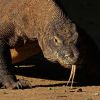
+4 +1New Zealand Scientists Want To Regulate Cats After One Regurgitated 28 Lizards - Reptiles Magazine
It is estimated that there are 2.5 million feral cats in New Zealand.
-
 +11 +2
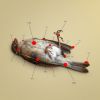
A mysterious illness killing America's songbirds has scientists stumped
One day in late May, a stranger contacted Erica Miller about a sick bird. For a volunteer wildlife rehabilitator, that isn't unusual. She's rescued 1,794 animals so far this year, many of them birds, and mostly thanks to tips from people who come across sick or injured animals. This was different.
-
 +13 +3
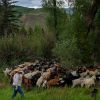
The Unconventional Weapon Against Future Wildfires: Goats
Lani Malmberg travels with a few hundred goats, which eat the tall brush and grasses that power Western wildfires.
-
 +17 +1
Firm raises $15m to bring back woolly mammoth from extinction
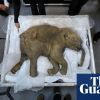
Ten thousand years after woolly mammoths vanished from the face of the Earth, scientists are embarking on an ambitious project to bring the beasts back to the Arctic tundra. The prospect of recreating mammoths and returning them to the wild has been discussed – seriously at times – for more than a decade, but on Monday researchers announced fresh funding they believe could make their dream a reality.
-
 +13 +2
Upside-down rhino research wins Ig Nobel Prize
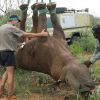
An experiment that hung rhinoceroses upside down to see what effect it had on the animals has been awarded one of this year's Ig Nobel prizes. Other recipients included teams that studied the bacteria in chewing gum stuck to pavements, and how to control cockroaches on submarines.
-
 +18 +1
42 hilarious finalists in this year's Comedy Wildlife Photography Awards
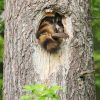
The photos feature otters, bears, monkeys, tigers, prairie dogs, penguins, and other wildlife in comical poses.
-
 +14 +4
Meet the Hunters Trying to Fix Florida's Python Invasion
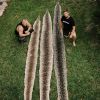
Anne Gorden-Vega notices a yellowish glint in the brush and slams on the brakes. She’s out of her Chevy Colorado pickup before I can even process what’s happening. The 62-year-old art teacher is basically operating on muscle memory as she dives into the brush with a flashlight, searching for the Burmese python she knows is there.
-
 +16 +5
Ecological Amnesia: Life Without Wild Things
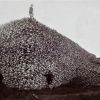
We have forgotten the primeval forests and expansive grasslands where wildlife thrived, an ecological amnesia. We must work to remember, regenerate, and restore
-
 +4 +1
+4 +1Endangered bettong reintroduced in Australia after more than a century
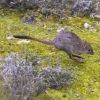
Brush-tailed bettongs are back. These tiny endangered marsupials have been reintroduced to mainland South Australia after disappearing more than a century ago. The bettong, also known as a woylie, once occupied more than 60 per cent of Australia, but was almost wiped out when cats and foxes were introduced by Europeans. Only about 15,000 are alive today.
Submit a link
Start a discussion