


















-
 +18 +3
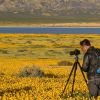
California's superbloom is so big and bright, it can be seen from space
NASA's Landsat 9 satellite, which was launched in 2021 to capture images of Earth's land surface, sent back images of bright purple and green blooms in Carrizo Plain National Park.
-
 +17 +5
Europe’s Juice Mission Will Launch to Jupiter and Its Moons: How to Watch
The spacecraft will set off on an eight-year journey to the solar system’s largest planet, focusing on moons that could offer clues in the search for extraterrestrial life.
-
 +3 +1
+3 +1New Zealander without college degree couldn’t talk his way into NASA and Boeing—so he built a $1.8 billion rocket company
After years of dreaming about building rockets, Peter Beck realized that the only path to his dream job was starting his own company. Here's what happened next.
-
 +3 +1
+3 +1Why the Moon Is the Next Tourism Frontier
Tourists travelling into outer space isn’t a fantasy for the future—it’s happening now
-
 +17 +3
Canada proposes to develop robotic lunar rover for Artemis
As Canada celebrates its first astronaut to go to the moon, it is starting a new project that could eventually enable a Canadian to walk on the moon.
-
 +2 +1
+2 +1What Flight 50 Means for the Ingenuity Mars Helicopter
Team Lead Teddy Tzanetos on the dual rotor’s milestone aerial mission
-
 +23 +5
SpaceX will conduct a Starship launch rehearsal next week
SpaceX is preparing to carry out a launch rehearsal of its next-generation Starship rocket as early as next week.
-
 +16 +6
Updated space safety document outlines rules of the road for avoiding collisions
An updated version of a space safety document endorsed by more than two dozen organizations includes “rules of the road” for avoiding collisions.
-
 +14 +2
‘Coherent’ radio signal from alien planet
Astronomers are one step closer to learning whether there is life beyond Earth, following the discovery of an exoplanet that’s able to emit a “coherent” radio signal.
-
 +15 +3
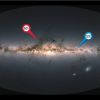
2 newfound black holes are the closest ever to Earth and like nothing seen before
The two black holes lie just 1,560 and 3,800 light-years from our planet, respectively.
-
 +24 +6
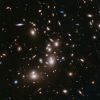
Galaxy clusters yield new evidence for standard model of cosmology
Cosmologists have found new evidence for the standard model of cosmology—this time, using data on the structure of galaxy clusters. In a recent study published in Monthly Notices of the Royal Astronomical Society, a team led by physicists at the Department of Energy's SLAC National Accelerator Laboratory and Stanford University made detailed measurements of the X-ray emission from galaxy clusters, which revealed the distribution of matter within them. In turn, the data helped the scientists test the prevailing theory of the structure and evolution of the universe, known as Lambda-CDM.
-
 +17 +3
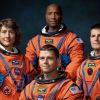
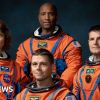
Nasa names first woman and black man on Moon mission
A team of four astronauts will take humanity back to the Moon after a gap of 50 years.
-
 +13 +4
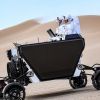
SpaceX’s Starship will carry an SUV-sized rover to the Moon in 2026
Meet FLEX, a lunar vehicle that's bigger than NASA's Perseverance rover and can travel at up to 15 miles per hour
-
 +3 +1
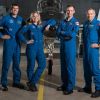
+3 +1Canada will be sending one of its astronauts to the moon. Here's what to know about them
The Canadian Space Agency has four active astronauts, three of whom have never been to space. That could soon change in a big way
-
 +14 +1
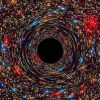
Scientists May Have Found an ‘Ultramassive Black Hole’ With a Mass of 30 Billion Suns
Scientists may have identified an ultramassive black hole 30 billion times the mass of our sun hiding in an image captured by the Hubble Space Telescope. Black holes are born when colossal stars many times the size of our sun run out of fuel, and collapse in on themselves in spectacular fashion. The resulting singularity is incredibly dense, and boasts a gravitational pull so powerful that light itself cannot escape it.
-
 +21 +5
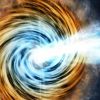
Object mistaken as a galaxy is actually a black hole pointed directly at Earth
According to new study, an object that was once believed to be a radio galaxy is actually an active black hole that changed angles to aim straight at Earth. Scientists are baffled by a supermassive black hole in a far-off galaxy that has suddenly turned sharply 90 degrees to face straight toward Earth while spewing radiation at close to light speed.
-
 +10 +3
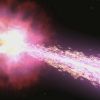
The solar system was hit with a gamma-ray burst so bright, it blinded scientists' equipment in space
One astronomer dubbed the high-intensity beam of radiation the BOAT: the Brightest of All Time.
-
 +9 +2
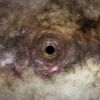
+9 +2Ultramassive black hole discovered by UK astronomers
An ultramassive black hole about 30bn times the mass of the Sun has been discovered by astronomers in the UK. Scientists at Durham University said the gargantuan black hole was one of the biggest ever found. The team described their findings, published in the journal Monthly Notices of the Royal Astronomical Society, as “extremely exciting”.
-
 +4 +1
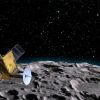
+4 +1Lockheed Martin is building a Moon-to-Earth satellite communications network
If humanity is going to have a long-term presence on the Moon, it's going to need reliable communications — and Lockheed Martin thinks it can provide that link. The company has created a spinoff devoted to lunar infrastructure, Crescent Space, whose first project is a Moon-to-Earth satellite network. Parsec, as it's called, uses a constellation of small lunar satellites to provide a non-stop connection between astronauts, their equipment and the people back home. The system will also provide navigation help.
-
 +17 +2
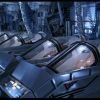
Astronauts that hibernate on long spaceflights is not just for sci-fi. We could test it in 10 years.
"Before we can use it on people, everything needs to be adjusted. However, I believe that a feasible timetable is 10 years." Within ten years, a scholar with the European Space Agency (ESA) believes that it will be possible to conduct the first hibernation experiments on humans.
Submit a link
Start a discussion