



















-
 +10 +1
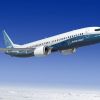
Report on 737 Max 8 crash blames Boeing design, Lion Air staff
Indonesia's final investigation says a faulty sensor, improper maintenance procedures, and problems with a flight control system all contributed to the October 2018 crash that killed 157 people.
-
 +24 +1
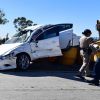
Drivers are killing pedestrians at the highest rate in almost 30 years
Automakers are getting better at protecting the people who buy their cars, but everyone else is getting slaughtered.
-
 +25 +1
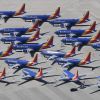
Boeing Pilots Detected 737 Max Flight Control Glitch 2 Years Before Deadly Crash
New evidence indicates that Boeing pilots knew about "egregious" problems with the 737 Max airplane three years ago, but federal regulators were not told about them. Investigators say the plane's new flight control system, called MCAS, is at least partially to blame for 737 Max crashes in Indonesia in 2018 and Ethiopia this year that killed 346 people. Acting on data from a single, faulty angle-of-attack sensor, MCAS repeatedly forced both planes into nosedives as the pilots struggled, but failed to regain control.
-
 +16 +1
Collision course: why are cars killing more and more pedestrians?
The long read: For drivers, roads are safer than ever – but for people on foot, they are getting deadlier. Car companies and Silicon Valley claim that they have the solution. But is that too good to be true?
-
 +25 +1
Former Amazon Employees Helped Make a Hotline to Report Unsafe Working Conditions
A new project wants to help Amazon workers report unsafe working conditions.
-
 +32 +1
Technology to save kids in hot cars exists. So why isn’t it in every vehicle?
At a car dealership a couple of months ago, Miles Harrison's 8-year-old daughter climbed into the back seat of a parked sports utility vehicle that a salesman was showing to the family. What happened next startled Harrison: As his daughter was exploring the back, the salesman got out of the car and shut the driver's door behind him. Suddenly, "the loudest horn you could ever imagine" started blaring, Harrison said.
-
 +17 +1
Pueblo man creates device to prevent kids from dying in hot cars
A former engineer in Pueblo has taken on a new challenge; preventing kids from dying in hot, locked cars. Lane Maxwell wanted to come up with a device that could remind parents they have a child in the car without relying on any other technology. "This is a device to remind the driver that there's still a baby in the car seat," Maxwell said.
-
 +6 +1
+6 +1Ford knew Focus, Fiesta models had flawed transmission, sold them anyway
The carmaker says that it's not a safety problem if your car slips into neutral on the highway.
-
 +18 +1
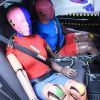
The Safest Place in a Car Crash Isn’t the Back Seat Anymore
Researchers have new recommendations for where to sit (in the front, for adults; kids still get the back) and what features to look for.
-
 +24 +1
Why Safer Cars Don't Lead To Cheaper Car Insurance ... Yet
Many new cars have optional features that can help prevent accidents. But those same features also make repairs more expensive. The result? Premiums can go up for cars that are less likely to crash.
-
 +20 +1
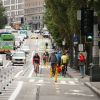
Separated Bike Lanes Means Safer Streets, Study Says
Cities that build protected lanes for cyclists end up with safer roads for people on bikes and people in cars and on foot, a new study of 12 large metropolises revealed Wednesday.
-
 +3 +1
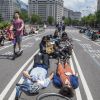
+3 +1Bike lanes need physical protection from car traffic, study shows
There are plenty of good reasons that people should cycle more. People who exercise more are healthier and can score higher on cognitive tests, for one thing. And replacing short car trips with journeys by bike (or on foot) is probably a good thing if we want to try to deal with this whole climate change thing. But that will only work if people feel safe swapping their two-ton deathmobiles for a pair of pedals. And it may well mean providing cyclists with bike lanes protected from vehicle traffic with more than a coat of paint.
-
 +36 +1
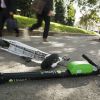
Head injuries, broken bones plague e-scooter users as more data rolls in
A three-month period in Austin, Texas, saw 20 injuries per 100,000 rides.
-
 +16 +1
Updated safe sleep guidance warns against using soft bedding, sofa sleeping
Most pediatricians know what makes a safe sleep environment for babies. But parents still are attracted to elaborate bedding and plush accessories — all the accouterments experts say have no place in an infant’s crib. That’s one reason new AAP safe sleep guidelines released today include basic recommendations from the past plus new warnings about increased risk of sudden infant death syndrome (SIDS) from use of soft bedding and the dangers of babies sleeping on couches and armchairs.
-
 +1 +1
+1 +1Why do an IOSH course? The IOSH Benefits
Looking to raise the health and safety standards in your workplace? IOSH could be the course for you. We've been digging deep into the benefits IOSH brings!
-
 +14 +1
Brussels Becomes First Major City to Halt 5G Due to Health Effects
Great news. A Belgian government minister has announced that Brussels is halting its 5G plans due to health effects.
-
 +21 +1
Adventurous. Alone. Attacked.
The number of female solo travelers has skyrocketed, but amid Instagram-worthy escapades are tales of violence and death, raising questions about how the world is greeting women who travel alone.
-
 +19 +1
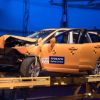
In 1959, Volvo gave us the seat belt—here’s what its safety team is building now
Its goal is no deaths or serious injuries in a new Volvo by 2020.
-
 +18 +1
Lack of redundancies on Boeing 737 MAX system baffles some involved in developing the jet
Boeing has long embraced the power of redundancy to protect its jets and their passengers from a range of potential disruptions, from electrical faults to lightning strikes. The company typically uses two or even three separate components as fail-safes for crucial tasks to reduce the possibility of a disastrous failure. Its most advanced planes, for instance, have three flight computers that function independently, with each computer containing three different processors manufactured by different companies.
-
 +18 +1
Flawed analysis, failed oversight: How Boeing, FAA certified the suspect 737 MAX flight control system
Federal Aviation Administration managers pushed its engineers to delegate wide responsibility for assessing the safety of the 737 MAX to Boeing itself. But safety engineers familiar with the documents shared details that show the analysis included crucial flaws.
Submit a link
Start a discussion