



















-
 +18 +1
It’s Alright
Fractures with Matthew Chuang
-
 +8 +1
+8 +1America at the Atomic Crossroads
Seventy years ago, at Bikini Atoll, weapons of mass destruction became a form of consumer entertainment. By Alex Wellerstein. (July 25, 2016)
-
 +30 +1
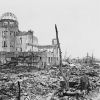
Hiroshima: the Crime That Keeps on Paying, But Beware the Reckoning
On his visit to Hiroshima last May, Obama did not, as some had vainly hoped he might, apologize for the August 6, 1945 atomic bombing of the city. Instead he gave a high-sounding speech... By Diana Johnstone.
-
 +17 +1
Postcards from Pripyat, Chernobyl
Danny Cooke
-
 +2 +1
+2 +1Fukushima in New York? This Nuclear Plant Has Regulators Nervous
A new documentary explores the fight around Indian Point Energy Center in the wake of Japan’s 2011 nuclear disaster. By Andrew Lapin.
-
 +19 +1
A brief history of the nuclear triad
There is a lot of buzzing about lately about the future of the United States’ “nuclear triad.” The triad is the strategic reliance on three specific delivery “platforms” for deterrence: manned-bombers, long-range intercontinental ballistic missiles, and submarine-launched ballistic missiles. Do we need all three “legs” of the triad? By Alex Wellerstein. (July 15th, 2016)
-
 +26 +1
All Cards on the Table: First-Use of Nuclear Weapons
Recent news that President Obama may be considering changes in nuclear deterrence policy has caused a storm of speculation as to whether the time is right for the U.S. government to declare a no first-use policy… By Al Mauroni and David Jonas.
-
 +29 +1
Could this be the first nuclear-powered airliner?
A supersonic airliner that flies at three times the speed of sound – and runs on nuclear fusion. Stephen Dowling investigates the challenges of making airliners run on atomic power.
-
 +28 +1
‘The graveyard of the Earth’: inside City 40, Russia’s deadly nuclear secret
Ozersk, codenamed City 40, was the birthplace of the Soviet nuclear weapons programme. Now it is one of the most contaminated places on the planet – so why do so many residents still view it as a fenced-in paradise? By Samira Goetschel.
-
 +21 +1
Radiation From Ancient Supernovae May Have Given Evolution an Astrophysical Push
High-energy cosmic rays mean an increase in cellular mutations, for good and bad. By Michael Byrne.
-
 +28 +1
The Ghosts of Fukushima
Can a town devastated by a nuclear disaster be brought back to life? By Steve Featherstone. (June 20, 2016)
-
 +3 +1
+3 +1How Writers Have Tried to Make Sense of Chernobyl
Thirty years later, the best works written about the accident express profound doubts about language's ability to capture the disaster's magnitude. By Michael LaPointe.
-
 +16 +1
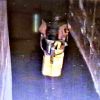
‘Catastrophic’ event at Hanford prompts emergency response
A leak in a massive nuclear waste storage tank at the Hanford Site has expanded significantly, KING 5 learned this [before last] weekend. Crews at Hanford lowered a camera into the two-foot-wide space between the tank’s inner and outer walls on Sunday and discovered 8.4 inches of radioactive and chemically toxic waste. (Apr. 18) [Autoplay video]
-
 +2 +1
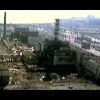
+2 +1The Battle of Chernobyl (2006)
Thomas Johnson
-
 +16 +1
Surprise nuclear strike? Here’s how we’ll figure out who did it
Post-detonation forensics may help provide answers if the nuclear nightmare becomes a reality. By Richard Stone. (Mar. 11)
-
 +3 +1
+3 +1Nuclear Plant Leak Threatens Drinking Water Wells in Florida
A finding that a Florida nuclear power plant is leaking polluted water has environmentalists threatening to sue over the safety of Biscayne Bay and the surrounding ecosystem. By Lizette Alvarez.
-
 +39 +1
Inside the Institutions for the Chernobyl Victims Forgotten by Society
In her photo series "The Invisible People of Belarus," photographer Jadwiga Bronte explored the effects of the Chernobyl disaster on the people of Belarus, specifically those living in governmental institutions called "internats." These institutions are part asylum, part orphanage, and part hospice... By Tom Usher.
-
 +30 +1
Revisiting South Africa’s Bomb
“At the time of South Africa’s decision to abandon its nuclear weapons program, the South African bomb was already small enough to arm both the H2 and South Africa’s ballistic missile under development. And, perhaps not so surprisingly, remnants of this program showed up on the market for export to places like Pakistan.” By Jeffrey Lewis. (Dec. 3)
-
 +22 +1
Here be dragons
Reading about the various radiation hazards in the Manhattan Project's history can be spine-tingling, even with a measured view of the dangers. By Alex Wellerstein. (Nov. 20)
-
 +41 +1
A Photographer Visits Fukushima
Inside Fukushima's nuclear disaster exclusion zone. By Arkadiusz Podniesinski. (Sept.)
Submit a link
Start a discussion