




















-
 +16 +1
How Physicists Proved The Universe Isn't Locally Real - Nobel Prize in Physics 2022 EXPLAINED
-
 +18 +1
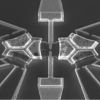
New analog quantum computers to solve previously unsolvable problems
Physicists have invented a new type of analog quantum computer that can tackle hard physics problems that the most powerful digital supercomputers cannot solve.
-
 +15 +1
Quantum breakthrough could revolutionise computing
Researchers have transferred 'quantum' information between computer chips at record speeds and accuracy.
-
 +20 +1
Quantum data conversion offers a path to scale up quantum technology architectures
Researchers at the Kastler Brossel Laboratory in Paris have succeeded in building the first converter between the two different types of quantum-bit encodings—an equivalent to converters for classical information, but targeted to different types of quantum data. This high-quality rewriting of information shows the way towards bridging the gap between the many different platforms competing in the race for quantum computing and may enable the interconnectivity of future networks.
-
 +23 +1
Physicists Say Aliens May Be Using Black Holes as Quantum Computers
If life is common in our Universe, and we have every reason to suspect it is, why do we not see evidence of it everywhere? This is the essence of the Fermi Paradox, a question that has plagued astronomers and cosmologists almost since the birth of modern...
-
 +16 +1
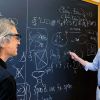
Physicists Rewrite a Quantum Rule That Clashes With Our Universe
Ajarring divide cleaves modern physics. On one side lies quantum theory, which portrays subatomic particles as probabilistic waves. On the other lies general relativity, Einstein’s theory that space and time can bend, causing gravity. For 90 years, physicists have sought a reconciliation, a more fundamental description of reality that encompasses both quantum mechanics and gravity. But the quest has run up against thorny paradoxes.
-
 +21 +1
US federal agencies required to adopt post-quantum security, private sector advised to follow
In an era of quantum computing "arms race", it is time to transition to quantum-safe systems.
-
 +22 +1
‘We have made science fiction come true!’ Scientists prove particles in a quantum system can be rejuvenated
An Austrian and Spanish team demonstrated that a process can be ‘rewound’ to restore the components of an atom to their previous state.
-
 +26 +1
Physicists Extend Qubit Lifespan in Pivotal Validation of Quantum Computing
Scientists were able to keep a qubit in its ideal state for twice as long as normal. Along the way, they demonstrated the practicality of quantum error correction (QEC), a process that keeps quantum information intact for longer by introducing room for redundancy and error removal.
-
 +22 +1
Quantum computing could break the internet.
We don’t know when. We don’t know who will get there first. But Q-day will happen — and it will change the world as we know it.
-
 +17 +1
Qubits 30 meters apart used to confirm Einstein was wrong about quantum
A new experiment uses superconducting qubits to demonstrate that quantum mechanics violates what's called local realism by allowing two objects to behave as a single quantum system no matter how large the separation between them. The experiment wasn't the first to show that local realism isn't how the Universe works—it's not even the first to do so with qubits.
-
 +28 +1
The expansion of the universe could be a mirage, new theoretical study suggests
The expansion of the universe could be a mirage, a potentially controversial new study suggests. This rethinking of the cosmos also suggests solutions for the puzzles of dark energy and dark matter, which scientists believe account for around 95% of the universe's total energy and matter but remain shrouded in mystery.
-
 +28 +1
Made you look
-
 +30 +1
Post-Quantum Resilience for Security Keys
We introduce a hybrid digital signature scheme based on two building blocks: a classically-secure scheme, ECDSA, and a post-quantum secure one, Dilithium. Our hybrid scheme maintains the guarantees of each underlying building block even if the other one is broken, thus being resistant to classical and quantum attacks.
-
 +54 +1
Encryption services are sending the right message to the quantum codebreakers
Quantum computers may still be years away, but it’s prudent that end-to-end encryption providers are ramping up defences
-
 +28 +1
Physics-Defying Quasiparticles Could Open a Whole New World of Microscopy
To pry into the private lives of objects in the microscopic domain (and beyond), scientists often rely on extremely bright sources of light.
-
 +36 +1
Particle accelerator on a chip
Particle accelerators are crucial tools in a wide variety of areas in industry, research and the medical sector. The space these machines require ranges from a few square meters to large research centers. Using lasers to accelerate electrons within a photonic nanostructure constitutes a microscopic alternative with the potential of generating significantly lower costs and making devices considerably less bulky. Until now, no substantial energy gains were demonstrated. In other words, it has not been shown that electrons really have increased in speed significantly. Two teams of laser physicists have just succeeded in demonstrating a...
-
 +43 +1
Physicists Say Magnets Offer Room Temperature Quantum Computing
The breakthrough material, a blend of aminoferrocene and graphene, has magnetic properties 100 times stronger than pure iron, eliminating the reliance on rare Earth materials for magnet construction.
-
 +38 +1
Many physicists assume we must live in a multiverse – but their basic maths may be wrong
The universe appears to be fine-tuned for life to evolve.
-
 +47 +1
Physicists Discover Surprising Quantum-Like Behavior in Tiny Bouncing Droplets
Quantum physics is fundamentally weird, so much so that we need thought experiments of hidden cats in boxes and metaphors of spinning coins to even begin to comprehend its laws.
Submit a link
Start a discussion