





















-
 +18 +3
NASA Refines Its Strategy for Getting Humans to Mars
The updated “Moon to Mars” blueprint involves 63 high-level objectives that could finally bring the Red Planet within reach.
-
 +12 +1
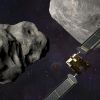
Bam! NASA spacecraft crashes into asteroid in defense test
CAPE CANAVERAL, Fla. (AP) — A NASA spacecraft rammed an asteroid at blistering speed Monday in an unprecedented dress rehearsal for the day a killer rock menaces Earth. The galactic grand slam occurred at a harmless asteroid 7 million miles (9.6 million kilometers) away, with the spacecraft named Dart plowing into the small space rock at 14,000 mph (22,500 kph).
-
 +18 +4
NASA gears up to deflect an asteroid
The U.S. space agency will launch a spacecraft next month on a mission to slam into an asteroid in October, and scientists are hopeful the impact will create a small crater that could help them learn how to better defend against future threats.
-
 +22 +3
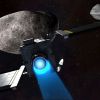
DART asteroid-smashing mission 'on track for an impact' Monday, NASA says
"At this point, I can say that the team is ready. The ground systems are ready, and the spacecraft is healthy and on track for an impact on Monday."
-
 +15 +2
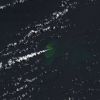
NASA’s Earth Observatory spots newly birthed island in the Pacific
NASA has spotted a newly birthed island out in the Pacific Ocean. The island is the result of a series of eruptions from a volcano situated in the Home Reef, a seamount in the Central Tonga Islands. NASA says the seamount repeatedly oozed lava and ejected plumes of ash and smoke starting on September 10. Eleven hours after the eruptions began, though, the space agency began to notice the new island.
-
 +15 +3
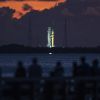
Why Florida is paradise for space nerds
Artemis is a big deal at an already-booming time for the space industry, sending fans flocking to the Space Coast.
-
 +15 +2
Jupiter is at its closest to Earth in 59 years, NASA says
The solar system's largest planet will make its close approach at the same time it moves into opposition.
-
 +14 +2
NASA's DART asteroid-impact mission will be a key test of planetary defense
When NASA's Double Asteroid Redirection Test (DART) slams into the tiny asteroid Dimorphos, it will be our first attempt to demonstrate our ability to deflect dangerous incoming asteroids.
-
 +26 +3
NASA’s InSight hears its first meteoroid impacts on Mars
The Mars lander’s seismometer picked up vibrations and sounds from four impacts in the past two years, a development detailed in a study co-authored by Brown planetary scientist Ingrid Daubar.
-
 +4 +1
+4 +1NASA science head to step down
The NASA associate administrator responsible for the agency’s science programs will resign by the end of the year after more than six years on the job. NASA announced Sept. 13 that Thomas Zurbuchen would step down as associate administrator for science at the end of the year. He had served in that role since October 2016.
-
 +12 +2
If you had to name a probe for Uranus, what would you call it?
Uranus always seems to be the butt of the joke, but this icy planet is actually one that scientists hope to dive deeper into in the future. In fact, many are already pushing for more missions to probe Uranus and learn more about the planet. That’s why some folks, like the people behind Twitter account @ExploreIGO, are trying to push for missions by coming up with a Uranus probe name.
-
 +4 +1
+4 +1NASA Has a New Target Date to Launch SLS Megarocket
After two failed attempts to launch its mega Moon rocket, NASA is planning for a third go at its inaugural Artemis mission. The space agency is now hoping to test the rocket on September 21 and finally launch it to space six days later, with a backup opportunity in early October. That is, if Space Force agrees.
-
 +20 +2
NASA targets Sept. 23 for next Artemis 1 launch attempt, but a lot has to go right
NASA needs to fix a hydrogen leak, ace a fueling test and secure a critical safety system waiver to even try to launch this month.
-
 +17 +5
Scientists discover two new "super-Earth" planets just 100 light-years away — and one may be suitable for life
An international team of scientists announced on Wednesday that they have discovered two new "super-Earth" planets just 100 light-years away. Both of them are significantly larger than our own planet — and one of them may even be suitable for life.
-
 +13 +3
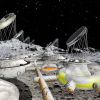
Our first moonbase could be made of inflatable habitats
Humans are finally on track to return to the Moon, and this time space agencies like NASA and the ESA are looking for ways to let humans stay there. Establishing a colony on the Moon could not only help with further space exploration, but it could allow us to study the lunar surface more in-depth. Now, researchers have proposed a crazy new inflatable moonbase that would also include its own greenhouses.
-
 +17 +2
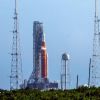
NASA once again calls off Artemis I launch due to technical issues
NASA has once again waved off an attempt to launch its massive new moon rocket on an uncrewed test mission because of technical issues. The scrub was called at 11:17 a.m. ET, three hours before the beginning of the launch window.
-
 +10 +1
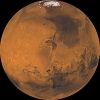
NASA's New Gadget Creates Oxygen On Mars
Finally, NASA has come up with the news which could possibly be a stepping stone for human life on Mars. A device called MOXIE may help in sustaining human life by producing oxygen. NASA has been exploring Mars’s climate for the past few decades. They, along with SpaceX CEO Elon Musk, have hinted at the possibility of life on Mars.
-
 +14 +4
SpaceX gets $1.4 billion contract for five more NASA astronaut launches
SpaceX's partnership with NASA just got $1.4 billion sweeter, as the space agency announced Wednesday that it's extending its deal with the company to cover five additional missions.
-
 +21 +3
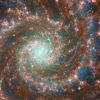
NASA releases stunning new image of the Phantom Galaxy
Stunning new images produced by the Hubble Telescope and the James Webb Telescope showcase the Phantom Galaxy, a spiral of solar systems 32 million light-years away from Earth.
-
 +3 +1
+3 +1Four Things We’ve Learned About NASA’s Planned Base Camp on the Moon
Humans haven’t set foot on the moon in more than a half century, but NASA’s Artemis program is going to send them back with a series of missions beginning in early September. When the first astronaut plants her boots in the lunar soil in 2025 as part of Artemis III, assuming the current schedule holds, it will be the start of an even more ambitious project than sending humans back to the moon: NASA plans to construct a base camp somewhere among the gray dust and craggy rocks of the moon’s south pole.
Submit a link
Start a discussion