




















-
 +23 +7
Ivermectin worthless against COVID in largest clinical trial to date
The largest clinical trial to date on the use of the antiparasitic drug ivermectin against COVID-19 concluded that the drug is completely ineffective at treating the pandemic disease, according to results published in The New England Journal of Medicine on Wednesday.
-
 +19 +2
A computer made from DNA-coated beads could detect viruses in saliva
A type of DNA computer that shows results through the motion of tiny beads could massively increase the parallel processing power of such machines. DNA computers take up less space than silicon-based ones and can work in wet environments. They could be used for applications such as detecting contamination in drinking water or monitoring sugar levels in the body.
-
 +18 +2
Could this trial be bringing male contraceptive pills one step closer?
A daily pill shows it can make mice temporarily sterile, and researchers hope to start human trials later this year.
-
 +24 +3
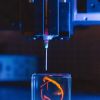
Building a Heart One Layer at a Time Using Advanced 3D Bioprinting Techniques
Using advanced 3D printing techniques, Mark Skylar-Scott and his team of Stanford bioengineers want to transform a paste made of living cells into hearts and other organs.
-
 +17 +3
Psychedelic Medicine: LSD, a Future Anti-Anxiety Pill?
The craze for psychedelics used for therapeutic purposes is real. However, the scientific evidence supporting their effectiveness and explaining their mode of action in treating mental health disorders is still very thin. A new study led by Dr. Gabriella Gobbi, a senior scientist in the Brain Repair and Integrative Neuroscience (BRaIN) Program at the Research Institute of the McGill University Health Centre (RI-MUHC), sheds light on previously unexplained neurobiological mechanisms by which LSD is believed to relieve anxiety.
-
 +16 +2
The controversial quest to make a 'contagious' vaccine
A new technology aims to stop wildlife from spreading Ebola, rabies, and other viruses. It could prevent the next pandemic by stopping pathogens from jumping from animals to people.
-
 +23 +1
Cancer drug uses an iron sensor to switch on in deadly tumors
Modern medicine has provided many cancer drugs with life-saving capabilities, but often toxic effects on healthy cells and resulting side effects stop them from reaching their full potential. Modifications to an existing drug promise to overcome this problem for a common and deadly form of cancer, with the scientists hailing the breakthrough as a potential "home run" for next-generation treatments.
-
 +22 +2
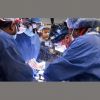
First Person With Transplanted Genetically Modified Pig Heart Dies
A 57-year-old man with terminal heart disease who made history as the first person to receive a genetically modified pig’s heart died on Tuesday at the University of Maryland Medical Center (UMMC), the hospital said.
-
 +22 +4
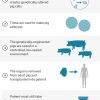
Man given genetically modified pig heart dies
The man died two months after operation, says the hospital that carried out the world-first surgery.
-
 +18 +1
Genetic study reveals causal link between blood type and COVID severity
Very early in the pandemic doctors began tracking the association between COVID-19 disease severity and a patient’s blood type. Now researchers have validated those early observations, finding several blood proteins are causally linked to an increased risk of hospitalization and death from COVID-19.
-
 +12 +5
A newly discovered molecule could lead to a cure for pancreatic cancer
It's the dreaded C-word: Cancer. Some dare not even say it in case it happens to them. Despite many advances in science, we are still at a loss for an effective cure for cancer. Now, a research team led by scientists at Roswell Park Comprehensive Cancer Center may have made a significant breakthrough in treating pancreatic cancer, according to a press release published by the institute on Wednesday.
-
 +12 +3
"Drug factory" beads implanted in mice take out tumors within a week
Among the many challenges in treating tumors is the difficulty in getting anti-cancer drugs to the right locations, and in the right amounts. A new type of implant developed at Rice University tackles both these issues, carrying the cellular machinery needed to produce and deliver continuous doses of anti-cancer compounds, and doing so with such potency that they took out 100 percent of ovarian tumors in mice in the space of a week.
-
 +17 +6
Why Women Suffer More Migraines Than Men
One in four women has had a migraine. And, it turns out, the debilitating headaches affect three times more women than men. Decades ago, these headaches were attributed to women's inability to cope with stress, a sort of hysteria. Now experts are starting to figure out the factors that really make a difference.
-
 +16 +2
Researchers make regenerative medicine breakthrough with volumetric 3D bioprinted livers
A research team from Utrecht University has successfully fabricated working livers using a newly developed ultrafast volumetric 3D bioprinting method. By means of visible light tomography, the volumetric bioprinting method enabled the successful printing of miniature stem cell units by making the cells “transparent”, which meant they retained their resolution and ability to perform biological processes.
-
 +12 +2
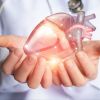
Revolutionary ‘bionic’ pacemaker capable of reversing heart failure now set for human trials
A potentially game-changing "bionic" pacemaker capable of restoring the human heart's naturally irregular beat is set to undergo trials involving heart patients in New Zealand this year. We may be on the medical precipice of turning back time, or actually reversing the heart rhythm effects of cardiac events.
-
 +9 +2
+9 +2The Healing Power of Psychedelics, According to Science
Modern science is slowly rediscovering how psychedelic substances can treat an array of mental illnesses.
-
 +26 +4
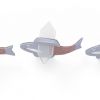
Biohybrid fish made from human cardiac cells swims like the heart beats
Device offers insights into artificial muscular pumps, a step toward building an artificial heart
-
 +24 +2
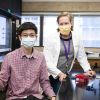
Smartphone app can vibrate a single drop of blood to determine how well it clots
Blood clots form naturally as a way to stop bleeding when someone is injured. But blood clots in patients with medical issues, such as mechanical heart valves or other heart conditions, can lead to a stroke or heart attack. That’s why millions of Americans take blood-thinning medications, such as warfarin, that make it harder for their blood to clot.
-
 +24 +2
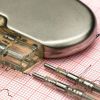
‘Bionic’ pacemaker reverses heart failure - The University of Auckland
A revolutionary pacemaker that re-establishes the heart’s naturally irregular beat is set to be trialled in New Zealand heart patients this year.
-
 +15 +3
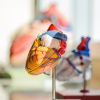
'Bionic' pacemaker reverses heart failure
A revolutionary pacemaker that re-establishes the heart's naturally irregular beat is set to be trialled in New Zealand heart patients this year, following successful animal trials. "Currently, all pacemakers pace the heart metronomically, which means a very steady, even pace. But when you record heart rate in a healthy individual, you see it is constantly on the move," says Professor Julian Paton, a lead researcher and director of Manaaki Manawa, the Centre for Heart Research at the University of Auckland.
Submit a link
Start a discussion