





















-
 +35 +6
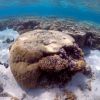
Scientists record biggest ever coral die-off on Australia's Great Barrier Reef
Warm seas around Australia's Great Barrier Reef have killed two-thirds of a 700-km (435 miles) stretch of coral in the past nine months, the worst die-off ever recorded on the World Heritage site, scientists who surveyed the reef said on Tuesday.
-
 +21 +7
Bright city lights are keeping ocean predators awake and hungry
Light pollution is changing the day-night cycle of some fish, dramatically affecting their feeding behaviour.
-
 +39 +4
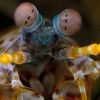
The Snail-Smashing, Fish-Spearing, Eye-Popping Mantis Shrimp
The killer punch of the mantis shrimp is the fastest strike in the animal kingdom, a skill that goes hand in hand with its extraordinary eyesight. They can see an invisible level of reality using polarized light, which could lead to a breakthrough in detecting cancer.
-
 +33 +9
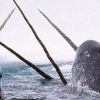
Narwhals Can 'See' Unlike Any Other Animal on Earth
It doesn't get much better than a narwhal. These bizarre creatures are a species of toothed whale, and the males have evolved an extra long left canine tooth that can grow up to 2.7 metres (9 feet) long, bursting through the upper lip and...
-
 +27 +4
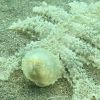
We Need to Talk About This Weird Alien Creature Filmed Off the Coast of Bali
Something left over from the Cambrian explosion?
-
 +10 +1
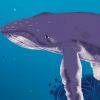
How do whales sing?
Communicating underwater is challenging. Light and odors don’t travel well, but sound moves about four times faster in water than in air — which means marine mammals often use sounds to communicate. The most famous of these underwater vocalizations is undoubtedly the whale song. Stephanie Sardelis decodes the evocative melodies composed by the world’s largest mammals.
-
 +10 +2
Jet powered dumplings you need to meet, not eat
If dumbo and a hovercraft made out, this is what you’d get. We admit we have a pretty warped sense of humour. But when you sit back and look at it, the Dumpling Squid does kinda look like a potential 'love-child' of the two don't you think?
-
 +2 +1
+2 +1Awesome Oceans
-
 +38 +5
Starfish are dying out in the Pacific – and no-one is quite sure why
Starfish are dying out on the Pacific Coast from Mexico to Alaska – and no-one is quite sure why. The problem has been documented among starfish, or sea stars as they are also known, that live along the Pacific shore before. But a new study has found species which live below the low tide mark are also being severely affected.
-
 +23 +7
Ocean algae blooms earlier, with potential ripple effects to come
Warmer oceans are acting like a catalyst for one of the world's most abundant species of plankton, triggering earlier blooms of blue-green algae in the waters of the North Atlantic. Because of plankton's fundamental role in the marine ecosystem, researchers expect this shift to have far-reaching impacts throughout the world's oceans. The study, published in the journal Science, focused on Synechococcus, a type of blue-green algae that is one of the most abundant phytoplankton in the ocean. The authors drew on 13 years worth of data to measure the spring blooms that cover the North Atlantic in a carpet of green each year.
-
 +6 +2
+6 +2Melanesia's oceans are worth US$5.4 billion but are at environmental crossroads
Melanesia's oceans are worth at least US$5.4 billion, but are under increasing threat.
-
 +23 +5
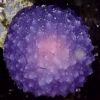
Strange purple sea creatures found in deep ocean trenches
Scores of spectacular and rare undersea species have been found on expeditions to some of the deepest trenches in the Pacific Ocean. By Matt McGrath. (Oct. 20, 2016)
-
 +23 +8
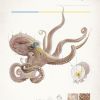
Why Do Octopuses Remind Us So Much of Ourselves?
They change shape and color, and squirt ink. But they also will return your gaze, "as if they're scrutinizing you."
-
 +32 +4
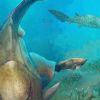
Chew on this: we finally know how our jaws evolved
Next time you bite down on something you're eating, spare a thought for the evolutioniary leap made by an ancient fish that gave rise to our jaws.
-
 +20 +3
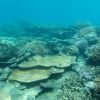
Great Barrier Reef is almost officially dead
New images of the Great Barrier Reef have revealed the extent of the damage climate change has caused to the coral. The world’s largest reef system, which stretches for over 1,400 miles off the coast of Australia, has been severely affected by rising water temperatures. In May, researchers found more than a third of corals in central and northern parts of the reef had been killed and 93 per cent of individual reefs had been affected by a condition known as coral bleaching, where too warm water causes corals to expel algae living in their tissue and turn completely white.
-
 +6 +1
+6 +1Obituary: Great Barrier Reef (25 Million BC-2016)
Climate change and ocean acidification have killed off one of the most spectacular features on the planet.
-
 +32 +7
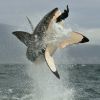
Great white sharks and tuna share genetics that makes them super predators
Despite evolving separately for 400 million years, some sharks and tuna share genetic traits linked to higher metabolism and quick swimming behaviour. Tuna fish and the lamnid group of sharks, which includes great white sharks, share some similar traits that help make them super predators, including their style of swimming and their ability to stay warm.
-
 +1 +1
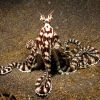
+1 +1'It's a skate! It's a lionfish! No, it's…'
The mimic octopus (Thaumoctopus mimicus) is an Indo-Pacific species of octopus capable of impersonating other local species…The mimic octopus is the only currently known marine animal to be able...
-
 +22 +5
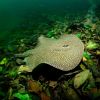
Stingrays Chew? Who Knew?
Plenty of animals bite, but mammals were once thought to be the only ones to chew, at least as it’s usually defined: moving our toothy jaws up, down, and side to side to tear through tough food. But chew on this: the ocellate river stingray, a beautiful spotted fish from the Amazon River, also chews its food. The discovery not only demonstrates that chewing isn’t special to mammals, but explains how rays, whose skeletons are made of soft cartilage rather than bone, can eat tough prey like shellfish.
-
 +22 +4
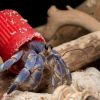
Incredible Photos of the Hermit Crabs Who Live In Trash
Instead of shells, these hermit crabs used plastic bottle caps and other trash.
Submit a link
Start a discussion