





















-
 +20 +3
Did You Know The English Language Has A Secret Brother?
You may want to sit down for this because you are about to find out your Germanic mother gave birth to another language in the North of the Netherlands.
-
 +22 +4
Raising a Truly Bilingual Child
Don’t assume that young children’s natural language abilities will lead to true grown-up language skills without a good deal of effort.
-
 +30 +6
The World Looks Different When You’re Speaking a Second Language
A new memoir lends a fresh perspective to one of the great mysteries of modern linguistics.
-
 +27 +2
How the quasi-British accent Canadian Dainty emerged amongst the country's elite
The age-old "tomayto-tomahto" debate may bear the remnants of Canadian Dainty, a quasi-British accent spoken by upper middle class Canadians that is now mostly extinct, according to a Toronto linguist.
-
 +7 +1
+7 +1Uncovering ancient Ashkenaz – the birthplace of Yiddish speakers
Yiddish was at one time the international language of Ashkenazic Jews, but it's exact origin has always been somewhat unclear, until now.
-
 +32 +5
Facebook teaches bots how to negotiate. They learn to lie instead
The chatbots came up with their own original and effective responses - including deceptive tactics
-
 +18 +4
Language alters our experience of time
Learning languages rewires the brain and changes how we perceive time.
-
 +18 +6
The Greek word that can’t be translated
‘Love of honour’, its official translation, is a utilitarian yet insufficient attempt to convey the constellation of virtues squeezed into the word’s four syllables. By Stav Dimitropoulos.
-
 +25 +5
The dark side of mondegreens: how a simple mishearing can lead to wrongful conviction
From cussing McDonald's Minions to wrongful conviction, mishearing what is said can be funny but also very serious.
-
 +10 +1
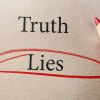
Culture affects how people deceive others, study shows: People's language changes when they lie depending on their cultural background.
People's language changes when they lie depending on their cultural background, psychologists have discovered. Linguistic cues to deception do not appear consistently across all cultures. The differences are dictated by known cultural differences in cognition and social norms. This has implications for everything from forensic risk assessments, discrimination proceedings and the evaluation of asylum seekers.
-
 +15 +3
Anthony Burgess's lost dictionary of slang discovered
The writer Anthony Burgess invented futuristic slang for his cult novel A Clockwork Orange and was so fascinated by the language of the street that he began work on a dictionary more than 50 years ago. Now his lost dictionary of slang, abandoned after several hundred entries covering three letters, has been discovered.
-
 +25 +4
Why Swearing Makes You Stronger
Letting loose an obscenity can make you exercise harder and endure pain better. What other powers could four-letter words have?
-
 +17 +4
How spelling became an ESPN sport
The delightful story of how the Scripps National Spelling Bee found a home on a sports network. By Ann-Derrick Gaillot.
-
 +13 +5
What Does Compactness Really Mean?
It took me a long time to understand the mysterious mathematical property of compactness. By Evelyn Lamb.
-
 +29 +4
Bilinguals experience time differently. This is why
A new study suggests that people who speak two languages fluently think about time differently depending on the language context in which they are estimating the duration of events.
-
 +5 +1
+5 +1How good is your Indian English?
With interesting formations of English words and a large crop of loanwords, Indian English is a fascinating English dialect. Let’s see how well you know it!
-
 +20 +3
Explainer: how the brain changes when we learn to read
We are not hard-wired to read. It has taken thousands of years of practice to forge connections in our brains to help us do this.
-
 +8 +3
+8 +3‘Anumeric’ people: What happens when a language has no words for numbers?
From the Amazon to Nicaragua, there are humans who never learn numbers. What can these anumeric cultures teach us about ourselves? By Caleb Everett.
-
 +24 +4
Apple fanboys cited as Merriam-Webster herds ‘sheeple’ into dictionary
“Wake up!” the good folks a Merriam-Webster just tweeted. “Sheeple is in the dictionary now.” And while the induction of such casual slang is sure to offend some, none will likely take great umbrage than Apple zealots, whose zealotry is cited by the dictionary as an example of the proper use of the word. First the definition from Merriam-Webster’s website: “people who are docile, compliant, or easily influenced: people likened to sheep.” And the second of two examples...
-
 +4 +1
+4 +1Google unveils neural translation technology
‘300 mn. Indian language users may come online in 4 years’
Submit a link
Start a discussion