





















- 10 years ago Sticky: Seeking moderators!
-
 +22 +1
Big Beef Says Eating More Meat Can Save the Planet. That's Bullshit.
North American ranchers and lobbyists are pushing back against a United Nations’ report pointing the finger at the global North’s huge appetite for meat and dairy for fueling climate change. But science shows that raising cows sustainably, with a low or carbon-neutral footprint, is the exception, not the rule.
-
 +3 +1
+3 +1Meatless burgers vs. beef: How Beyond Meat’s environmental impact stacks up
We’ve all heard about the benefits of plant-based meat alternatives: reduced cholesterol, less impact on the land, animal-friendly, etc. But in terms of its reportedly environmentally friendly practices, how exactly does it measure up to traditional meat? Beyond Meat–makers of non-GMO meat-free burgers, sausages, and chicken strips–discovered it’s quite substantial.
-
 +2 +1
+2 +1What impact are data centres having on climate change?
As a growing number of organisations seek to become major players in today’s data-driven economy, the data centre remains one of the most important pieces of business infrastructure. However, as the ice caps continue to melt at an alarming rate, is it really possible to sustain energy-guzzling data centres whilst trying to save the planet?
-
 +15 +1
Don't let vegetarian environmentalists shame you for eating meat. Science is on your side.
Go ahead, grill a burger. Going vegetarian can help our climate a little bit, but it's an inefficient policy to try to push on people worldwide.
-
 +8 +1
+8 +1Climate change is finally on the agenda for 2020. But is it too late for debating?
Climate change got a brief moment in the spotlight—25 minutes worth of long-overdue conversation on a national political stage at the Democratic debates last week in Detriot. Yours truly was busy live-tweeting the affair for the better part of six hours.
-
 +16 +1
Indigenous lands have highest biodiversity: "We must manage a larger fraction of world's area in ways that protect species"
Lands managed by Indigenous peoples may be key to saving the planet's biodiversity, according to a study published in the journal Environmental Science & Policy.
-
 +10 +1
US Can't Ignore That Climate Crisis Will Force 120 Million People Into Poverty
Mainstream discussions of the global emergency, writes a top U.N. official, are remarkably out of touch with the scale of the crisis and the economic and social upheaval it will bring.. Climate change is making headlines this summer with record temperatures, devastating floods, and climate-related migration. But in the U.S., mainstream discussions about climate change are remarkably out of touch with the scale of the crisis and the economic and social upheaval it will bring. Political leaders have failed to put forward a vision for avoiding catastrophic consequences or protecting those most affected.
-
 +13 +1
French police criticised for using pepper spray on climate protesters
France’s interior minister has asked the Paris police chief to explain a controversial riot police operation to remove climate activists from a bridge, after a video of officers using pepper spray and dragging protesters went viral on social media. The interior ministry said the police operation to clear the demonstrators was “necessary to restore traffic circulation in the centre of Paris”.
-
 +18 +1
A 2020 Cheat Sheet: How 21 Democrats Answered Our Questions Before the Debates
Which Democratic candidates believe that the next president could stop climate change? Which candidates don’t believe that? And where do they stand on the future of health care, handguns, big tech, the Supreme Court and other issues that may come up at the debates on Wednesday and Thursday night?
-
 +3 +1
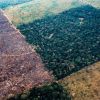
+3 +1Business as Usual Threatens Thousands of Amazon Tree Species
Climate change and deforestation could also severely fragment much of the forest by 2050, a new model projects
-
 +2 +1
+2 +1Even Oil Companies Want The Government To Act On Climate Change
Corporate America is increasingly calling for a federal price on carbon, writes Anne Kelly of Ceres. Private sector commitments could encourage ambitious government policies.
-
 +11 +1
The Uninhabitable Earth, Annotated Edition
We published “The Uninhabitable Earth” on Sunday night, and the response since has been extraordinary — both in volume (it is already the most-read article in New York Magazine’s history) and in kind. Within hours, the article spawned a fleet of commentary across newspapers, magazines, blogs, and Twitter, much of which came from climate scientists and the journalists who cover them.
-
 +10 +1
Could Air-Conditioning Fix Climate Change?
It is one of the great dilemmas of climate change: We take such comfort from air conditioning that worldwide energy consumption for that purpose has already tripled since 1990. It is on track to grow even faster through mid-century—and assuming fossil-fuel–fired power plants provide the electricity, that could cause enough carbon dioxide emissions to warm the planet by another deadly half-degree Celsius.
-
 +2 +1
+2 +1Enough with the 'Actually, Electric Cars Pollute More' Bullshit Already
I know, I know, dunking on the Wall Street Journal editorial board is a bit like smacking your four-year-old nephew’s would-be jumper out of the air before it even leaves his hands. But in an Op-Ed last week it peddled the tired and disingenuous notion that electric cars, by the very virtue of their production, pollute more than fossil fuel cars. This is wrong, and it cannot stand.
-
 +4 +1
+4 +1Could a Green New Deal Make Us Happier People?
For as long as climate change has been a part of America’s national consciousness, it’s been talked about in dire terms, evoking images of some hellish, “Mad Max”-style dystopia. The title and much of the content of David Wallace-Wells’s recent book is a variation on the same theme, stirring up hundreds of pages of images’ worth of an “Uninhabitable Earth” to make the case that the conversation has not been dire enough.
-
 +20 +1
From ruined bridges to dirty air, EPA scientists price out the cost of climate change
By the end of the century, the manifold consequences of unchecked climate change will cost the U.S. hundreds of billions of dollars per year, according to a new study by scientists at the Environmental Protection Agency. Those costs will come in multiple forms, including water shortages, crippled infrastructure and polluted air that shortens lives, according to the study in Monday’s edition of Nature Climate Change. No part of the country will be untouched, the EPA researchers warned.
-
 +21 +1
Bad Questions Lead to Bad Democracy
In a previous post, I discussed the essential role that questions play in the political landscape of contemporary democracy. The ability to ask questions, and to ask good ones at that, facilitates participation in political discussion and debate, allows us to gather information that speaks to our concerns, and those of our communities, and enables informed decision-making, about, for example, which box to tick on one’s ballot paper. Here I want to make the case stronger by looking at...
-
 +2 +1
+2 +1How humans derailed the Earth's climate in just 160 years
Climate change might be the most urgent issue of our day, both politically and in terms of life on Earth. There is mounting awareness that the global climate is a matter for public action. For 11,500 years, atmospheric carbon dioxide (CO2) concentrations hovered around 280 ppm (the preindustrial "normal"), with an average surface temperature around 15°C. Since the Industrial Revolution, this level has been rising continuously, reaching 410 ppm in 2018.
-
 +11 +1
Donald Trump is using Stalinist techniques against climate science | Michael Mann and Bob Ward
Americans should not be fooled by the Stalinist tactics being used by the White House to try to discredit the findings of mainstream climate science. The Trump administration has already purged information about climate change from government websites, gagged federal experts and attempted to end funding for climate change programmes.
-
 +12 +1
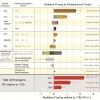
CO2 is main driver of climate change
While there are many drivers of climate, CO2 is the most dominant radiative forcing and is increasing faster than any other forcing.