


















-
 +6 +1
+6 +1Yuri Bezmenov: Psychological Warfare Subversion & Control of Western Society (Complete)
Yuri Bezmenov (alias Tomas Schuman), a Soviet KGB defector, explains in detail his scheme for the KGB process of subversion and takeover of target societies at a lecture in Los Angeles, 1983.
-
 +7 +1
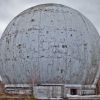
+7 +1‘We are poorer for the things you are looking at in these pictures’
A photographer travels the globe visiting defunct cold war sites. By Kenneth Dickerman. Photos By Matt Slaby
-
 +9 +1
+9 +1The New Red Scare
Reviving the art of threat inflation. By Andrew Cockburn.
-
 +36 +1
‘Spy vs. Spy’ Was The Subversive Brainchild of An Exiled Cuban Illustrator
One day a Cuban illustrator walked unannounced into the MAD Magazine offices, and the rest is history. By Eric Grundhauser.
-
 +23 +1
This Russian Nuclear Submarine Made Some Scary History (It Sank Not Once, but Twice)
The Cold War saw numerous submarine accidents, especially on the Soviet side. For much of its existence, the USSR tried to maintain a world-beating military with a second-rate economy. Throughout the era, the Soviets struggled to maintain their magnificent weapons of war. In the effort to close this gap, the crews of Soviet submarines often paid with their lives. But only one submarine had the poor luck to sink twice.
-
 +18 +1
A Star in a Bottle
An audacious plan to create a new energy source could save the planet from catastrophe. But time is running out. By Raffi Khatchadourian. (Mar. 3, 2014)
-
 +7 +1
+7 +1Joel Whitney by Rob Spillman
“If we know the government is funding the arts or funding journalism, then it behooves us to put structures in place that will allow for them to be fearless.”
-
 +6 +1
+6 +1Davy Crockett: King of the Atomic Frontier
On 17 July 1962, a caravan of scientists, military men, and dignitaries crossed the remote desert of southern Nevada to witness an historic event. Among the crowd were VIPs such as Attorney General Robert F. Kennedy and presidential adviser General Maxwell D. Taylor who had come to observe the “Little Feller I” test shot, the final phase of Operation Sunbeam… By Alan Bellows.
-
 +42 +1
The pilot who stole a secret Soviet fighter jet
When pilot Viktor Belenko defected, he did so in a mysterious Soviet plane – the MiG-25. Stephen Dowling looks at its far-reaching impact.
-
 +17 +1
The Immigrants from Hell
Robert Huddleston reviews "German Rocketeers in the Heart of Dixie: Making Sense of the Nazi Past During the Civil Rights Era," by Monique Laney.
-
 +16 +1
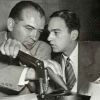
Taking a Page from Joe McCarthy
Hillary Clinton and her supporters have turned to ugly McCarthyism in attacking Donald Trump to divert attention from their email scandals, a dangerous use of Russia-bashing, says Robert Parry.
-
 +29 +1
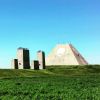
The pyramid at the end of the world
In rural North Dakota, the long shadow cast by nuclear weapons and the Cold War is not as far in the past as we might like to think. By Elmo Keep.
-
 +10 +1
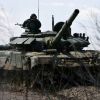
US Army keeping wary eye on Russia
Pentagon leaders warn that Russia is making alarming military advancements. By Kristina Wong.
-
 +23 +1
American Military Intervention Can't Save Syria
"The Syrian people have endured horrors and face challenges beyond comprehension. Yet these tragic realities do not warrant intervention by the United States." By Rajan Menon.
-
 +8 +1
+8 +1Mangoes, K-Pop and KFC: Chinese Nationalism today
“What would Chairman Mao, who died (or, in Communist Party parlance, ‘went to meet Marx’) forty years ago, think of Seoul-based bands being blocked from appearing on Chinese television and touring the mainland because of a South Korean missile programme?” By Richard Curt Kraus and Jeffrey Wasserstrom.
-
 +29 +1
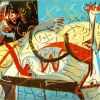
Was modern art a weapon of the CIA?
The Abstract Expressionists emerged from obscurity in the late 1940s to establish New York as the centre of the art world. But were they pawns of US spies in the Cold War? By Alastair Sooke.
-
 +12 +1
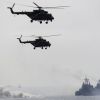
Russia 'Considering Military Bases in Cuba and Vietnam'
Russia's deputy defence minister reveals country is 'reconsidering' the closure of bases in Vietnam and Cuba.
-
 +11 +1
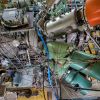
Atomic Light
What is most astonishing about this genuine relic of Soviet science that Ortiz Monasterio has brought to light in his photographs is the precarious nature of the installations, the austere conditions in which the scientists worked and lived. By José Manuel Prieto, photographs by Pablo Ortiz Monasterio.
-
 +8 +1
+8 +1America at the Atomic Crossroads
Seventy years ago, at Bikini Atoll, weapons of mass destruction became a form of consumer entertainment. By Alex Wellerstein. (July 25, 2016)
-
 +3 +1
+3 +1A Radioactive Cold War Military Base Will Soon Emerge From Greenland’s Melting Ice
They thought the frozen earth would keep it safely hidden. They were wrong. By Ben Panko.
Submit a link
Start a discussion