














-
 +1 +1
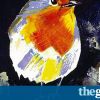
+1 +1Artist’s 'sexual' robin redbreast Christmas cards banned by Facebook
Jackie Charley said she ‘could not stop laughing’ after harmless festive images were blocked by Facebook because of ‘adult’ nature
-
 +1 +1
+1 +1Poland Attacks Europe Union For Censoring Christian Traditions
Poland wants to avoid the ‘ideological censorship’ of Christian traditions in the European Union, according to Prime Minister Beata Szydlo. Speaking at a conference organized by the Polish Institute of International Affairs, Szydlo emphasized her party’s opposition to Muslim immigration.
-
 +23 +5
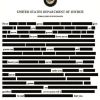
Censored
-
 +9 +3
+9 +3US Court Grants ISPs and Search Engine Blockade of Sci-Hub
Sci-Hub, often referred to as the "Pirate Bay of Science," has suffered another blow in a US federal court. The American Chemical Society has won a default judgment of $4.8 million for alleged copyright infringement against the site. In addition, the publisher was granted an unprecedented injunction which requires search engines and ISPs to block the platform.
-
 +11 +4
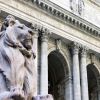
Theodore Dreiser’s New York
Theodore Dreiser moved to New York during the Gilded Age to become a journalist. He didn't like what he saw. By Mike Wallace.
-
 +16 +5
This clever copy of Fahrenheit 451 can only be read when burned
Fahrenheit 451 is the 1953 Ray Bradbury novel (soon to be a film) about a “fireman” who burns books rather than saves them, as a means to keep society illiterate and complacent. The novel has been a lightning rod for issues of censorship and book banning, and it begins with the sentence, “It was a pleasure to burn.”
-
 +11 +2
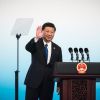
The ideological war playing out on China's internet
As China's leaders gather in Beijing this week for the 19th National Congress of the Chinese Communist Party (CCP), an ideological war is under way on the country's internet.
-
 +1 +1
+1 +1Despite censorship, China has some cool bookshops
The government is ambivalent about them. (Sep 7, 2017)
-
 +21 +5
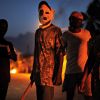
No business, no boozing, no casual sex: when Togo turned off the internet
When young people started mobilising online against Togo’s president, the state switched off the internet. In the week that followed, people talked more, worked harder and had less sex – all of which proved bad news for the government. By Mawuna Koutonin. (Sept. 21, 2017)
-
 +12 +2
How I Believe Facebook Was Censoring My Political Speech
Forget China, the Internet police are already here in U.S. By Philip Giraldi.
-
 +21 +7
China censors discussion of North Korea's bomb test
Chinese censors appear to be stifling online discussion of North Korea's latest missile launch, a move apparently linked to China's hosting of this week's Brics summit. Posts on the popular microblogging network Sina Weibo and the mobile messenger WeChat which highlight or make jokes about the bomb test coinciding with the summit have been censored.
-
 +19 +4
Nazis, The Internet, Policing Content And Free Speech
I'm going to try to do something that's generally not recommended on the internet: I'm going to try to discuss a complicated issue that has many nuances and gray areas. That often fails, because all too often people online immediately...
-
 +13 +2
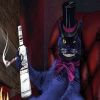
In the Face of Constant Censorship, Bulgakov Kept Writing
On the Tragic Life and Death of the Master and Margarita Author. By Julie Lekstrom Himes. (Jan 23, 2017)
-
 +9 +4
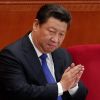
+9 +4China bans Winnie The Pooh over jokes about President Xi Jinping
According to BBC News (via The Wrap), the Chinese government is blocking all mentions of Winnie The Pooh on social media sites in an attempt to stop people from associating President Xi Jinping with the cubby, honey-living children’s character. Apparently, Winnie The Pooh has been the go-to reference for people looking to poke fun at President Xi for a while now, but the government is ramping up its censorship operations in advance of the Communist Party Congress this fall so that President Xi can make a big show of his “grip on power”—as the BBC puts it—and try to shut down his critics.
-
 +23 +2
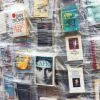
Defiant democracy: Parthenon replica made of 100,000 banned books.
Standing on the site where Nazis burned 2,000 books by Jewish and Marxist writers, this Parthenon is not made of marble, but of 100,000 books that have been or remain banned by various governmental entities around the world. The Parthenon of Books by Argentine artist Marta Minujin faithfully recreates the historic Athens landmark in Kassel, Germany with various editions of 170 banned books, all wrapped in plastic and donated by the public. The artist will keep accepting copies of the banned books and adding them to the structure until Documenta ends on August 4th, and then the books will be distributed to anyone who wants them.
-
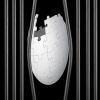 +25 +2
Wikipedia’s Switch to HTTPS Has Successfully Fought Government Censorship
Harvard researchers found fewer instances of Wikipedia censorship after the site started encrypting all of its traffic. By Daniel Oberhaus.
-
 +13 +2
Venezuela increases internet censorship and surveillance in crisis
Venezuela is increasingly censoring its internet and expanding online surveillance of citizens. The country is currently in a state of emergency after two months of anti-government protests that have caused the deaths of over 50 people and led to violent confrontations with the police.
-
 +13 +3
NYT Cheers the Rise of Censorship Algorithms
The New York Times is cheering on the Orwellian future for Western “democracy” in which algorithms quickly hunt down and eliminate information that the Times and other mainstream outlets don’t like, reports Robert Parry.
-
 +17 +3
The Moderators
In an office in India, a cadre of Internet moderators ensures that social media sites are not taken over by bots, scammers, and pornographers. The Moderators shows the humans behind content moderation, taking viewers into the training process that workers go through in order to become social media’s monitors.
-
 +11 +3
Tor-developed smartphone app will detect internet censorship and surveillance
The Tor Project, responsible for software that enables anonymous Internet use and communication, is launching a new mobile app to detect internet censorship and surveillance around the world. The app, called “OONIProbe,” alerts users to the blocking of websites, censorship and surveillance systems and the speed of networks. Slowing internet speeds down to a crawl is one way governments censor internet content they deem illegal. The app also spells out how users might be able to circumvent the blockage.
Submit a link
Start a discussion