




















-
 +12 +2
The Movement to Protect Your Mind From Brain-Computer Technologies
Recording memories, reading thoughts, and manipulating what another person sees through a device in their brain may seem like science fiction plots about a distant and troubled future. But a team of multi-disciplinary researchers say the first steps to inventing these technologies have already arrived. Through a concept called “neuro rights,” they want to put in place safeguards for our most precious biological possessions: our mind.
-
 +18 +5
Peloton’s mandatory treadmill memberships show how you never fully own your connected devices
Tread+ owners must pay $39 a month to use their treadmills.
-
 +12 +1
Expect an Orwellian future if AI isn't kept in check, Microsoft exec says
AI is already being used for widespread surveillance in China.
-
 +18 +2
Amazon sales of facial recognition software to police on pause indefinitely
Amazon asked US lawmakers to regulate the use of facial recognition after the murder of George Floyd in May 2020.
-
 +17 +2
The FBI Seized Heirlooms, Coins, and Cash From Hundreds of Safe Deposit Boxes in Beverly Hills, Despite Knowing 'Some' Belonged to 'Honest Citizens'
Victims of the FBI's constitutionally dubious raid say they've been told to come forward and identify themselves if they want their stuff back.
-
 +26 +3
Amazon delivery drivers have to consent to AI surveillance in their vans or lose their jobs
Amazon is well-known for its technological Taylorism: using digital sensors to monitor and control the activity of its workers in the name of efficiency. But after installing machine learning-powered surveillance cameras in its delivery vans earlier this year, the company is now telling employees: agree to be surveilled by AI or lose your job.
-
 +31 +3
These crowdsourced maps will show exactly where surveillance cameras are watching
Amnesty International is producing a map of all the places in New York City where surveillance cameras are scanning residents’ faces. The project will enlist volunteers to use their smartphones to identify, photograph, and locate government-owned surveillance cameras capable of shooting video that could be matched against people’s faces in a database through AI-powered facial recognition.
-
 +3 +1
+3 +1The Capitol Attack Doesn’t Justify Expanding Surveillance
The security state that failed to keep DC safe doesn't need invasive technology to meet this moment—it needs more civilian oversight.
-
 +18 +4
The Tech That Will Invade Our Lives in 2021
Spoiler: We’re looking at another year of internet services dominating many aspects of our lives.
-
 +24 +3
What Big Tech does in the shadows: Shunning social media won't protect your privacy
So called "shadow profiles" are just one of the major challenges when it comes to protecting privacy in a digital age.
-
 +4 +1
+4 +1Massachusetts Legislators Should Stand With Their Communities and Restore Face Recognition Prohibitions to Police Reform Bill
Before 2020 ends, Massachusetts could become the first state to implement robust state-wide protections from government use of face recognition. As part of a sweeping package of police reform legislation (S. 2963) inspired by protests for police accountability, state legislators in the commonwealth passed a prohibition on government agencies using the technology.
-
 +25 +3
Facial Recognition Is Running Amok in China. The People Are Pushing Back.
China’s first lawsuit against facial recognition was a victory for privacy advocates. But there’s a limit to how far they can push against surveillance.
-
 +15 +4
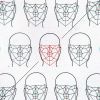
Massachusetts on the verge of becoming first state to ban police use of facial recognition
Massachusetts lawmakers this week voted to ban the use of facial recognition by law enforcement and public agencies in a sweeping police reform bill that received significant bipartisan support. If signed into law, Massachusetts would become the first state to fully ban the technology, following bans barring the use of facial recognition in police body cameras and other, more limited city-specific bans on the tech.
-
 +24 +5
Google illegally spied on workers before firing them, US labor board alleges
Laurence Berland and Kathryn Spiers were fired in the wake of employee organizing efforts. Now, the NLRB says the terminations violated labor law.
-
 +18 +2
Microsoft productivity score feature criticised as workplace surveillance
Tool allows managers to use Windows 365 to track their employees’ activity
-
 +24 +2
‘You Have Zero Privacy’ Says an Internal RCMP Presentation. Inside the Force’s Web Spying Program
‘Project Wide Awake’ files obtained by The Tyee show efforts to secretly buy and use powerful surveillance tools while downplaying capabilities.
-
 +12 +3
Police launch pilot program to tap resident Ring camera live streams
Law enforcement in Jackson, Mississippi has launched a pilot program that allows officers to tap into private surveillance devices during criminal investigations. On Monday, the AP reported that the trial, now signed off by the city, will last for 45 days. The pilot program uses technology provided by Pileum and Fusus, an IT consultancy firm and a provider of a cloud-based video, sensor, and data feed platform for the law enforcement market.
-
 +2 +1
+2 +1Are We Already Living in a Tech Dystopia?
For the most part, fictional characters rarely recognize when they’re trapped in a dystopia. Watching their neighbors get carted off for harboring subversive thoughts, they almost never say, “I wish we weren’t living in this dystopia.” To them, that dystopia is just life. Which suggests that—were we, at this moment, living in a dystopia ourselves—we might not even notice it. We might call this or that policy/data-harvesting technique “dystopian,” but, at least on some level, we believe we aren’t totally there yet—that there is still room, in our world, for a modicum of personal freedom/happiness. Is this a laughable...
-
 +23 +5
The DEA Has Just Been Authorized to Conduct Surveillance on Protesters
The Justice Department gave the agency the temporary power “to enforce any federal crime committed as a result of the protests over the death of George Floyd.”
-
 +16 +2
Inside the NSA’s Secret Tool for Mapping Your Social Network
Edward Snowden revealed the agency’s phone-record tracking program. But thanks to “precomputed contact chaining,” that database was much more powerful than anyone knew.
Submit a link
Start a discussion